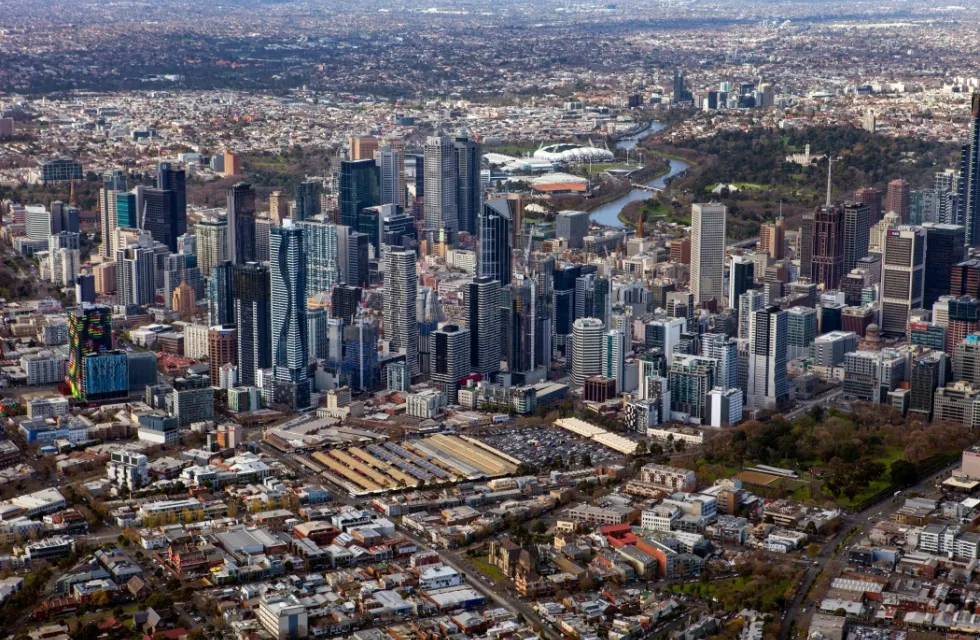
Originally set aside as a public reserve in 1851, the gardens were developed in 1867 to a design by Clement Hodgkinson and then further developed by William Guilfoyle.
The gardens feature avenues of mature trees along the crossing paths, forming a 'cathedral' or 'tunnel' effect. A prominent landscape feature is the contrasting evergreen foliage of conifers, palms, and Moreton Bay figs against a background of deciduous elms, oaks, and poplars.
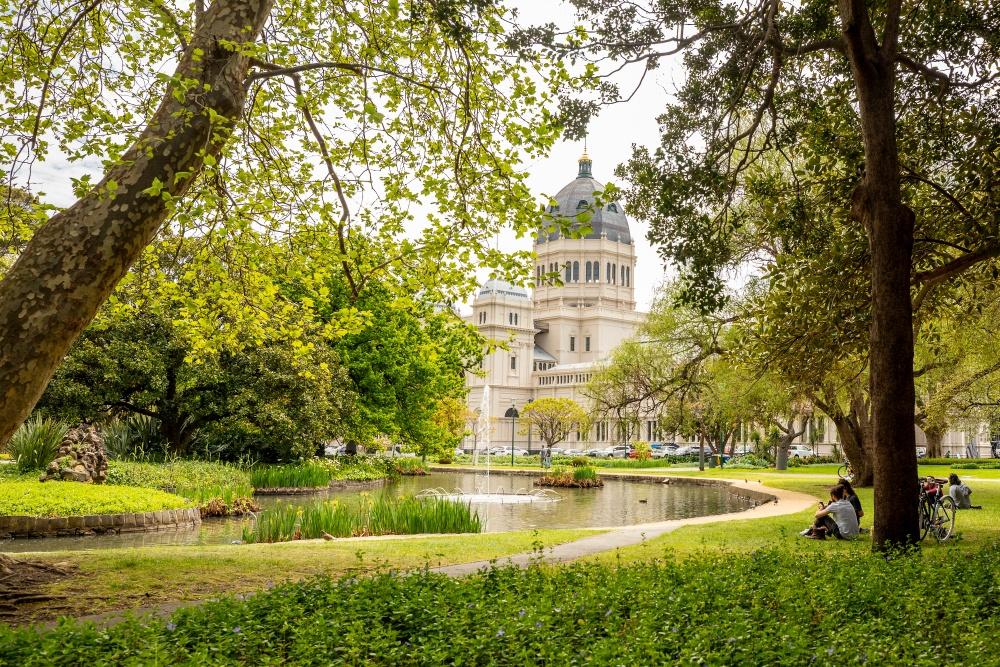
Other features include a Robert Burns memorial External link, an ornamental lake with a monument to President John F Kennedy External link, a memorial statue of Sir William Clarke External link, and the Victorian Emergency Services Memorial, which honours fallen members of all of Victoria’s emergency services organisations.
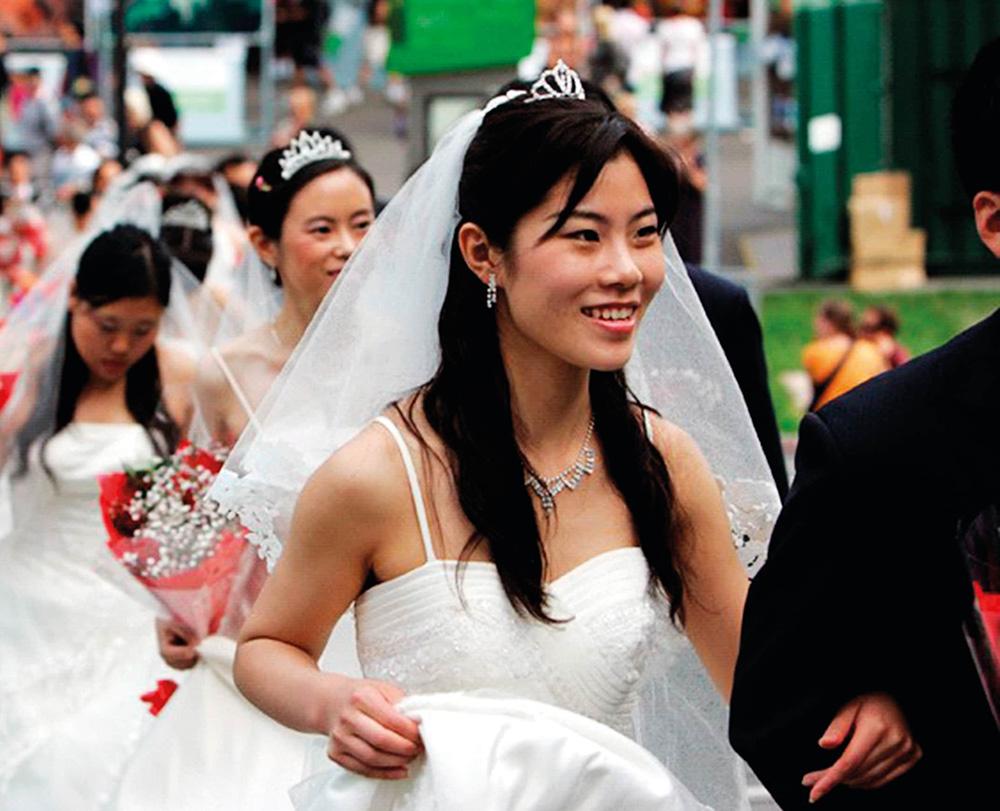
The Treasury Gardens are a popular venue for weddings, community events and rallies.
Things to do
- Relax on the lawns.
- Stroll the long walks beneath shady Moreton Bay fig trees and towering elm trees and admire the garden beds.
- Watch the antics of the ducks on the lake, wander around the adjacent Emergency Services Memorial and marvel at the beautiful rocks and evocative landscaping.
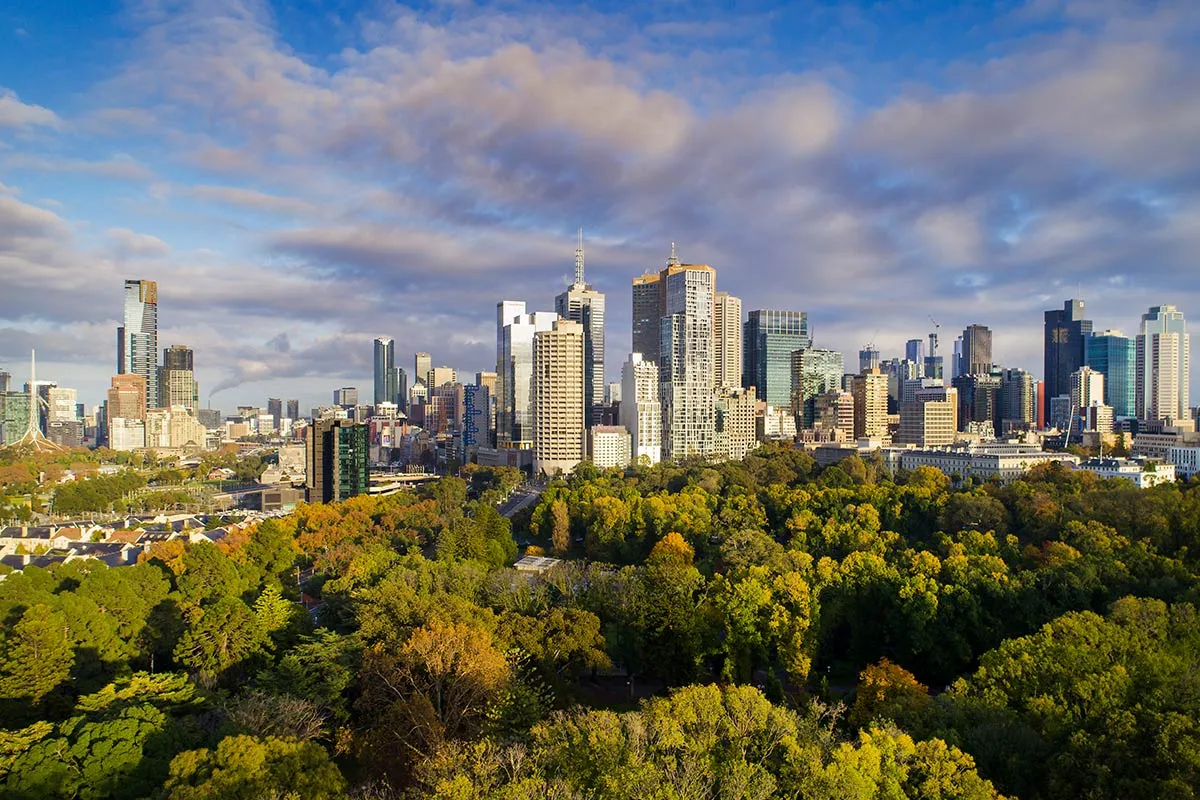
An aerial view of Fitzroy and Treasury Gardens looking towards the city
1
of
3
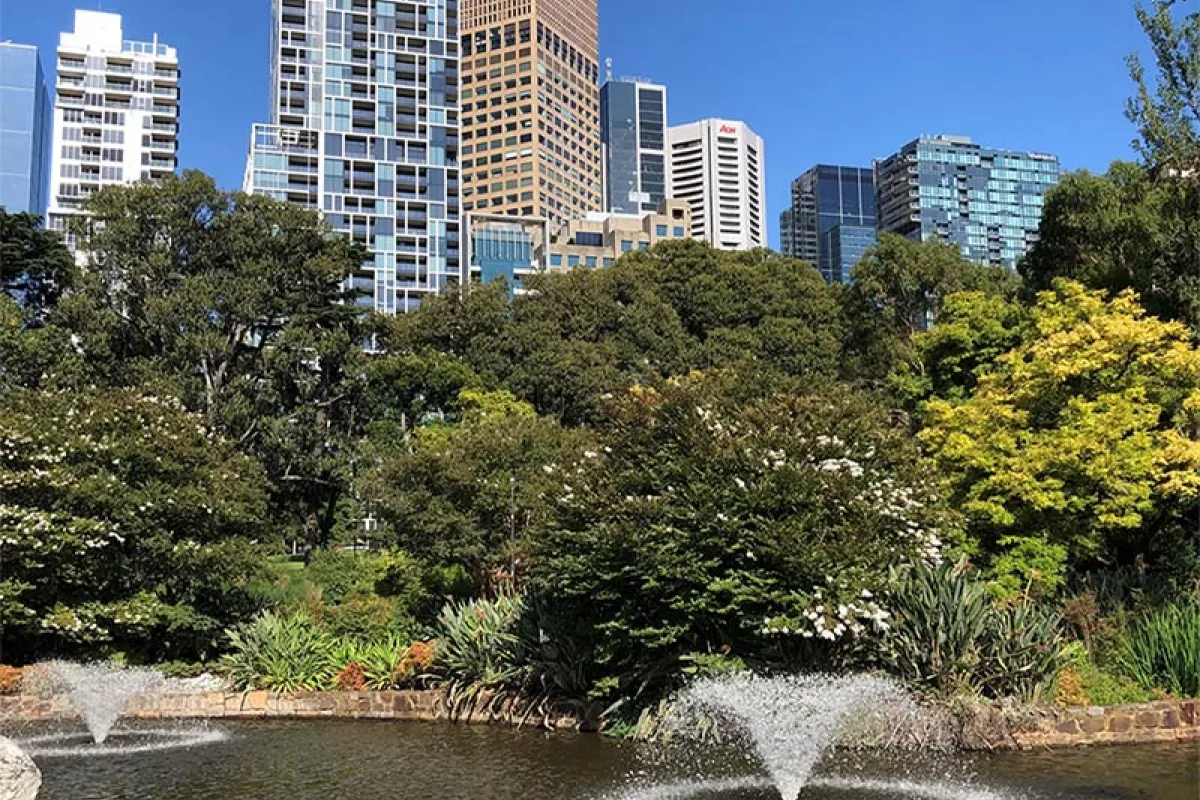
The lake in Treasury Gardens
2
of
3
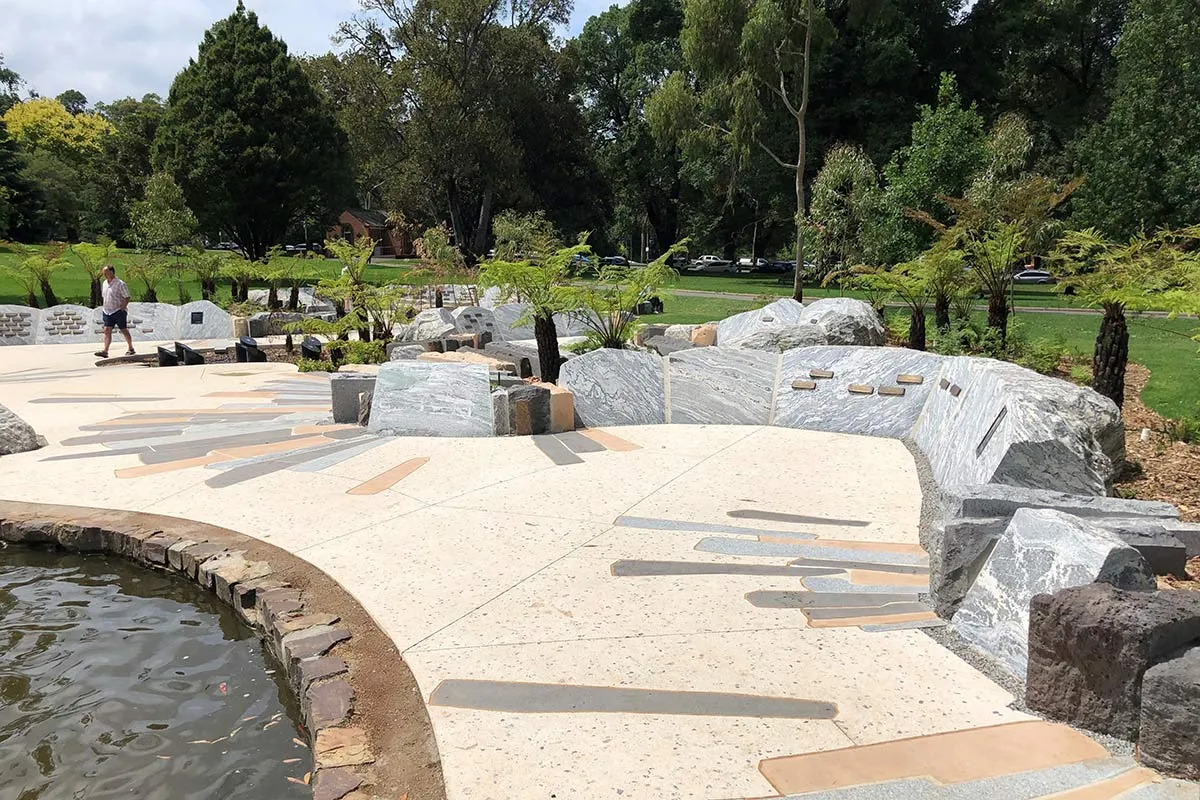
The Emergency Management Victoria memorial
3
of
3
1
of
3
An aerial view of Fitzroy and Treasury Gardens looking towards the city
2
of
3
The lake in Treasury Gardens
3
of
3
The Emergency Management Victoria memorial
Designations, policies and plans
- Treasury Gardens is classified as a Capital City Open Space in City of Melbourne's Open Space Strategy.
- Treasury Gardens is recognised as being of State Significance and is listed on the Victorian Heritage Register External link (H1842).
How to get there
Walk from Flinders Street Station or catch a 48 or 75 tram east along Flinders Street.
See PTV journey planner External link for more public transport information.
Treasury Gardens