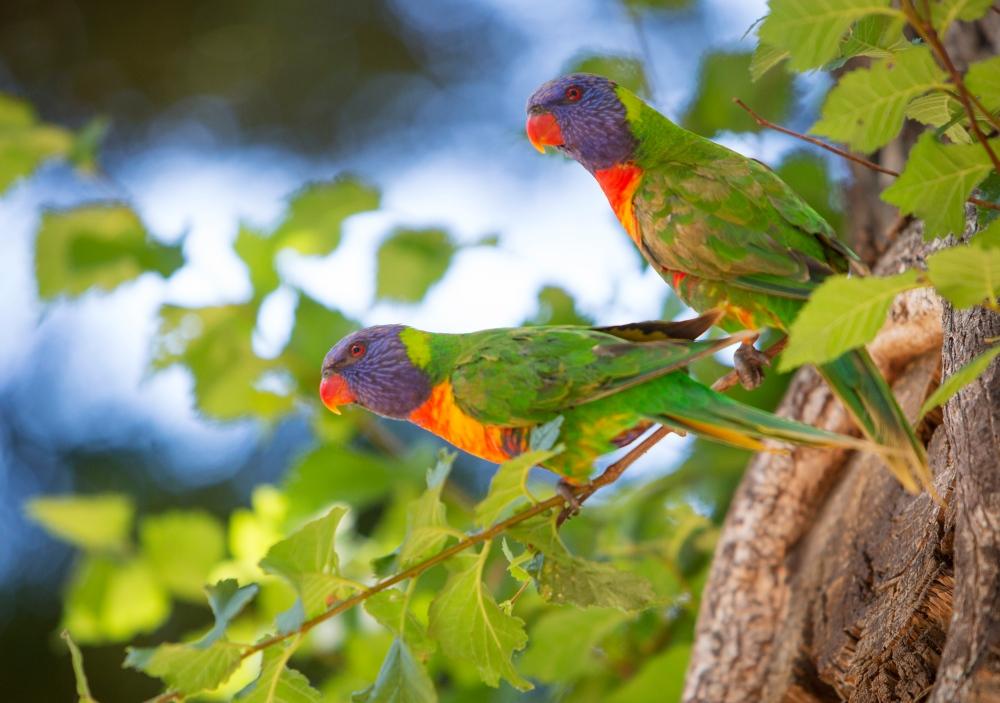
All Australian native animals are protected under the Wildlife Act 1975. It is an offence to take, harm or disturb wildlife. Hunting, trapping or injuring animals, including possums and ducks, in public parks and gardens is illegal and fines apply.
Remember that wildlife is wild so watch animals from a safe distance.
Do not feed wildlife
Feeding wildlife, especially possums, can do them serious harm. It can:
- alter the natural behaviour of wildlife
- contribute to their overpopulation
- make some animals aggressive
- cause poor nutrition and spread disease
- encourage the presence of vermin in the wildlife habitat
- often lead to unwelcome wildlife causing property damage in residential areas
- affect water quality and the natural environment.
Domestic cats, dogs and wildlife
When taking your dog for a walk in the park, never let your dog chase birds or wildlife. Your dog may inadvertently cause damage by trampling habitat and may disturb feeding or nesting fauna.
For more information, see Walking your dog.
Cats also pose a serious threat to native wildlife populations and have led to declines in many bird species Australia-wide. Please keep your cat inside your property at all times, especially at night. This will help keep both your pet and wildlife safer.
Find tips for stopping your cat from roaming.
Possums and possum guards
Possums are one of our well-known nocturnal park dwellers. They sleep during daylight hours and leave their nests in the trees or tree hollows to feed after dusk.
High densities of possums mean many park trees are fitted with possum guards (collars of sheet metal or perspex) to prevent possums defoliating trees, stripping bark and causing serious damage to tree health.
Read our Ringtail and brushtail possums fact sheet (PDF 1.1 MB)
For information on how to live with possums successfully and legislation regarding trapping of Brushtail Possums please refer to Possums (Department of Energy, Environment and Climate Change) External link.
If you see a possum that you believe may be unwell or injured, please contact Wildlife Victoria on 8400 7300 or view their fact sheets External link.
Household fruit tree netting
In Victoria, it’s illegal to use or sell household fruit tree netting with a mesh size bigger than 5 mm by 5 mm. Larger mesh netting is more likely to entangle, distress, and seriously injure or kill wildlife.
To help check if netting is compliant, try poking a finger through the mesh. If your finger can pass through, then it’s too big. View Victoria’s current regulations External link for more information.
If you find wildlife trapped in fruit tree netting, call an experienced wildlife rescuer on 136 186 or use the Help for Injured Wildlife Tool External link. Please do not attempt to handle or touch the wildlife yourself.
To help protect wildlife in our city, please replace any non-compliant household fruit tree netting and report illegal netting sightings to Crime Stoppers Victoria on 1800 333 000.
Second-generation Anticoagulant Rodenticides (SGARs)
SGARs are a group of poisons that have been used to kill unwanted rodent populations. A single dose can be lethal. Unfortunately, SGARs can cause poisoning to non-target native wildlife and domestic pets. This may happen by
- primary poisoning, where a non-target animal directly consumes the poison
- secondary poisoning, where a non-target animal consumes another animal that has been poisoned (for example, an owl eating poisoned mice) and subsequently becomes poisoned themselves.
Additionally, SGARs break down slowly and can build up in animal tissue over time. The long-lasting effects mean that accumulation of small doses may eventually become lethal, and they pose a higher risk of secondary poisoning.
BirdLife Australia External link has launched a campaign to phase out SGARs and protect our native wildlife. To learn more about SGARs, their impacts and how you can help, check out BirdLife Australia’s resources and tool kits External link.