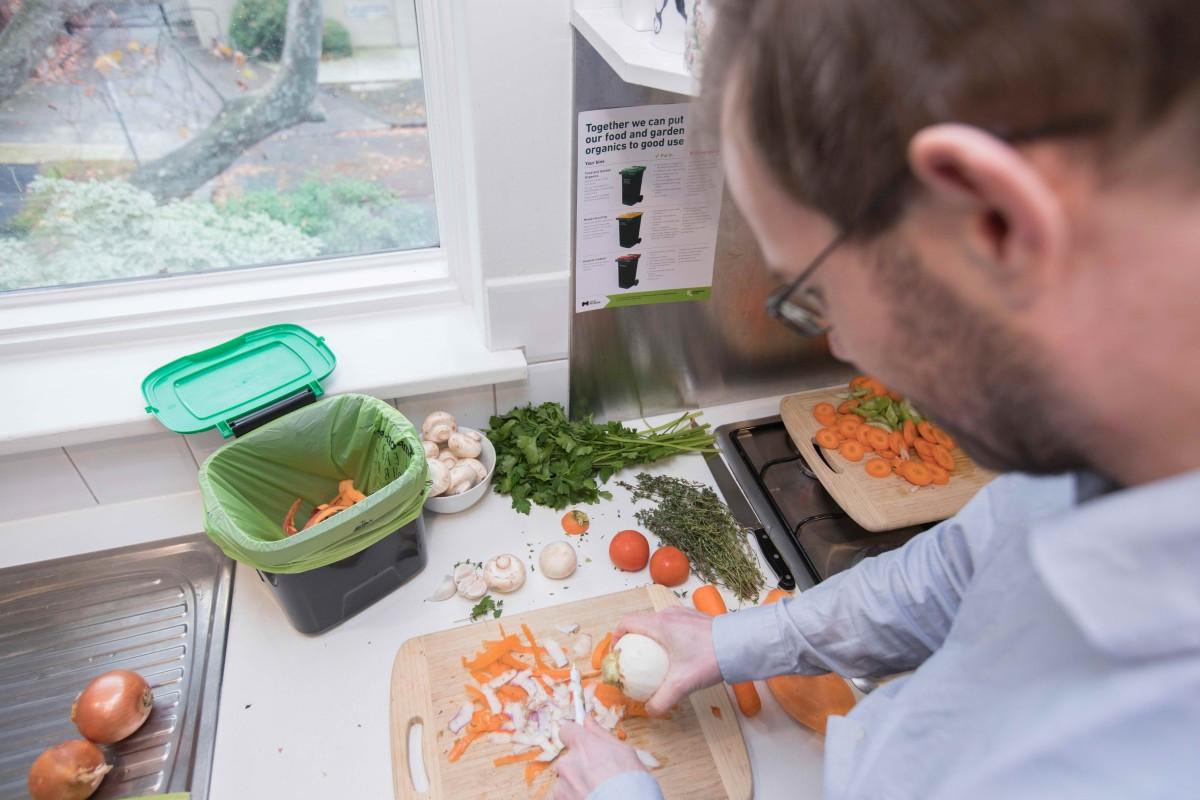
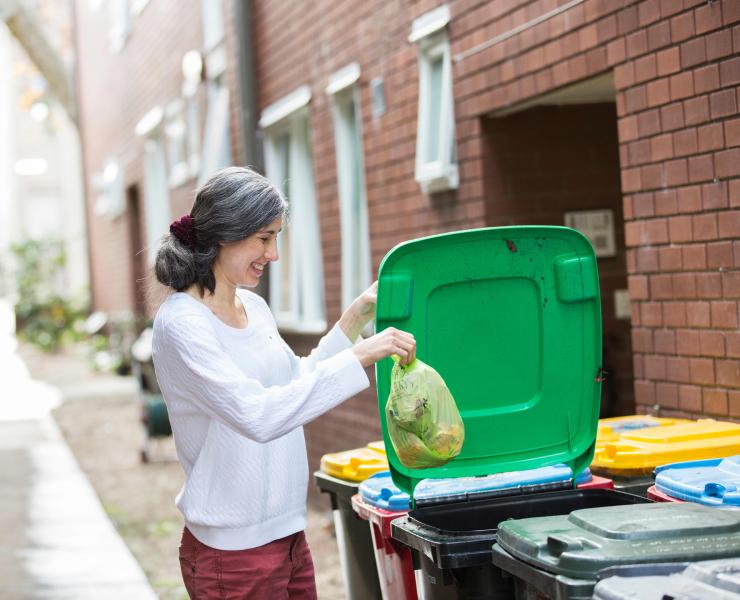
Households are supplied with a kitchen caddy and lime-green lid bin to dispose of their food and garden waste. The organics we collect are converted into compost and fertiliser to be used on farms, as well as our parks, gardens and sporting fields.
Phase one of the rollout began in June 2021 for single unit dwellings, followed by multi-unit dwellings up to five storeys. So far, we have diverted over 7000 tonnes of food and garden organics from landfill.
A pilot is currently underway for high-rise residential apartments.
What is a kitchen caddy?
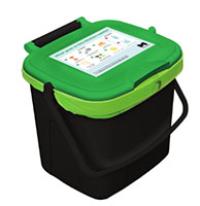
As part of our FOGO service, we supply a 12 L benchtop caddy for collecting food scraps at no charge to residents who have a lime-green lid bin. It’s not necessary to line your FOGO caddy, but if you’d like to you can line it with a caddy liner, paper bag, newspaper or paper towel.
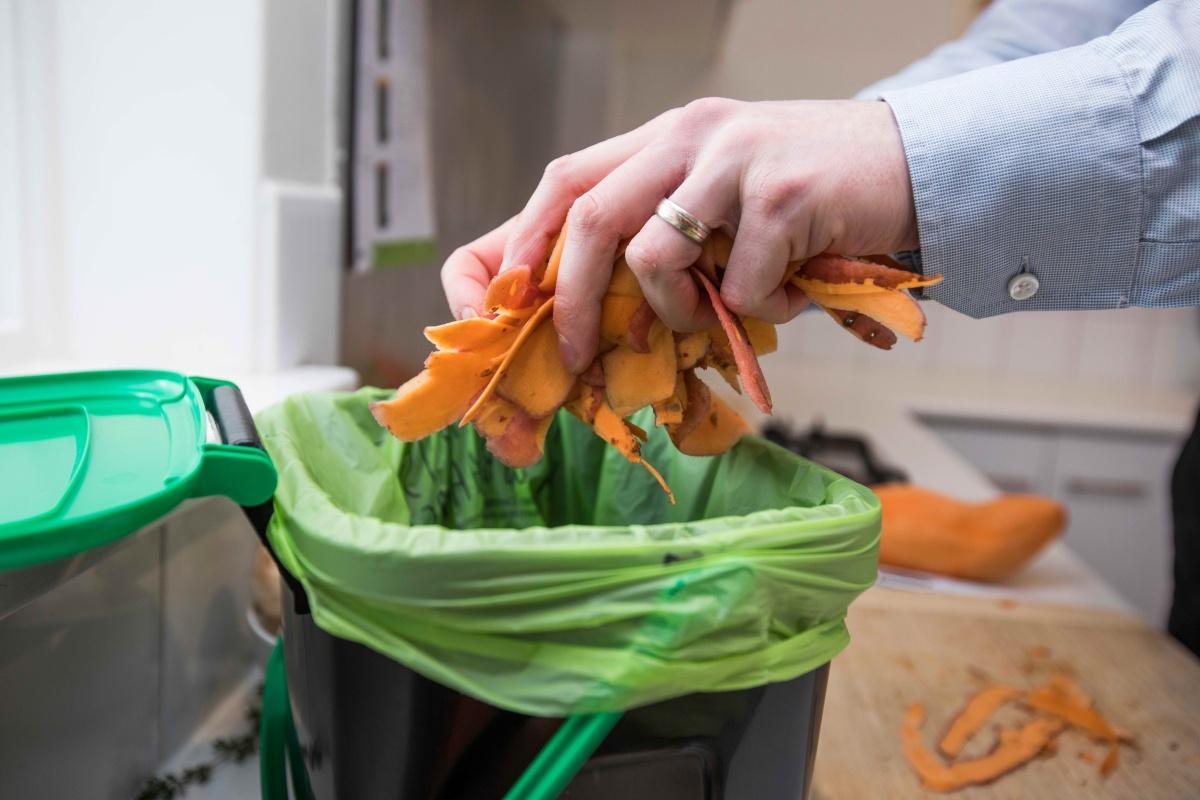
When full, empty the caddy into your lime-green lid bin (don’t tie a knot in the liner bag) and place the bin out for weekly collection.
FOGO options for different types of dwellings
Single-unit dwellings include single houses on a single block. All single-unit dwellings should have their own lime-green lid FOGO bin and weekly collection service.
Food and garden waste is collected weekly, on the same day as your red-lid garbage bin. Check the collection day for your address.
How to get started
I already have a lime-green lid FOGO bin
If you have a FOGO bin already, you’re ready to start.
If you need a caddy bin and some compostable liners, you can order a starter pack online External link (which includes a kitchen caddy and a pack of compostable liners). When filling out the form:
- select “A request for a new waste service” at step 2
- select “New Resident Pack” at step 7.
Alternatively, a starter pack is available for collection at the following location:
I don’t have a lime-green lid FOGO bin
Lime-green lid FOGO bins are currently available to single-unit dwellings (residentially-rated single houses on a single block) and smaller multi-unit dwellings.
If you don’t yet have a FOGO bin, you can submit a request External link to have your address checked. If you’re eligible, we’ll deliver a new FOGO bin, a starter pack and commence a weekly collection service to your address. When filling out the form:
- select “A request for a new waste service” at step 2
- select “Food and garden” at step 7. Select either an 80 Litre or 120 Litre bin.
How to replenish your liners
To support the initial roll out of the new FOGO service, City of Melbourne delivered FOGO caddy liner bags to residents for five years. While this assisted with the positive adoption of the service, there have been challenges with rolls of liners going to waste.
It’s not necessary to line your FOGO caddy, but if you’d like to you can line it with a paper bag, newspaper or paper towel.
City of Melbourne residents can also collect a pack of compostable liners at no charge from the service counter at one of the following centres:
- Customer Service Centre at Melbourne Town Hall
- City Library
- East Melbourne
- Kensington Town Hall External link
- Library at the Dock
- North Melbourne
- Southbank Library
- naarm ngarrgu Library
- Kathleen Syme
You will need to bring along something that proves you live in the City of Melbourne, like a drivers licence or utility bill. Collection is limited to a single pack per customer.
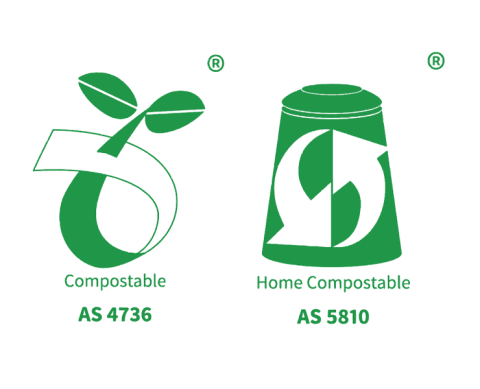
You can use liners purchased elsewhere but they must be green and display the certified compostable symbol and code AS4736 or AS5810.
Multi-unit dwellings include flats, units, townhouses and apartments (up to five storeys). Some multi-unit dwellings share lime-green lid FOGO bins; others have their own lime-green lid FOGO bin.
Food and garden waste is collected weekly, on the same day as your red-lid garbage bin. Check the collection day for your address.
How to get started
If your building does not yet have a FOGO bin
Speak to your building manager or body corporate and ask them to submit a request External link for your building to be assessed. If eligible, a FOGO bin and starter packs (which include a kitchen caddy and a pack of compostable liners) will be delivered to the residents.
When building managers or body corporates are filling out the form:
- at Step 2, select "A request for a new waste service"
- at Step 4, select "Building manager/ caretaker"
- at Step 7, select "Food and garden" and choose either an 80-litre or 120-litre bin.
If your building does have a FOGO bin
If you’re a new resident and don’t yet have a kitchen caddy or compostable liners, please check with your building manager or body corporate in the first instance. They may have existing stocks available for use. If there are none available, caddies and compostable liners are available for collection at the following location:
Use the caddy to collect food scraps. When full, empty the caddy and compostable liner into your food and garden organics bin (don’t tie a knot).
How to replenish your liners
To support the initial roll out of the new FOGO service, City of Melbourne delivered FOGO caddy liner bags to residents for five years. While this assisted with the positive adoption of the service, there have been challenges with rolls of liners going to waste.
It’s not necessary to line your FOGO caddy, but if you’d like to you can line it with a paper bag, newspaper or paper towel.
City of Melbourne residents can also collect a pack of compostable liners at no charge from the service counter at one of the following centres:
- Customer Service Centre at Melbourne Town Hall
- City Library
- East Melbourne
- Kensington Town Hall External link
- Library at the Dock
- North Melbourne
- Southbank Library
- naarm ngarrgu Library
- Kathleen Syme
You will need to bring along something that proves you live in the City of Melbourne, like a drivers licence or utility bill. Collection is limited to a single pack per customer.
You can use liners purchased elsewhere but they must be green and display the certified compostable symbol and code AS4736 or AS5810.
We are rolling out the FOGO service to high-rise residential apartments across Melbourne.
Selected buildings are undertaking a 12-month pilot program to collect and process food scraps using an on-site organic processor. For more information on the pilot, visit Food organics high-rise pilot.
Text on screen 'Food and Garden Recycling Program'
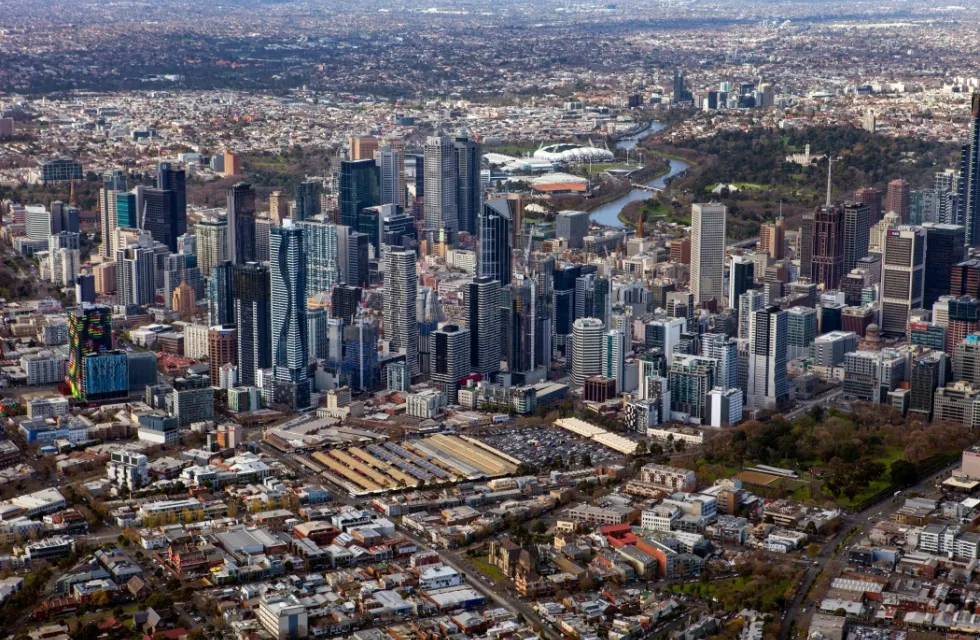
View of Melbourne from the sky with bouncy music in the background.
Woman's voice says "Kids, come inside" - with two kids playing basketball outside.
Mother is cutting vegetables and throwing scraps into a bucket. Text says 'Collect your kitchen scraps'.
Kids take bucket outside to thrown in bin. Text says 'Empty into your food and garden bin'.
Kids then put the green bin on the kerbside.
At collection centre waste is seen being processed and then compost used on a garden.
Text says' We're converting your food and garden organics into compost for our parks and gardens'.
Aerial view of Melbourne with text 'Small acts make a big impact. Food and Garden Organics Service now available.'
Closes with City of Melbourne logo.
What goes in the lime-green bin
Food
- fruit and vegetable scraps (including citrus, onion, garlic, herbs, spices)
- bread, rice and pasta
- leftover food scraps
- spoiled or rotten food
- solid dairy products (butter, cheese)
- meat, fish and bones
- soft shell seafood (prawns, shrimps, crayfish, lobster)
- loose coffee grounds
- loose tea leaves
- eggshells
- jelly.
Garden
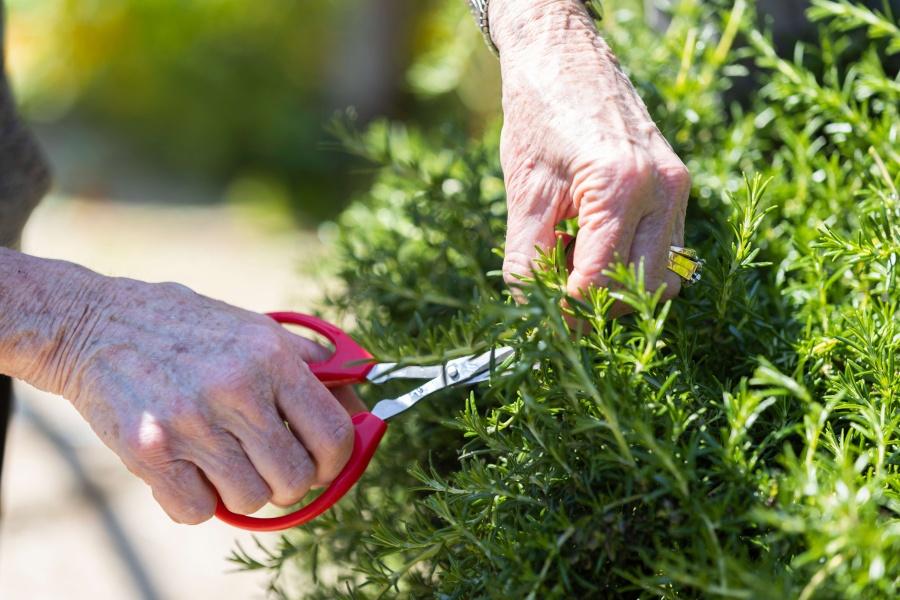
- garden cuttings (twigs, branches - cut to fit neatly in the bin)
- weeds
- grass cuttings and leaves
- cut flowers
- straw and hay.
Tip: Please keep garden waste loose, not bagged.
Other items
- wooden icy pole sticks, wooden chopsticks, toothpicks, skewers (no plastics)
- human and animal hair
- dryer lint.
If your food and garden waste bin contains items that we cannot process, it could result in the entire truckload going to landfill.
Do not put these things into your lime green-lid food and garden waste bin:
- plastic or plastic bags
- biodegradable or compostable bags and packaging (only use council approved caddy liners)
- tea bags
- coffee pods, compostable cups and coffee cups (including biodegradable marked items)
- liquids, including cooking oil
- hard seafood shells (mussels, oyster, pipi shells, large crab)
- recyclables (paper, cardboard, aluminium, steel and glass items)
- soft plastics (cling wrap, chip packets)
- bricks and building rubble
- treated and painted timber, treated lattice, other timber building materials
- rocks and pebbles
- garden hoses
- string, twine, ties, rope, metal wire
- plant pots
- cotton wool, cotton wool buds
- pet poo or pet litter
- vacuum dust
- ash (from home fire)
- cigarette butts
- toys.
To find out how you can recycle or dispose of these and other items, refer to our A-Z guide to recycling and waste disposal.
Frequently asked questions
Your kitchen caddy is used to collect and transfer food scraps to your lime-green lid bin for collection. You can use the caddy with or without a compostable liner bag.
You can use liners purchased elsewhere, but they must be green and display the certified compostable symbol and code AS4736 or AS5810.
This is because not all types of compostable caddy liners are accepted in City of Melbourne’s FOGO bins. Using the wrong type of compostable liner can create contamination and result in the food and garden waste being sent to landfill. Plastic, degradable and biodegradable bags must not be placed into your food scraps bin. These take too long to break down and result in contamination. The use of non-approved liners may result in a non-collection notice.
Remember, only food waste needs to go in your compostable liners. All garden waste can go directly into the bin without the use of a liner or bag.
Important: please don’t tie a knot in your compostable liner bag.
The caddy is made from 100% recycled plastic in Melbourne, Victoria.
Kitchen caddy dimensions are:
- Volume: 7 litres
- Height: 235mm
- Width: 225mm
- Depth: 225mm
We know that 40 to 50 per cent of waste found in our average landfill bins are made up of food and garden waste.
By recycling your food and garden waste in the lime-green bin, you can help reduce greenhouse gases and the amount of waste that goes to landfill.
Your food and garden waste is taken to a purpose-built local composting facility, where it undergoes some very specific processing.
The materials are processed into mulch and nutrient-rich compost that improves soil health, fertility and productivity. It can then be used on Victorian farms and our parks and gardens.
Excellent! Thank you for doing this – please keep up the great work.
The new food and garden waste bin can complement your current composting by taking the meat, bones and dairy products that cannot go into a compost bin. This will help you to divert all your food waste and garden waste material away from landfill.
Businesses in the City of Melbourne are responsible for the implementation and collection of business waste.
We can provide advice and suggestions on waste management practices that can be implemented for businesses. If you would like further information, see Commercial waste and recycling or you can contact us on 03 9658 9658.
Information in other languages
View of Melbourne from the sky with synthesiser music in the background.
Young woman is cooking in the kitchen and putting waste in small bucket.
Man is on balcony tending to plants and throwing garden waste in his bucket.
Women sees him from window and runs downstairs to meet her neighbour where they meet at the communal bin.
Text 'Small acts make a big impact. Food and Garden Organics Service now available.'
Closes with City of Melbourne logo.