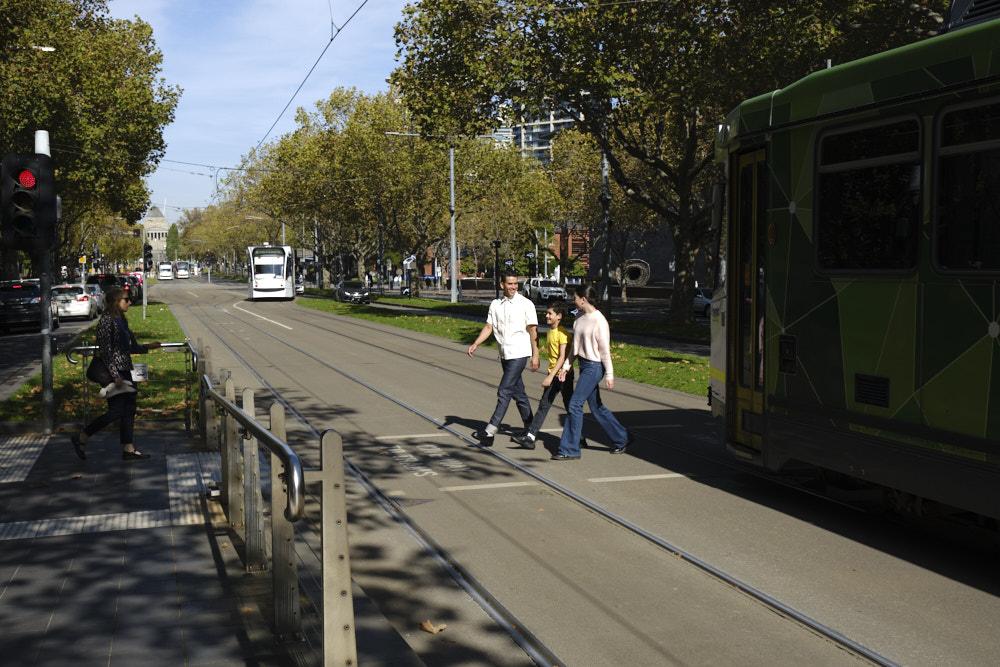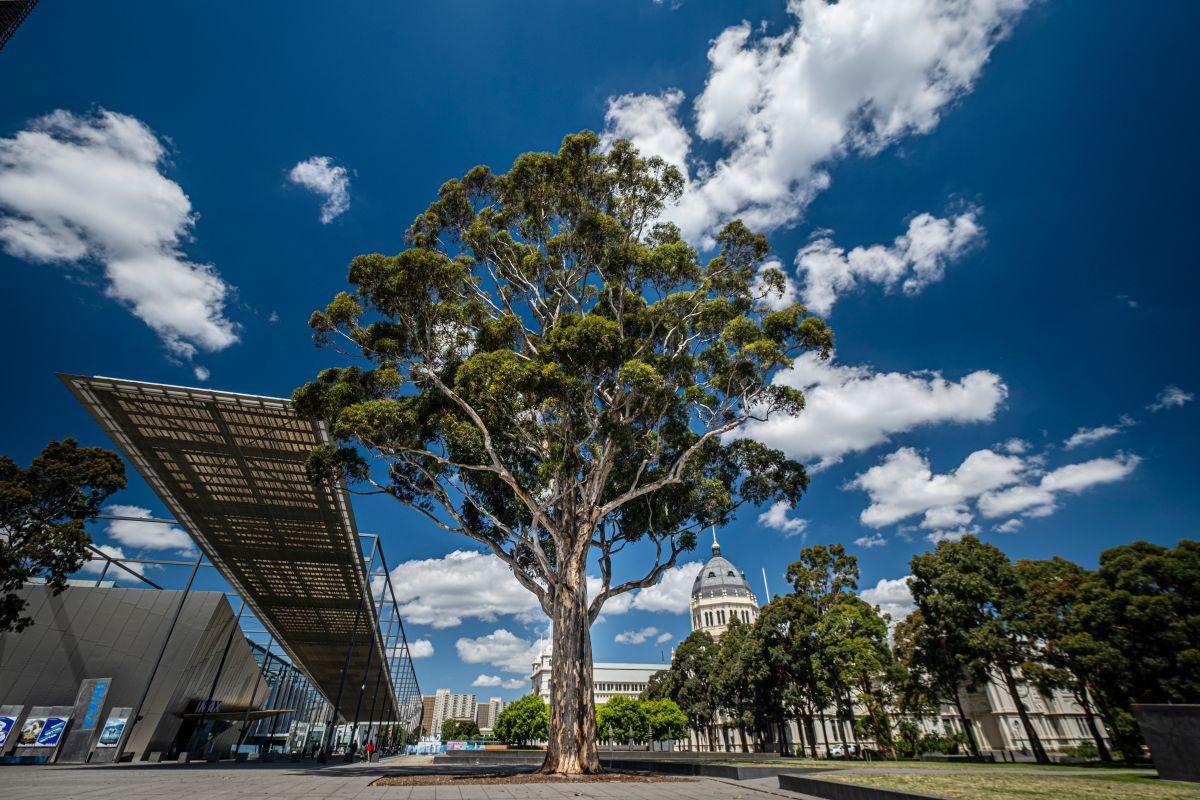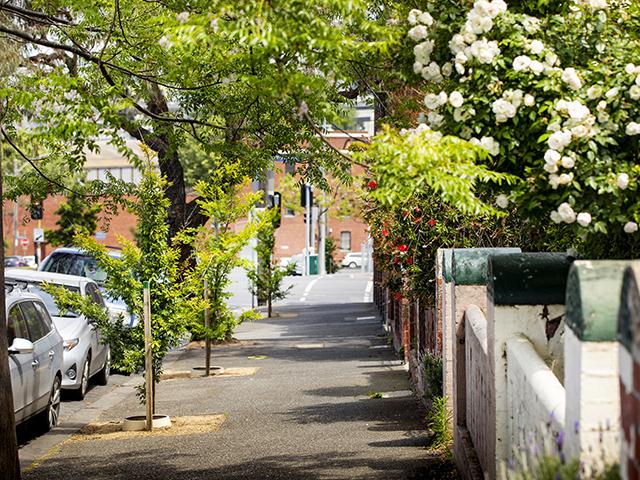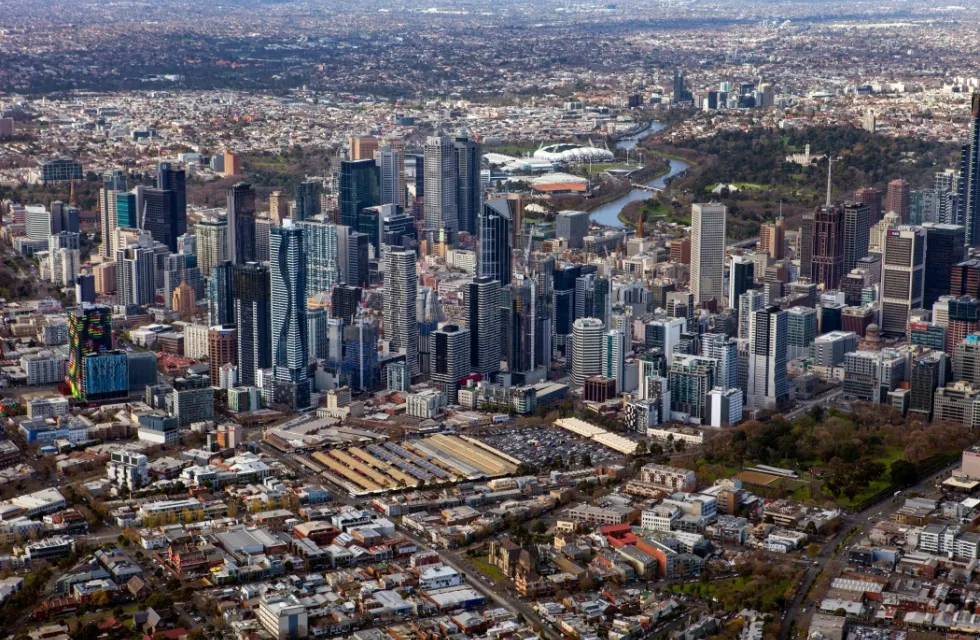
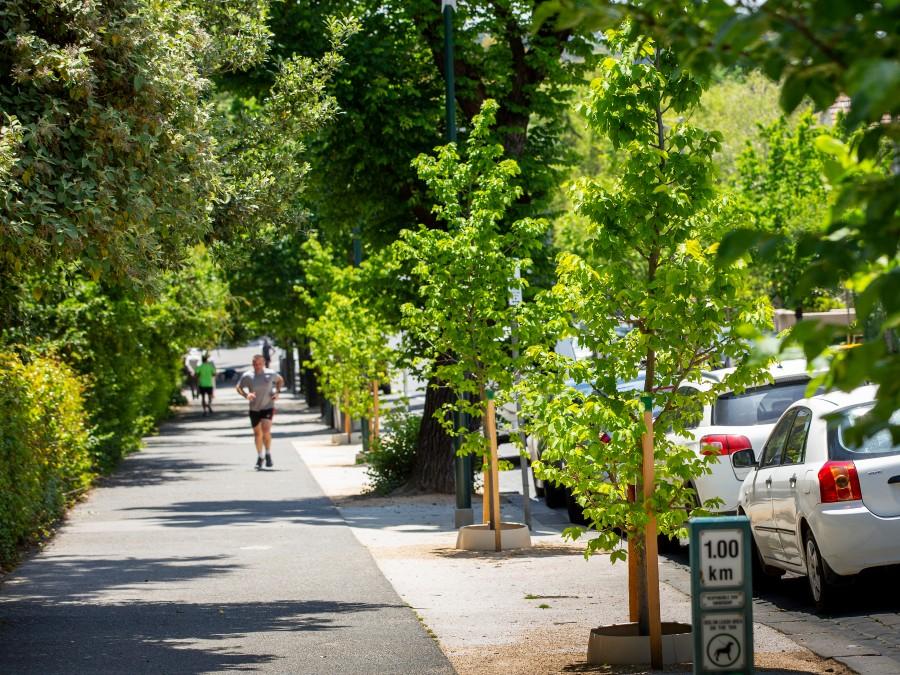
Trees make our city a beautiful place to live and visit and help to remove pollution and keep our city cool.
City of Melbourne’s urban forest includes about 80,000 council trees. These trees are cared for by professional arborists who assess trees for their health, structure, stability, growing environment and clearance requirements from infrastructure such as roads and powerlines. Our tree care team works on tree maintenance daily.
Our tree management is guided by our Tree Policy, Urban Forest Strategy and Nature in the City Strategy.
We do not have authority over trees on private property, except those listed on the Exceptional Tree Register.
Report a tree in need of maintenance
Use the form below to submit requests and report tree issues such as fallen branches, roots causing damage, requests for maintenance and tree planting.
Please review the street tree clearance guidelines before requesting any tree maintenance. If your request is about pruning a public tree to enable construction and development works, please visit Tree protection.
If there is any danger to the public or public space, please call us immediately on 03 9658 9658.
Report a tree in need of maintenance
Tree pruning and street tree clearance guidelines
Our tree care team prunes our trees to:
- comply with Energy Safe Victoria clearance requirements
- comply with VicRoads requirements
- comply with Australian Standard 4373-2007 'Pruning of amenity trees'
- maintain sight lines and clearance for traffic and pedestrians
- provide clearance from buildings.
Our Electrical Line Clearance Management Plan provides details on how we prune trees to prevent any interference to power lines and safety standards.
Clearance specifications
- 4.6 m above roads
- 2.5 m above footpaths
- 0.5 m from buildings.
Pruning works schedule
| Suburbs | Timeframe |
|---|---|
| CBD | January 2026 |
| Docklands | March 2026 |
| Carlton East | May 2026 |
| Parkville Gardens | June 2026 |
| South Yarra | July 2026 |
| Punt Hill, Flemington and South Melbourne | August 2026 |
| Fishermen’s Bend and Footscray | September 2026 |
| Kensington | December 2026 |
Tree planting program
We plant over 3000 trees per year to help us achieve our canopy cover and species diversity targets.
The planting season runs during the cooler months when young trees are more likely to establish well in their new environment, typically from April until September each year. Each new tree is placed on a three-year monitoring and maintenance program to make sure it establishes in the landscape.
When a tree has to be removed and replanting is possible in the same location, we add the plot to our list of future plantings. Sometimes there may be delays in replanting, for instance due to the time of year or availability of tree stock.
You can find out more about tree planting plans that are currently being implemented across City of Melbourne as part of the Urban Forest Precinct Plans.
Tree root damage and infrastructure
Tree roots will grow wherever moisture, aeration, nutrition and soil structure are favourable, often reaching across property boundaries and causing conflicts with the built environment.
Direct damage
Direct damage is the distortion of built structures as the growing tree root exerts pressure. Direct damage by tree roots is usually limited to light built structures such as pavements and low walls and can also be witnessed in buildings of sub-standard footings.
Indirect damage
Indirect damage is the distortion of built structures as the growing tree root takes up soil moisture. Foundation movement is often caused by multiple factors, not just tree root growth alone. This is why claims of indirect tree root damage must be accurately investigated.
Leaking pipes can create a moisture gradient that encourages tree root growth in the direction of the pipe. The property owner is responsible for the maintenance, repair and replacement from the legal point of discharge, usually near the property boundary kerb. The City of Melbourne should always be given the opportunity to inspect the pipes and offending tree roots prior to the property owner undertaking repair works.
Resolving tree root conflicts
City of Melbourne will investigate all claims of tree root damage from public trees by:
- seeking practical solutions to reduce the risk of damage to infrastructure from public trees
- seeking viable arboricultural solutions to rectify the situation and to retain the public tree
- removing the tree if no practical arboricultural solution can be found
- taking every effort to ensure that replacement and future public trees will not result in similar damage to built structures
Claims of property damage from tree roots must comply with our guidelines for submitting a claim.
Polyphagous shot-hole borer (PSHB)
We're urging our community to keep a lookout for the Polyphagous Shot-Hole Borer (PSHB), a tiny beetle, the size of a sesame seed, posing a significant threat to our trees and ecosystems. It has already been found in Western Australia, causing destruction on thousands of trees in Perth.
The PSHB attacks a range of healthy trees in two main ways:
- inserting a fungus into the tree, blocking the flow of water and nutrients, causing it to die slowly.
- digging small tunnels (called galleries) inside tree trunks, which can weaken the tree’s structure.
The PSHB is difficult to spot, but their damage is easily recognisable. If you see any of the following signs on trees, report it immediately to Agriculture Victoria. For more information and how to report the pest, visit Polyphagous shot-hole borer External link at Agriculture Victoria.
Policies and strategies
Tree policy
Trees are an important city infrastructure asset and all options are explored before tree removal is recommended.
Urban Forest Strategy
Playing a critical role in maintaining the health and liveability of Melbourne.
Nature in the City Strategy
Our strategy to create and maintain healthy ecosystems in the city.
Electrical Line Clearance Management Plan
This plan details tree pruning regimes for various low and high voltage electrical infrastructure in the municipality.