- Picnic facilities
- Barbecues
- Seats
- Drinking fountains
- Public toilet
- Bookable spaces for events and weddings
- Playground
Between 1836 and 1837 the hilltop was the site of Melbourne's first colonial burial ground. Then from 1840 to 1857, it became the site of a flagstaff which was part of a signalling system between Melbourne and ships sailing into the port at Williamstown. The site was then also used as a meteorological and magnetic observatory between 1857 and 1862. It was also the place from which news of Victoria's separation from NSW was signalled to Melbourne residents through the lighting of a great bonfire in 1850.
Established as a public garden in 1862, Flagstaff Gardens was designed in the gardenesque style in 1865 by Assistant Commissioner for Crown Lands and Survey, Clement Hodgkinson.
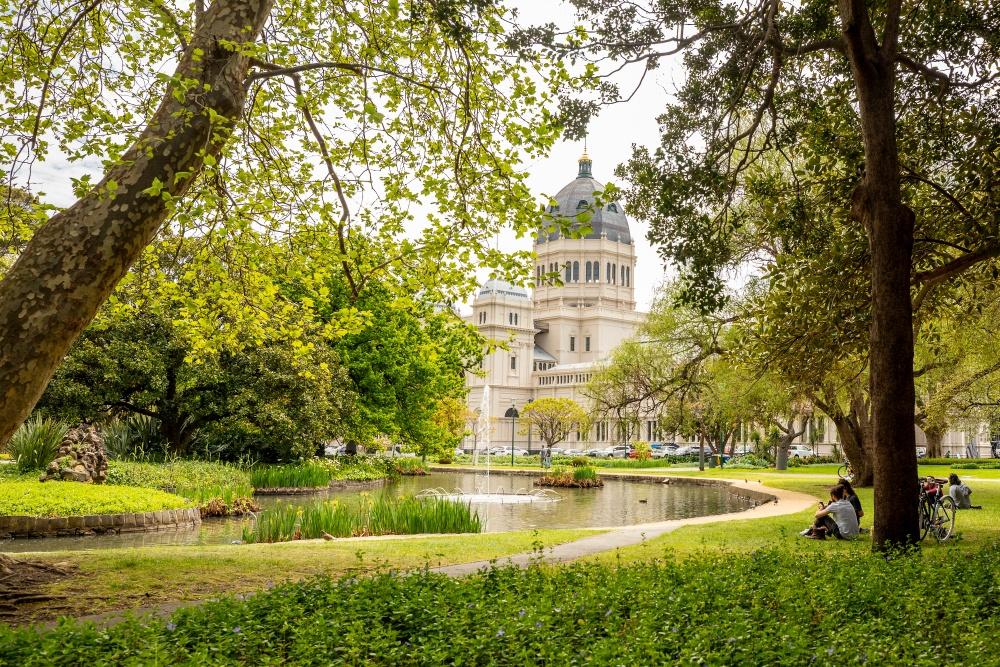
Along with the popular lawns, the gardens feature eucalypts, Moreton Bay figs, avenues of elm trees, shrub beds and a high vantage point.
Things to do
- Stroll around the gardens, walk to the highest point beneath the huge shady trees and enjoy the floral shrub beds. The shrub bed in the centre of the gardens has a scented theme.
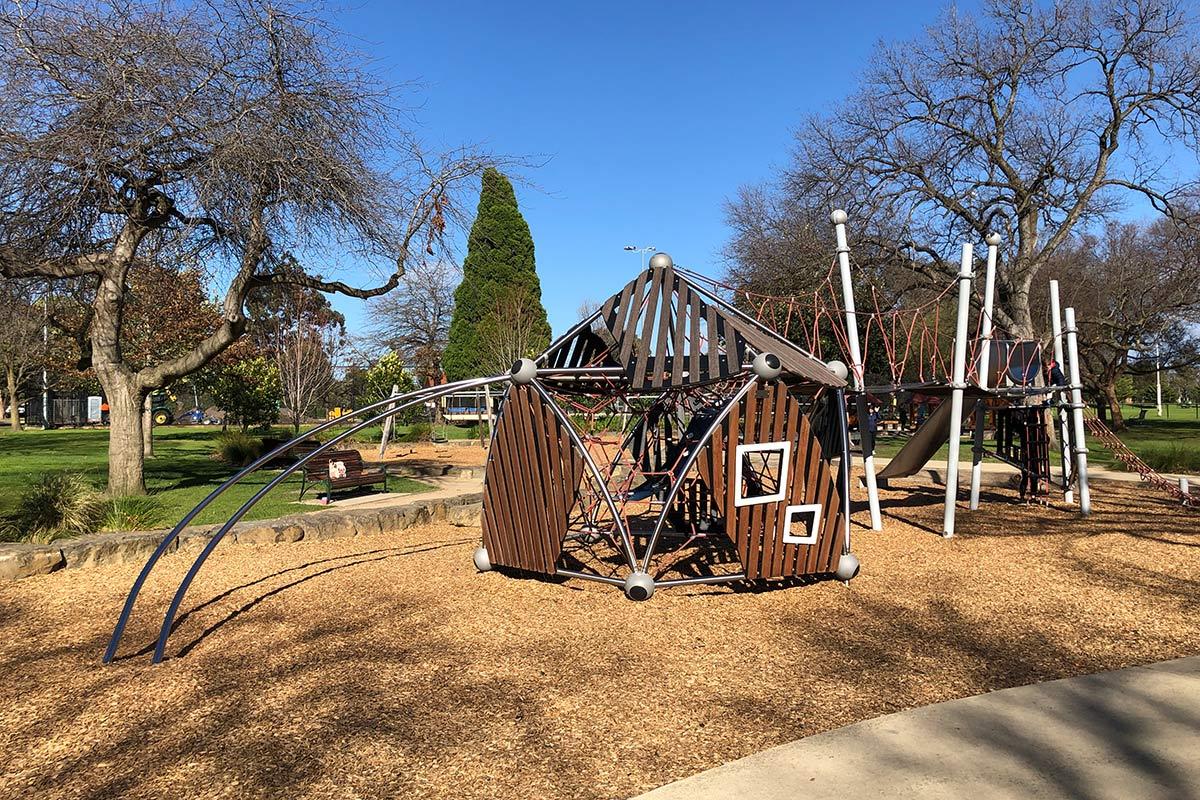
- The playground features a five-way swing and a rope climbing dome. Adjacent to the playground are barbecues, picnic facilities and a public toilet.
- Play tennis, volleyball or netball on the multi-use courts.
- Play bowls or attend an event at the lawn bowls club External link.
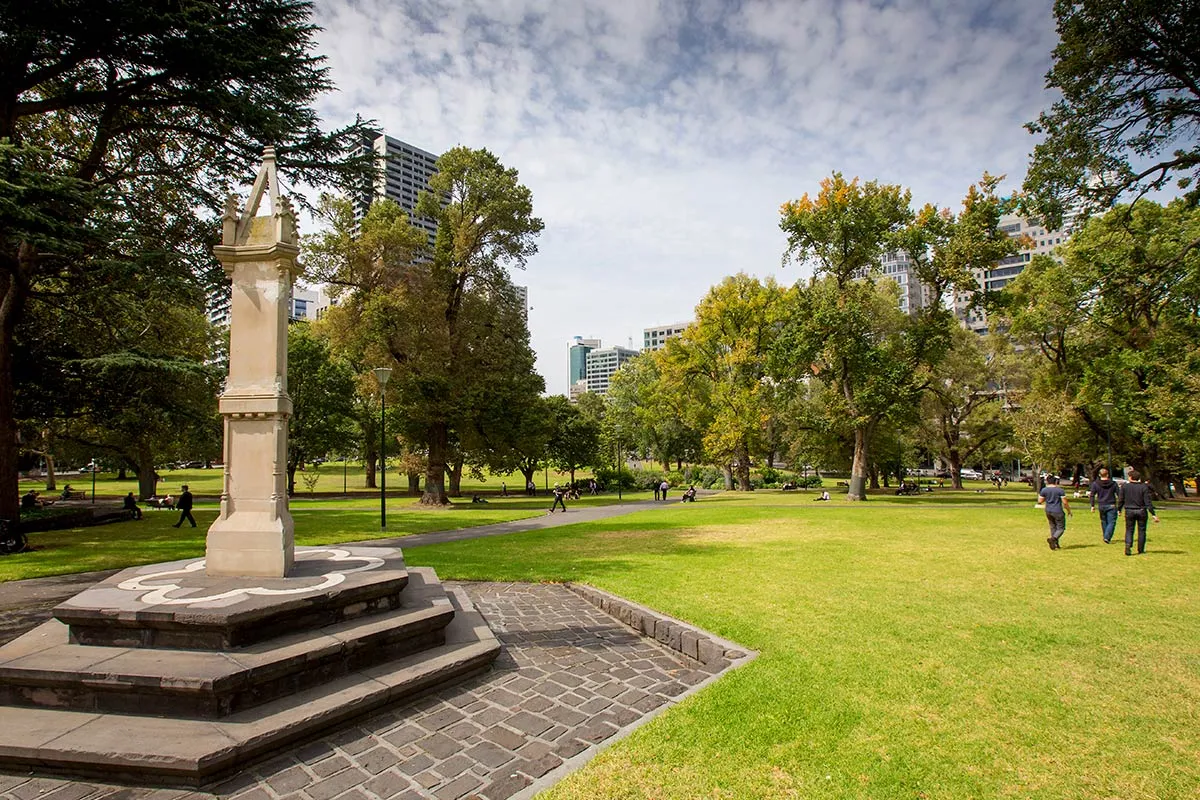
The sandstone Pioneer Monument by Samuel Craven was erected in 1871
1
of
8
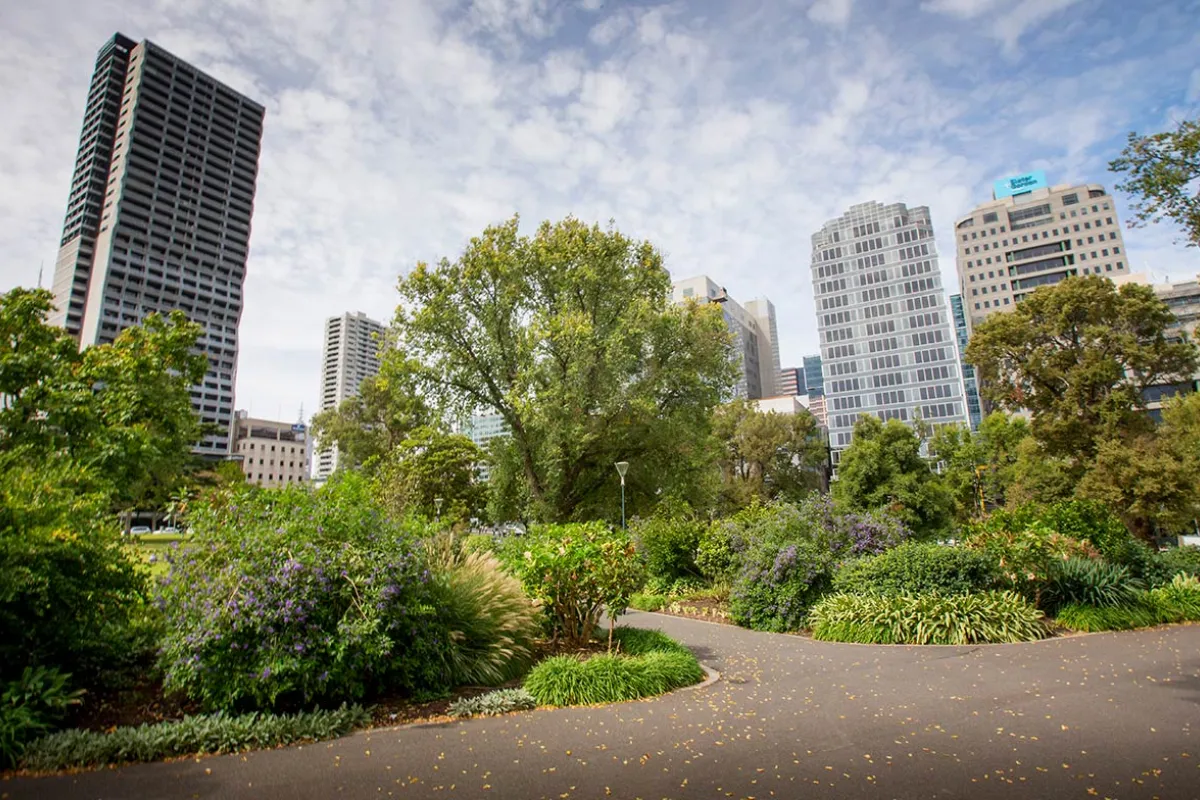
The shrub beds in the centre of Flagstaff Gardens are known for their scented flowers
2
of
8
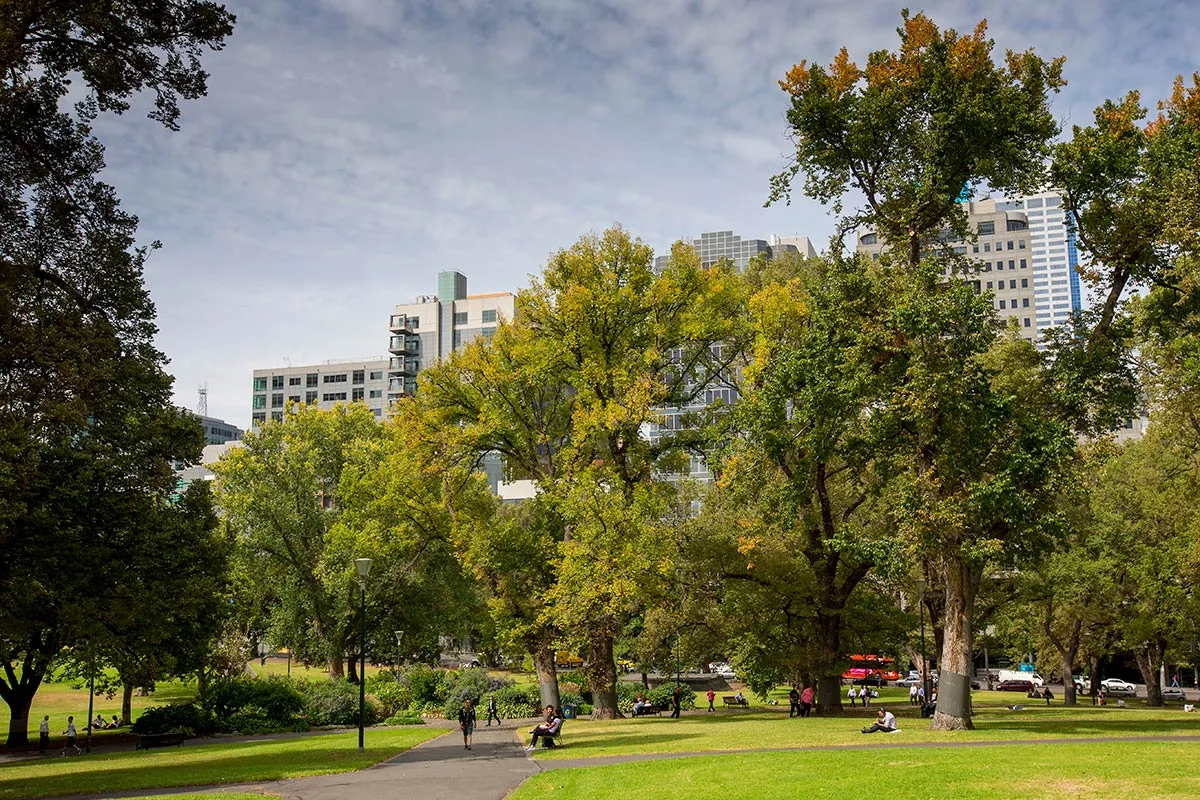
Large elm trees dominate the landscape of Flagstaff Gardens
3
of
8
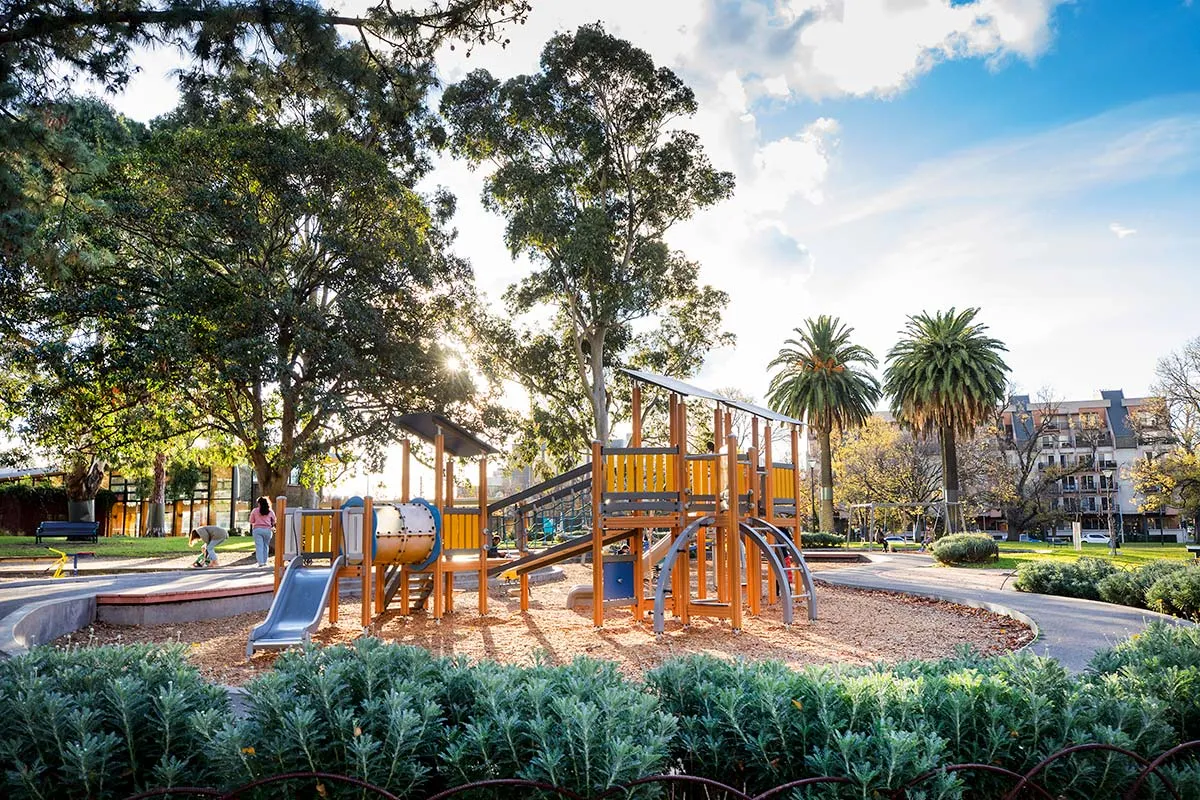
The children’s playground is in the north-east of Flagstaff Gardens near the netball courts
4
of
8
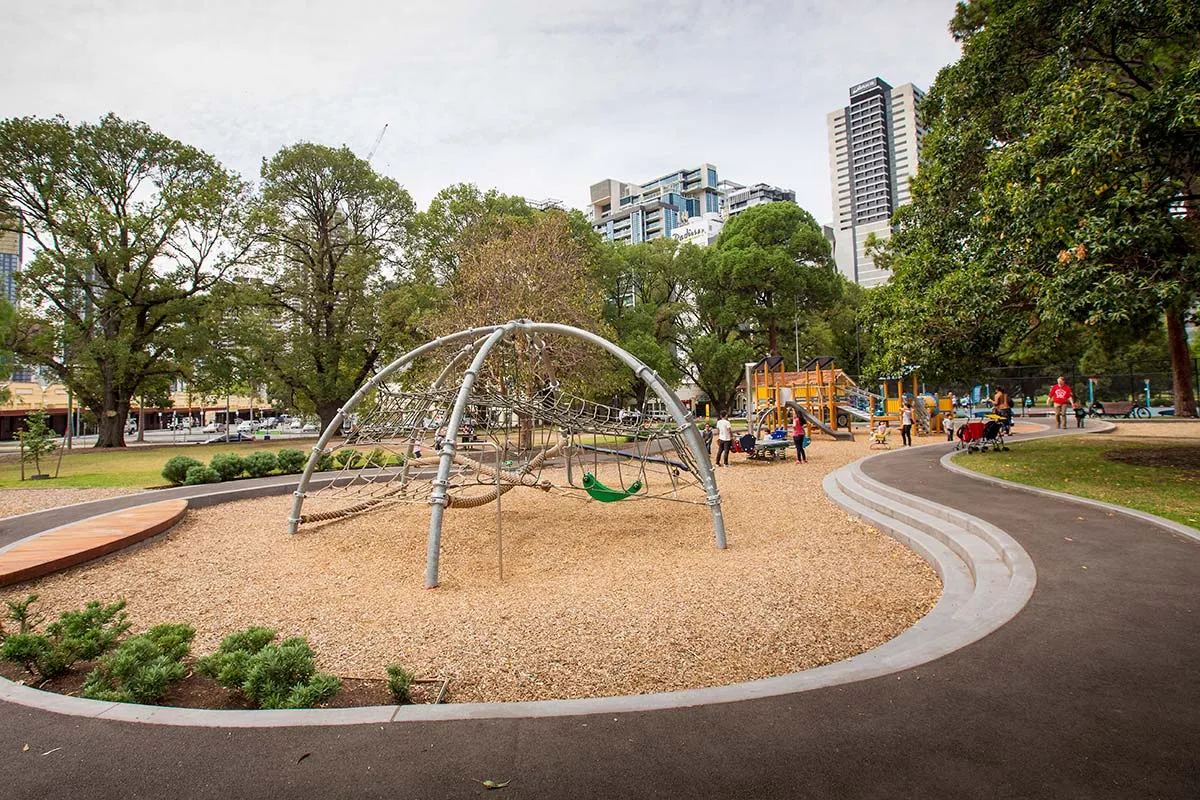
The playground features a rope climbing dome
5
of
8
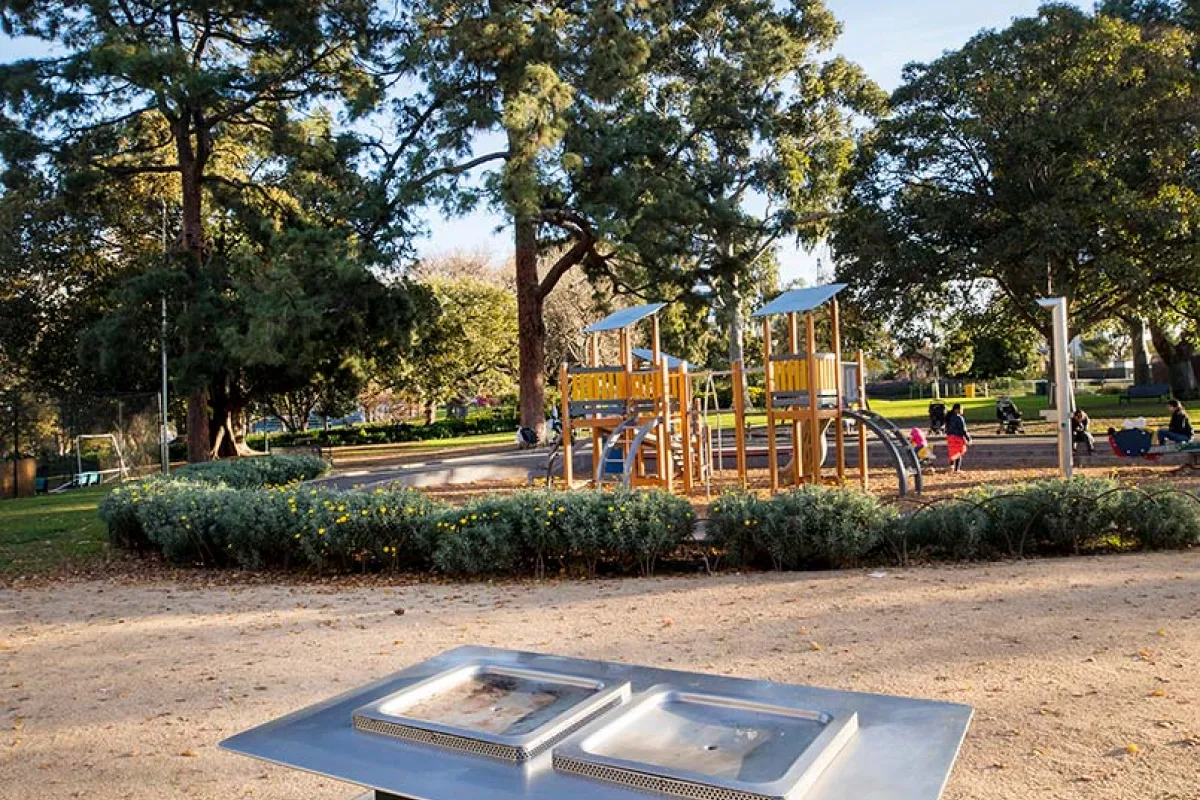
Barbecues and picnic tables are adjacent to the playground
6
of
8

Large trees and open grassed areas feature in Flagstaff Gardens
7
of
8

An avenue of very old elm trees
8
of
8
1
of
8
The sandstone Pioneer Monument by Samuel Craven was erected in 1871
2
of
8
The shrub beds in the centre of Flagstaff Gardens are known for their scented flowers
3
of
8
Large elm trees dominate the landscape of Flagstaff Gardens
4
of
8
The children’s playground is in the north-east of Flagstaff Gardens near the netball courts
5
of
8
The playground features a rope climbing dome
6
of
8
Barbecues and picnic tables are adjacent to the playground
7
of
8
Large trees and open grassed areas feature in Flagstaff Gardens
8
of
8
An avenue of very old elm trees
Playground
The playground is in the north-east corner of Flagstaff Gardens near the netball courts. Children can monkey around on climbing bars, dig in the sandpit, or do the twist on the spiral slide. Other features include swings, rope dome and rockers.
For more information, visit Playgrounds.
Designations, policies and plans
- Flagstaff Gardens is classified as a Regional Open Space in City of Melbourne's Open Space Strategy.
- Flagstaff Gardens is recognised as being of State Significance and is listed on the Victorian Heritage Register (H2041) External link.
- Flagstaff Gardens Master Plan (2000) (PDF 1.2 MB)
How to get there
Catch any City Loop train service to Flagstaff Station, or tram routes 30 or 35 (City Circle) along La Trobe Street, or tram 58 along William Street.
See PTV Journey Planner External link for public transport information.
Flagstaff Gardens