- Seats
- Drinking fountains
- Public toilets
- Playground
- Bookable spaces for events and weddings
Originally set aside as a reserve in 1848, the gardens were named after Sir Charles Augustus Fitzroy, Governor of NSW. The gardens were laid out in 1859 and were developed as a garden under the supervision of Deputy Surveyor-General Clement Hodgkinson, with the assistance of gardener James Sinclair.
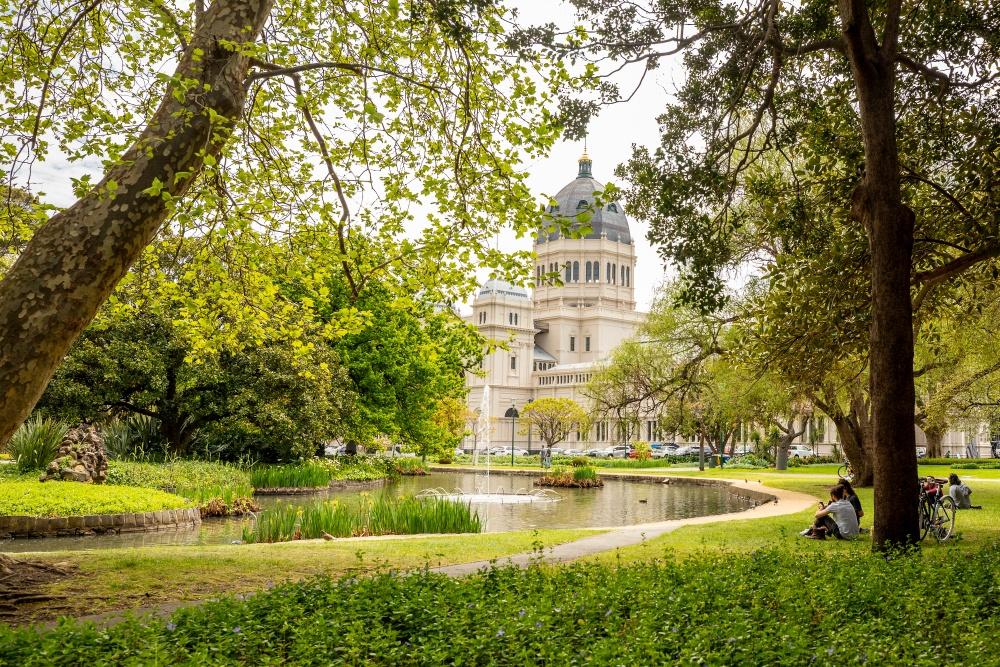
The layout follows a classic Victorian era design, featuring pathways lined with magnificent elm trees, known to be some of the best grown in Victoria. There are a variety of flowers and ornamental shrubs and trees, which together with extensive lawns creates a diverse and layered landscape.
The watercourse that runs through the centre of the gardens is an ephemeral tributary of the Yarra River, Birrarung. The Scarred Tree in the south-east section of the gardens is associated with the pre-colonial use of the area by Aboriginal peoples and it is registered on the Aboriginal Heritage Register. The tree was a redgum, one of a number of remnant redgum found in the gardens.
The gardens contain several buildings and structures which are of architectural significance in their own right, including the Band Pavilion External link (1864), Sinclair's Cottage (1866) and the Rotunda (1873).
Significant twentieth century buildings include the plant manager’s cottage The Lodge (1927), the recently refurbished Spanish mission-style Conservatory External link (1930) and the Electricity Substation (1940).
The Fitzroy Gardens Visitor Centre External link opened in 2014 and provides tourism information and manages entry to Cooks' Cottage External link.
Things to do
- In autumn take a leisurely stroll around the gardens to enjoy the fiery colours of the season. During August it’s the bulb displays beside the main north-south footpath that will delight. The seasonal floral displays alongside Hotham Walk are also worth a visit, and the rotating floral displays in the Conservatory External link are a highlight at any time of the year.
- Enjoy a coffee and cake at the cafe External link.
- Take a 90 minute self-guided walking tour External link. Printed guides are available in our visitor centres External link at Melbourne Town Hall, Bourke Street and Fitzroy Gardens.
- Other attractions include Cooks’ Cottage External link, the Model Tudor Village External link (a gift from the UK), and Olga Cohn’s magical Fairies’ Tree External link. Throughout the gardens there are sculptures and water features. Call in to the Fitzroy Gardens Visitor Centre External link for information.

Beautiful tree-lined footpaths in Fitzroy Gardens
1
of
5
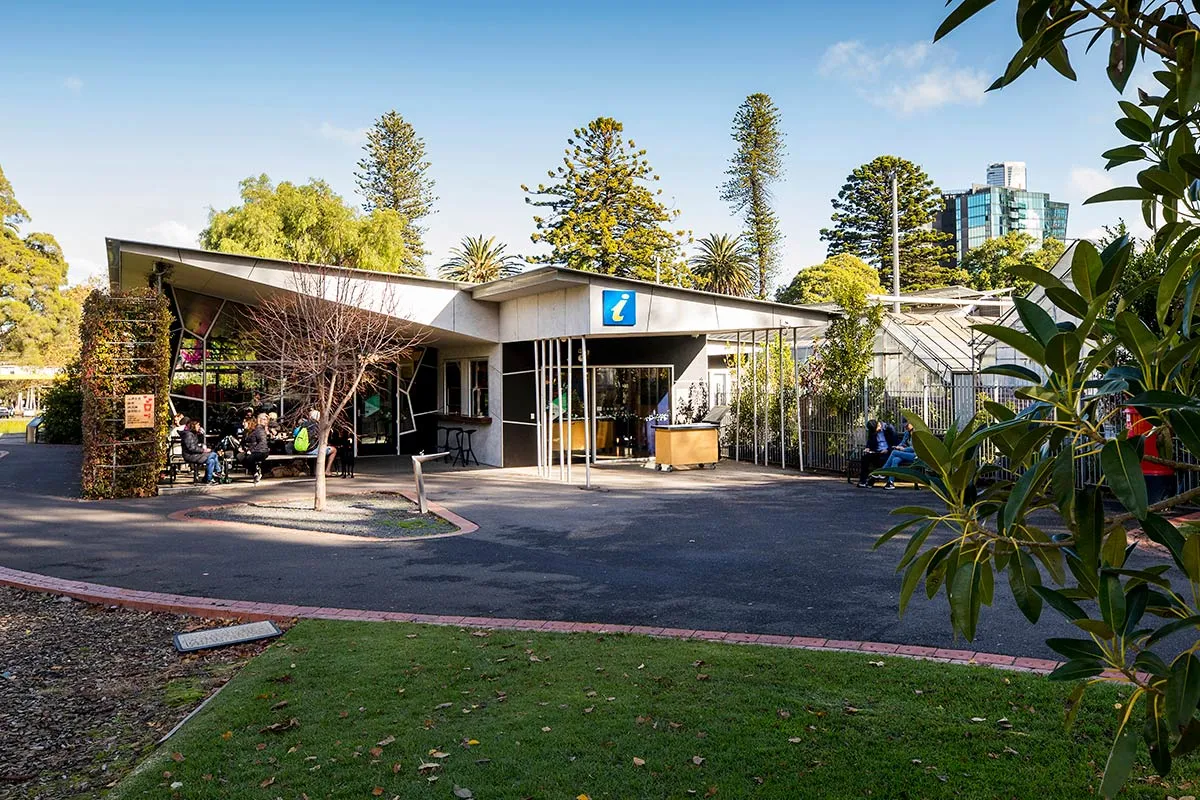
The Visitor’s Centre and adjacent café are opposite Cooks' Cottage
2
of
5
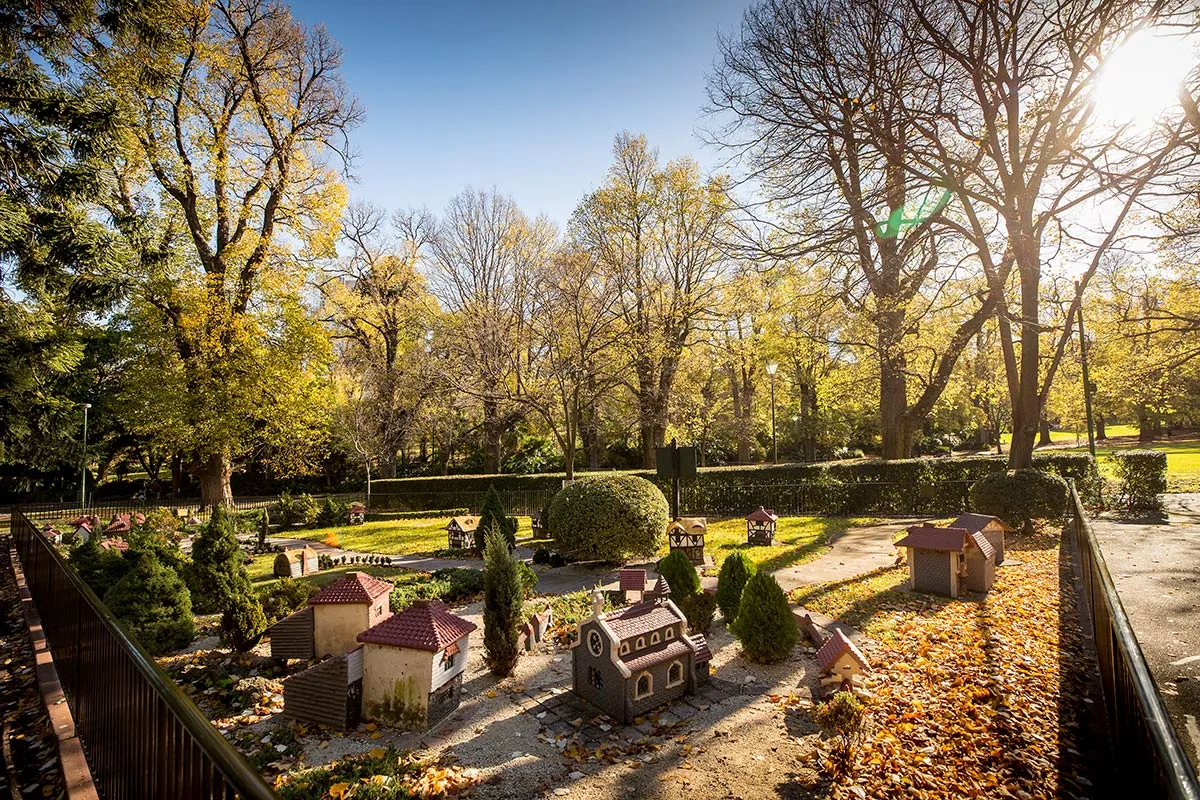
The quaint little cottages of the Model Tudor Village were donated by the UK in 1948
3
of
5
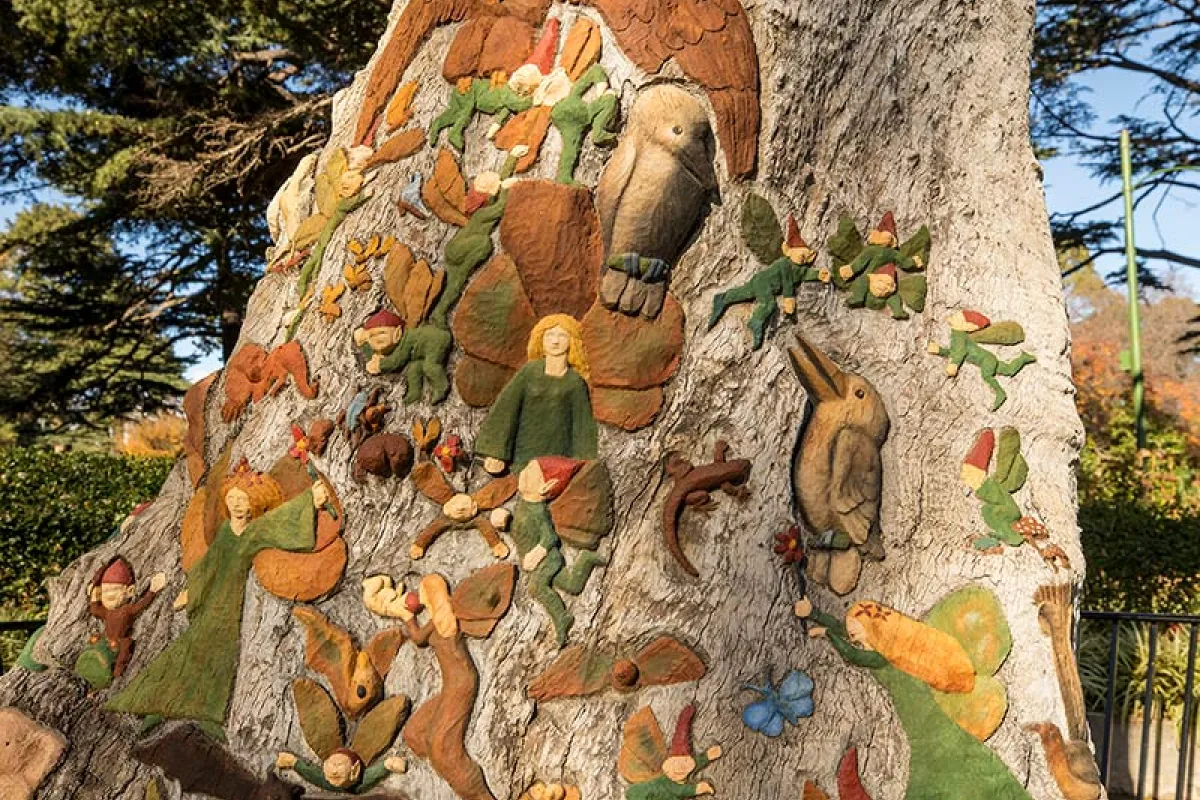
The Fairies Tree was the work of Ola Cohn and was gifted to the city’s children in 1934
4
of
5
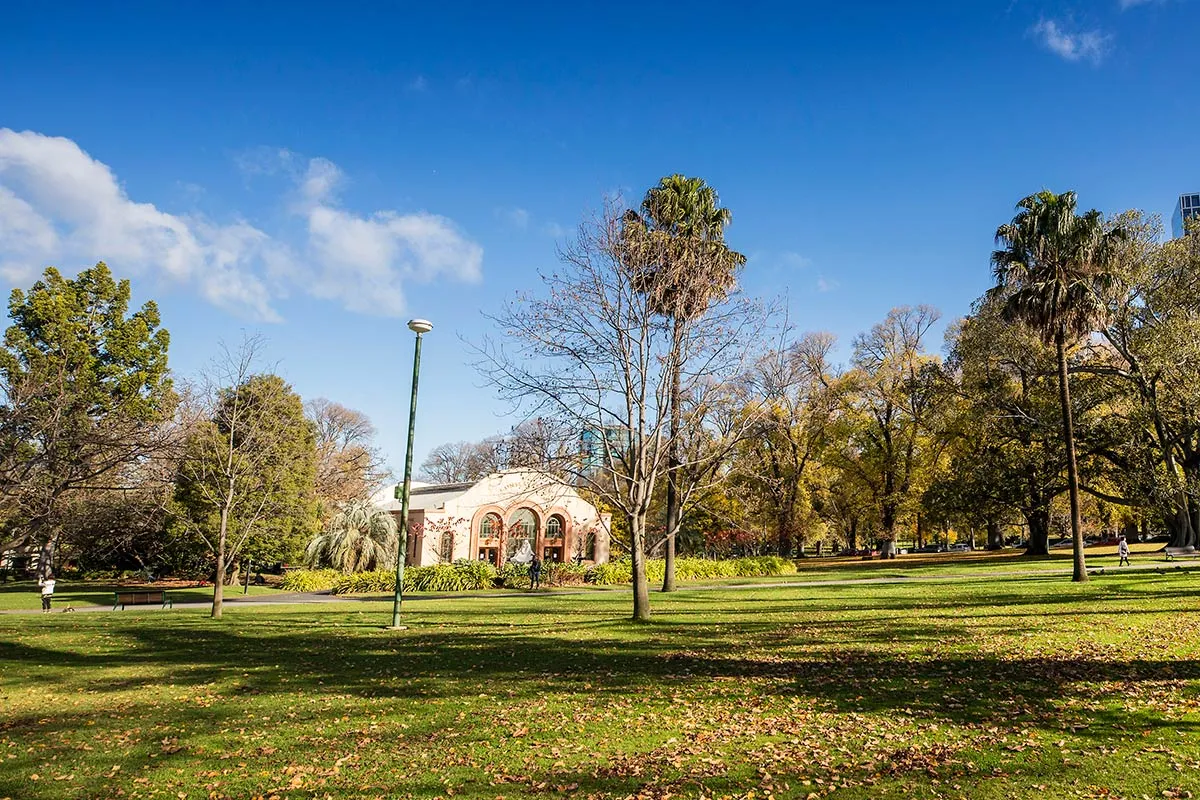
The classic Spanish mission-style Conservatory, opened in 1930, houses five floral displays a year
5
of
5
1
of
5
Beautiful tree-lined footpaths in Fitzroy Gardens
2
of
5
The Visitor’s Centre and adjacent café are opposite Cooks' Cottage
3
of
5
The quaint little cottages of the Model Tudor Village were donated by the UK in 1948
4
of
5
The Fairies Tree was the work of Ola Cohn and was gifted to the city’s children in 1934
5
of
5
The classic Spanish mission-style Conservatory, opened in 1930, houses five floral displays a year
Playground
Let their imagination run wild at this creature-filled playground located near Clarendon Street. Slide down the dragon’s tail, swing on the giraffe’s ears and see the dragon glowing in the dark.
For more information, visit Playgrounds.
Designations, policies and plans
- Fitzroy Gardens is classified as a Capital City Open Space in City of Melbourne's Open Space Strategy.
- Fitzroy Gardens is recognised as being of State Significance and is listed on the Victorian Heritage Register External link (H1834).
- Fitzroy Gardens Master Plan 2010 (compilation report February 2018) (PDF 3.9 MB).
- The gardens' infrastructure includes a stormwater harvesting system which captures and reuses stormwater for irrigation in the park.
How to get there
Walk from Flinders Street Station or Federation Square along Flinders Street, or catch a 48 or 75 tram east along Flinders Street.
See PTV Journey Planner External link for public transport information.
Fitzroy Gardens