

Get to know the oldest continuing culture on Earth and check out events that promote truth-telling, healing and change.
Being an ally means taking the time to listen, learn and unlearn. That means understanding how our presence, power and privilege all have an impact on the people and communities we stand alongside.
Being an ally is about showing solidarity all year round and calling out racism in all settings, whether you're at a barbeque, in the office or online.
Here are a few ways to deepen your understanding of Aboriginal Melbourne and become a genuine ally.
First Peoples, first culture
Victoria has a strong and proud Aboriginal history, featuring complex ownership and land stewardship systems that stretch back thousands of years.
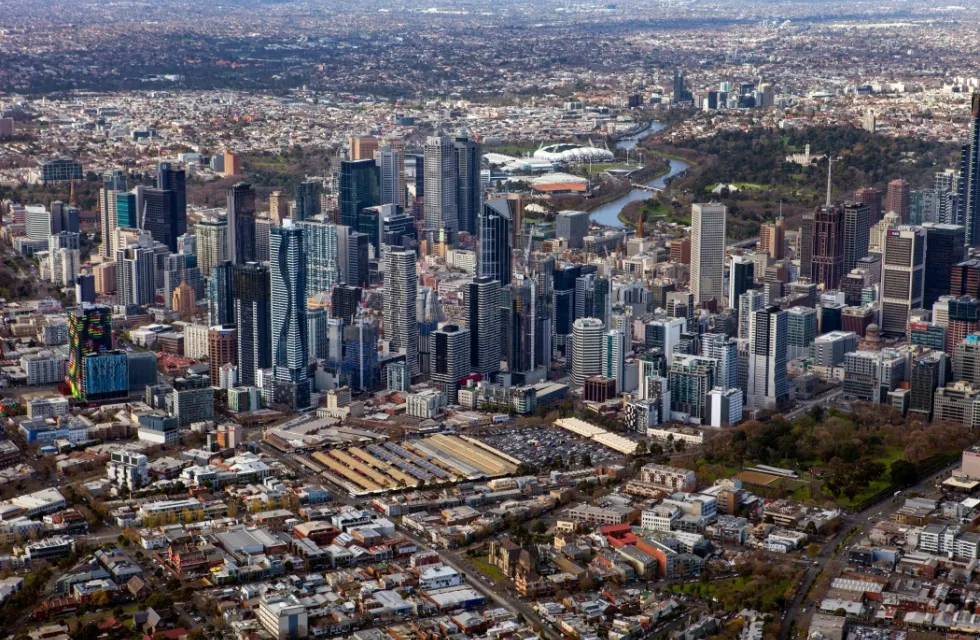
The Traditional Owners of the land governed by the City of Melbourne are the Wurundjeri Woi-wurrung External link and Bunurong / Boon Wurrung External link peoples of the Kulin.
Discover more about our city’s unique and continuing Aboriginal culture, learn about our Traditional Owners and see the landscape with fresh eyes with Mapping Aboriginal Melbourne.
Showing respect for Traditional Owners
Include a thoughtful Acknowledgement of Country at the start of every meeting or gathering, and invite Traditional Owners to perform a Welcome to Country at your next event. These are two important ways to show respect for Traditional Owners and Aboriginal cultural protocols.
Acknowledgement of Traditional Owners
Any person of any descent can acknowledge and pay respect to the Traditional Owners of the land at the beginning of a meeting, speech or event.
Find out whose land you are on and get advice for crafting your own Acknowledgement of Traditional Owners with this interactive map External link developed by Aboriginal Victoria.
Welcome to Country
A Welcome to Country is a traditional ceremony conducted before a formal event or meeting.
Aboriginal Traditional Owners welcome people to their Country in a Welcome to Country, which can take many forms including singing, dancing, smoking ceremonies, or a speech.
This protocol is an important mark of respect for Aboriginal peoples as Australia’s original inhabitants. It recognises the continuing connection of Traditional Owners to their Country.
To arrange a Welcome to Country, contact the Wurundjeri Woi-wurrung Cultural Heritage Aboriginal Corporation External link or Bunurong Land Council Aboriginal Corporation External link, depending on where the event is being held.
Show up in times of celebration and reflection
Make time for these culturally important events that celebrate or recognise Aboriginal and Torres Strait Islander peoples and culture.
Share the Spirit Festival
Every year on 26 January
Celebrate all things culture and connection at Share the Spirit, Victoria’s longest-running First Peoples festival, presented by Songlines Aboriginal Music.
Come together to enjoy live music, performances, delicious food, and fun activities for all at Treasury Gardens from 11.30am to 6pm.
City of Melbourne supports the Share the Spirit Festival External link. Deepen your understanding of Aboriginal sentiments about this date with resources like cultureislife.org External link and the SBS documentary The Australian Wars External link. And read our position on 26 January.
National Sorry Day
Monday 26 May
On National Sorry Day, we pause to acknowledge the strength of the Stolen Generations and reflect how we can all share the healing process.
National Sorry Day commemorates survivors and marks the anniversary of the Bringing Them Home report, which was tabled in the Australian Parliament in 1997. The report was a landmark in the truth-telling process.
Melbourne Town Hall was lit up in purple to acknowledge National Sorry Day.
You can also find out about the Stolen Generations Marker we are creating.
National Reconciliation Week
Every year from 27 May to 3 June
National Reconciliation Week is a time for all Australians to learn about our shared histories, cultures, and achievements, and to explore how each of us can contribute to reconciliation.
The dates are the same each year, commemorating two significant milestones in the reconciliation journey: the successful 1967 referendum and the High Court Mabo decision.
[Jodie Sizer] (0:14 - 28:01)
Oh my gosh, here we go. Maybe a little bit. Yes, thank you, Mayor. That's a good adjustment of height. Thank you, Jase. God, what a beautiful introduction and warm room of incredible people that I've had the good fortune of working with, being part of my family, some who had a tremendous influence on my professional career, and I look at Terry and Andrew who have been there through I think every chapter since back in AIATSIS days. Remember I got the most votes ever? Remember that? And many colleagues I've worked with, it just brought back such beautiful warmth of great work we've done over time. So thank you everyone for coming. Though I should formally kick off, and thank you Annette. Gosh, I didn't expect that.
We've had some time together and had some conversations, eh? And I felt that we've always had a connection. And I thank you, and I too acknowledge the Wurundjeri people as our First Peoples, as Traditional Owners, as Rights Holders. And I thank you for your knowledge and your wisdom that guides us on our journey. I thank your Elders in particular. And I recognise that you've been here and all of our people have been here for more than 60,000 years. As we said, the Mayor, that's thousands and thousands of generations. And that fact is something that will never ever change. So thank you for your warm welcome Annette. I acknowledge too the broader Kulin Nations and our neighbouring Bunurong and Kulin Nations there. And I understand that there is some contest there and that's a reflection of our history. And I thank you for your leadership Annette and the Council.
So, what an incredible opportunity. I should move my thanks to thank you to the City of Melbourne, City of narrm. Thank you for this opportunity to deliver an oration. I've never done an oration before. I've done President’s functions, a whole lot of community yarns, AGMs, we've had chairs flying, a whole lot of that. I don't know what to expect today. But I am really up for questions. So I'm going to frame the conversation today in that way. And to recognise that this week is Reconciliation Week for 2025 and that does bring a whole lot of mixed experience and feeling for all of us. So I acknowledge that.
I too just want to briefly continue those acknowledgements and acknowledge you Jase, one of the OGs from our peak days, but of course our friendship goes back longer than that. And you truly are a work colleague that I admire. A Gunnai man, strong leader, willing to take on the hard stuff and the absolute intellect to get through, take it all and lead. So I've always admired you for that. So thank you for the invitation. Thank you for your warm introduction. Let's thank City of Melbourne for their leadership to bring this event through Reconciliation Week. So thank you. I'd also like to thank I think we've got a couple of councillors here and CEO Alison Leighton.
My theme for today's speech, our oration is titled We are the First Peoples. We are the First Peoples. I see that some people might be nodding and looking at me saying, yeah, I know. I know. I am. Let's discuss. For the introduction and to understand the context of this oration, I generally start with a little bit about me. This will assist you to understand my key messages, the Jodie Sizer perspective and it also helps me recognise Uncle Jim Berg's philosophy is we don't know where you're going unless you know where you've been.
And with our Reconciliation Week theme ‘Bridging Now to Next’. Before I go into the next, I'd like to reflect on what has got me to these points. And as yesterday I was mucking around with what could be a PowerPoint presentation, I realised in my storytelling that what was missing was really whilst the moments and the stories I'm about to tell have had an incredible influence on my decision making and path, it's really been the people. It's the people that shape who we are.
It's the people that have shaped my decision-making and informed my strength, and at times when I've needed - carried me through what has been some challenging times. So this is just a reflection from my side reel and I mentioned to Uncle Andrew and Terry and even Damian that I haven't got pictures of everyone so this is a marker that we need more photos. But you'll see a reflection of the people that have had an influence to shape these stories. So let's get into it.
As per our introduction, yes, I have been fortunate to have a number of accolades and success, and I'd like to think some real impact. Most importantly, I'm the mother of three fierce young tween teenagers. The greatest learning opportunity, challenge and source of pride all in one. I'm a Gunditjmara / Djab Wurrung woman from South West Victoria. I'm the daughter of Lyn Coulson, one of 13 herself and mother of five, and the daughter of Robert Wordie, Austin Lone From a professional perspective.
I started my career in accounting primarily because numbers always made sense. Understanding economics, what made the world work, led me to trying to understand and influence wealth inequality. I soon started to ask myself why is it that almost half the world's wealth is held by almost 1% of the population? Why are all the levers of power and control designed to support and protect this? Aha! So it's not a coincidence that across the globe we've seen simultaneous and consistent increases in the level of extreme wealth and extreme poverty for many, many decades. And whilst we see 824 million people go to bed hungry, we see our food and our utility companies continue to increase their profits in extraordinary volumes. This cannot be good enough. Is it truly okay that it's money and greed that makes the world go round? Is that actually the case? Is it love? Maybe it should be, maybe it's a bit of both. Nevertheless, my motivations from here were clear We, as First Peoples, deserve something better. Something better for our children. Something better for our elders' legacies. For the betterment of the nation, we must define our rightful place. And we are the First Peoples.
Initially for me personally that involved a better education. I was highly motivated to do further study and that's what I did. I did go the long way round via uni, TAFE, back to higher education which did firm up for me a love for numbers and I headed into accounting and specifically auditing where the numbers and the process come together. And for me that's where the magic happens. Not for everyone, I appreciate that. Through my study pathways I was also fortunate to be awarded an AIATSIS traineeship at the Ballarat Aboriginal Co-op.
My time at the Co-op had an incredible impact on me. It is through this time that I was also given the opportunity to represent our people at the United Nations. This learning led me to a better understanding of the past, building a greater knowledge base of past policies, past injustices and the deliberate decisions of government and opportunistic private enterprises and families taking land and opportunities for their own wealth creation at our expense. Leading us into intergenerational poverty and the resulting symptoms of great social injustice. So for me the social justice fire in the belly was ignited.
A further important lesson in this chapter was the role of community-controlled sector best practice, self-determining holistic health care and community practice where we see leadership at its best. But back to working hard on the big future. I finished my study with great results allowing me to secure a role at Big Four firm, Ernst and Young as an accountant. That was bloody hard can I tell you, five interviews or something like that. But once I got there, moving to the big smoke, I needed to do more within the community. I'd come from working at the co-op, I joined the NAIDOC committee as we all do and a series of other boards. Before I knew it I signed up every week. And in that work, I knew I learnt more and I knew my rightful, I knew my number one goal was to restore our rightful place in this nation. After all we are the First Peoples. We have inherent rights. These rights are captured in what we all know as the United Nations Declaration of Rights of Indigenous People.
We know it as UNDRIP or the Declaration. So we're going to get a bit into the business now. You might have had enough of the slideshow so whoever's in charge they can turn that reel off as we get a little bit more serious. Let's talk about UNDRIP. The most comprehensive international human rights instrument. In its own words the Declaration sets out minimum standards necessary for the dignity, survival and wellbeing of Indigenous peoples. With over two decades of drafting and debate, in 2007 the Declaration was adopted by the majority of 144 nations. Four voted against it and you know it. It was Canada, the USA, Australia and New Zealand.
Fortunately, we later adopted it in 2009. Further to this, the Declaration should be adopted and applied in all decisions for the future of First Nations people. The Declaration codifies Indigenous historic grievances, contemporary challenges and socio-economic, political and cultural aspirations as in the culmination of generations-long efforts by Indigenous organisations to obtain international attention and secure recognition for our aspirations and to generate support for our political agendas.
Many of us know this. These rights are of political, economic, social, cultural, spiritual and economic nature and they include the right to self-determination. So if this international instrument has been so well informed, globally supported, adopted here in Australia, how are these rights being applied and recognised? How is this guiding our rightful place? Let's take some test cases and see how they're tackling. Bear with me because I know that some of you will be familiar with this. I'm not going to go through all 46 articles of this Declaration but let's just run through a few and see how we're doing.
Article number 2. Indigenous peoples and individuals are free and equal to all other peoples and individuals and have the right to be free from any kind of discrimination. How's that going? Recent surveys. 70% of those who completed one, 70% of those kids in school who completed this particular survey experienced racism. 70%. A separate survey in the sporting field - at least 50% of people, Aboriginal and Torres Strait Islander people, experienced racism on the sporting field. A particular workplace, at least 25% of people experienced racism in the workplace. Racism is rife. It's debilitating. It's unlawful. But it's rarely held to account. Just ask Adam Goodes. Whilst we have individual acts of racism that require both education and consequence, systemic racism is a greater challenge through our workplaces, schools, institutions, including government.
I just come from a conversation with a parent teacher at the schools yesterday at my daughter's Catholic school. We were up to our fourth Indigenous liaison person and she unequivocally says the hardest part is educating the teachers. How can they not know and lead curriculum and learning for our young people? You would have seen in that slide show I was talking about family and people who have influenced me but I did sneak in a cheeky Collingwood couple of photos because it plays such a big part in our life. As a case study, not the be all and end all but as an example, in my time on the Collingwood board we decided to take this on. Not perfectly and we are far from done. This is very hard work and it's probably never done.
But through the voices of individuals who had experienced racism calling out for challenges of systemic racism we engaged in the Do Better report work over a six-month period and Professor Larissa Behrendt led a team where she was able to engage and listen to the voices of our past players who'd had experience in racism. Our board were committed to know we can't move forward and better our relationship with Aboriginal Australians unless we know and understand the past. We must do that.
Challenging and some more work to do but the report of 18 recommendations was adopted and implemented. We took our responsibilities as an employer seriously. We take our responsibility as a leader in a community sporting organisation seriously. As I mentioned this work is ongoing, but I can guarantee you that 2023 premiership had a significant influence on the culture that we set which also influenced the coach that we chose. That conversation was all about values. All about the principles, the priorities, the expectations we set.
Let's go on to another article. I'm sure that'll come up in Q&A it generally does. The article number four. Indigenous peoples in exercising their right to self-determination have the right to autonomy or self-government in matters relating to their internal and local affairs as well as the ways and means for financing this autonomous function.
This, coupled with article 18 - Indigenous people have the right to participate in decision-making in matters that will affect their rights through representation chosen by themselves and in accordance with their own procedures as well as to maintain and develop their own Indigenous decision making institutions. Now I know there was challenges in the Voice and we didn't all support that, but according to that referendum there wasn't a state that supported that proposal and there's many more localised examples that better highlight that. So I'd say if we got a mark of how we're going there I'll get to the Victorian example where we're making great strides but still not good enough.
I've got a couple more. Article 12.1 - Indigenous people have the right to manifest, practice, develop and teach their spiritual and religious traditions, customs, ceremonies, right to maintain, protect and have access to the privacy of their religious and cultural sites. How do you think Melbourne Storm were tracking on that one? A welcome to Country is a respectful recognition of Aboriginal rights to land and our continued connection to country. It's also informed by our traditional practices where we would be welcomed to country upon which we are a visitor as a mark of respect and cultural protocol. And whilst there are a far right that will always use a platform to project their neo-Nazi voices when First Nations matters, I must say I was both relieved and felt hope when at the MCG on Anzac Day 90,000 plus people were respectfully silent and applauded.
And I can tell you, I just bring that example because it's incredibly hard for our mob continuing to be in that space where I was sitting next to one of my best mates, Deb Lovett. We'd heard about what happened in the morning with the booing at the ceremony on Anzac Day. We're sitting there in the President's Function space saying to ourselves, what the fuck are we going to do if someone boos? We have to stand up and call it out. That happens every day. Every day. Something that we have to work to overcome. Maybe one more. Article 21 - Indigenous peoples have the right without discrimination to improve their economic and social conditions including areas of education, employment, vocational training. It goes on.
How are we tracking here? Whilst I know that we've got some great leadership in our Victorian Government, we're still lagging behind in many of those indicators and this is reported in the Victorian Government. VAAF reporting, we look at home ownership tripled in the last couple of decades. We're still at 44% compared to 68%. And whilst we've seen leaps and bounds with our brilliant Aboriginal entrepreneurs, and we have to give a shout out, Jase, to the businesses that are supported with their floral arrangements. I can't recall their name but they're stunning. When it comes to procuring, whilst we've grown the supply of businesses, VicGov are still only procuring at 0.7%. So we keep hearing there's no money. There's money, there's just different priorities. I know this because I'm paying my tax, but there's many opportunities there. Sorry and I will make one final reference.
Particular attention should also be paid to rights in Article 22, where we speak to the special needs of Indigenous Elders, women, youth and children. We still see 60% of Aboriginal women experience domestic violence. We still see the out-of-home care population, I don't have to tell you this, Uncle Andrew, is at 50% our kids. And we still see the prison systems, depending on what cohort, but at least 33% of the prison population is First Nations people. And even worse, it's increasing. We know this. This absolutely crazy world we live in.
Where is the scorecard against our rights? We're the First People. We are the First People. We have rights. There's no value in this forum to go on to continue to talk about further statistics. We could talk about land ownership, mental health, investment, supporting language. And I do want to emphasise there are great examples of programs and work being done. So please don't take this as a blanket statement to say everyone do better, because I know there are a lot of people doing incredible stuff. Leadership over decades. But we need to set our compass points in the right direction forward. We need to recognise that rights agenda. And I am so proud in this chapter to be a Victorian. We are leading the way. And it has been decades. It has been generations.
The opportunities that are before us on the hill have come through incredible hard work. And I just want to speak to that momentarily to frame the way forward. So despite overturning of terra nullius through the decisions to recognise native title, we have still yet to receive the social justice and economic package to recognise the lost benefit and provide the means to which we can realise these rights as discussed in the Keating eras.
We know that most of the land here in Victoria is private lands. The people have already chopped up and made their money out of that. What are we going to do about that? 30% of it is public land. How are we going to use that? And when you look up on the Closing the Gap report, unfortunately the percentage of Aboriginal owned land in Victoria is so small, I think they round it down to zero. So some work to do there. We recognise that granting of native title was always said to never be enough to realise the true economic benefit and meaningful change for our future without a greater commitment. And whilst limited by the recession at that time, there was always going to be too much pressure on the native title system to bring that benefit.
These new mechanisms are going to carve our way forward. I also see hope in some of the recent legal cases that have recognised that past economic loss and they have been able to quantify that. So we need to use some of those economic models to extrapolate that loss and build our wealth for the way forward. And certainly, the meaningful and consistent application of that model and those rights that have been recognised need to be applied. We have still yet to see the truth of our history appropriately recognised and I'm glad that we had a short out to our cousin there, Travis, who's walking the 400 kilometres because of the disappointment that came in the response. I think the words were beyond disappointment after hundreds of people poured out their hearts and told their history and their stories.
What is the response? In my view, my personal view on reconciliation is we know that it cannot come without truth and recognition of that truth coming in the forms in Victoria it is a treaty and there's more to come. So from here, bridging now to next, we our people have an incredible intellect. We are the advocates. We are powerful advocates. We are practitioners with leaders across every field.
We need to come together and come behind the first people's led agenda. However, it must be one that meaningfully recognises our rightful place, recognises and applies the 46 articles of the Declaration and has genuine accountabilities at a local government national and state level. And it's not just government, it's private sector wealth. A lot of wealth is going out there. In Victoria we are fortunate to have progressed our treaty and on the basis of significant hard work we're on track and I couldn't be more excited about the potential this brings. I'm so proud of our mob and I thank you for everyone at the Coalface for this work.
These next steps must uphold these rights and the forthcoming negotiations must provide an appropriate response to the Yoorook Truth-Telling Commission and the hundreds of truths that have been told that detail those wrongs and the consequence. I can't tell you the frustration of being the CEO of the Great Ocean Road and working across 21 communities who continue to assert their position and authority over lands of which their family have been in for a couple of generations and some were gifted to do agricultural businesses and create wealth and stand and preach to me about what they're entitled to and what they deserve. It was beyond my ability to process that without losing my mind. And government bureaucrats can't do that can we? That's how I've been told. This history, the impact economically, socially, culturally, it's not been properly recognised or compensated. It's time to revisit potentially, I'll look to the powers that be, I should have tested this but we talked about a social justice commission in Victoria.
I know we have Katie Kiss but where's the accountability? Where does it start so that we can take the good work that's been done and reporting through the VAF and the department but what happens next? One other further positive note that I'm really pleased to see is that we're building our success in creation of the self-determination fund. This is so exciting. Our international brothers and sisters have been moving this way for some time and have shown great benefit in creating a wealth and prosperity fund. I'm not sure how familiar you are with this but it really has been a means to create their own future.
A genuine act of self-determination. Our Canadian brothers and sisters have created funds that are contributing to investments up to $48 billion. $48 billion worth of investments they are part investors in because they've created a wealth to contribute to lead the prosperity of our people. A means in which they're able to do that. How would we have been able to do that prior? Make no mistake, those models that we've seen success in are built on the recognition of rights and they have a means to invest in the future. This work, if applied successfully, will provide our mobs, our nations, our clans, a way of applying our ways of doing. Employing our models that we've seen in Aboriginal health. Our holistic models for healing and care to protect our future. It's time to create a future that recognises our rightful place. A future where we have wealth and prosperity and equal footing plus more. A future where we thrive and flourish as proud First Peoples.
Where our 500 distinct nations and language groups, the world's oldest living culture and the thousands of generations of wisdom, love and determination can thrive for the many more generations to come. What are the next steps ‘Bridging Now to Next? Every conversation, every point of action starts with we are the First Peoples. So hold strong. 60,000 years of history, wisdom is counting on us. We all take our role and from here we move forward. And I thank you for this time of the oration.
[Jason Eades] (28:01 - 28:20)
Another round of applause. You're going to have to bear with us as we try and work through this technology and questions. But I was looking at one of the questions and this one really jumped out to me. And it just says ‘how are you so deadly?’
[Jodie] (28:24 - 28:27)
For me? Thank you. Thank you.
[Jason] (28:28 - 28:41)
I also wanted to say those photos you told me there was none of me in there. There is one in there. I saw it and for those that are wondering I think it was from an out ???.
[Jodie] (28:43 - 28:47)
But I took it out.
[Jason] (28:48 - 29:43)
But it made it still in because the blonde. Nothing like being a bit humbled in front of an audience but we all have a past. So there's a couple of really good questions flowing through here.
One that really jumps out to me, and there's a lot of questions about football. So I feel like I'm going to give you one. The question really is asking what is the role of football in equalising the kind of topics that we've been talking about.
Reflecting on Collingwood and your experience there but generally within the game. You mentioned Adam and the profound impact on him. But what role does football play in actually addressing these issues in a broader society?
[Jodie] (29:46 - 29:59)
I should have a well-polished answer but there's a couple of things. One what happened to Adam Goode should never happen again and I'm not sure what would happen now. I'm not sure. So, I think that we haven't taken all the lessons learned and translated it into action. I think I see Peggy, one of those people that have really supported me through the AFL chapter. I think there is a role for the leadership in all sporting codes and you have a responsibility at the leadership level from an AFL perspective, AFL house has a leadership responsibility to ensure the code is safe and it isn't.
So there are roles in which they have levers of influence, whether it's influencing media, making minimum standards. I was talking to Anie Joy and she was talking about a national code for all sports. Let's do that. That's not going to solve all the challenges in our workplace and our schools, but it is going to go some way. It is going to go some way to demonstrating this is not okay and this is what you do about it. And we can invest some of our resources to help the uneducated of the many teacher workforce, if we can get the football clubs right or the sporting clubs right. I didn't see a response from the NRL when Melbourne Storm did what they did. I was disappointed about that. but I think there's a club response as an employer and to demonstrate leadership because they have influence and I think there's a regulator response without getting - it's not political to recognize the fundamental rights of our First People. Well, I don't think that's political. I think that's a copout narrative on social media. It's the right thing to do. It's a necessary thing to do. It's not negotiable. It's not negotiable. So, I think they do have a role, but you know, it probably goes to the statement we all do.
[Jason] (31:46)
This next question really talks about your role as a mom. Yes. And an auntie. But I I'm going to add to that because I think it's also about your role as a leader in our community and the broader community. What kind of life do you want to see for our young people in 2050?
[Jodie] (32:07)
Oh, that's a big question. I like the question-and-answer part. I just know from my kids, I was using this example last week, that there's too much burden on them. Like in a school room in a school classroom they have to pull up the teachers who don't know and when it was the time of the Voice or different chapters even in reconciliation and NAIDOC they are often given wrong information.
And Alesha, she'll come home she's year 11 now, and say I can't believe the teacher said this I can't believe that, I know it's wrong and through that — not to keep going back to the Voice — but even in that time where there was all that shitty social media that was just false that there's a real burden on them and we choose to go into the political rooms to have debates and so for me I'd like a future where our young people, our First Nations people are valued and that that's when I say our rightful place, respected appropriately in whatever room it is, to not feel fear of that cultural burden where we're sitting in the MCG saying what if people boo? They feel that.
So it should be a place where we can say we are First Peoples and know what that means and be able to live that freely, as you know, articulated in the rights. So they might not choose into go into Aboriginal affairs, they might have different experiences from my experiences in that, but I know they're incredibly passionate so I think there is a strong possibility of that and it should be should be a safe place.
[Jason] (33:34)
This next question probably you know, draws in the UN declaration in particular. Do you believe that our political leaders have the courage that's required to implement the articles of the UN Declaration and to really face into some of the real and moral considerations of our time?
[Jodie] (34:08)
You're right to call out courage because you have to give something up. That's the big blocker. It's like I remember in my first days of AIATIS and going to Canberra, I'm like whoa I actually believed that if we just educated the politicians they would change their mind and it was just because they didn't really understand. But they knew. And I was pretty devastated actually. And then even when poor Peter Garrett went into politics and I thought this guy knows what's going on, he can influence. Poor bugger.
So I don't I don't know about the political circles. I think there's challenges with the short cycles. I think there's challenges in state, federal. I think that that limits the courage, that you know, the force of the courage doesn't get its full effect because the system's a bit broken. So maybe we just change the whole system. But you know, I know some people who really advocate strongly for that Because it's - we're sort of one foot forward, two foot back, forward, back, forward and it's hard to bring that.
Do I think they have the courage? I think they want to, some of them. I think if we can come together and have the unity I think that's what's been a strength in Victoria of getting the model and having the strength behind early the early stages. They're still you know, political, but we've recognised it's a system that recognises all of our mobs. Support to bring those that haven't formalised their structures forward. If we could bring that together a national level in some form different to that I think it would go a long way because their courage will be tempered by how strong we can be.
They can't do it in the same way that we can lead and it needs to be led by us and if we can come together with stronger unity I think they might have the courage. And our strength is incredibly powerful if we can come together and that's what's necessary that is really what's necessary and these guys just back us in.
[Jason] (36:10)
It's an interesting one isn't it when too often our voices are used to divide us. You know, they find someone with in our community with a different voice and amplify it when it doesn't really represent the majority of what our people think and what we want to achieve.
Do you really believe that we can use the current economic system and institutions to bring about economic development, economic equality for First Peoples? And what is the world that you envision from this?
[Jodie] (26.45)
Well, of course we can because others have done it. Of course we can. We're not a poor country. Just ask Gina. We're not a poor country. We just haven't got our priorities right. And the evidence is there. The leadership is there. Our practitioners are there. Of course the economic wealth is there. We just have to disrupt the existing supply chain, it's restrictive.
If you look at the defense force or any of the contracts I spoke about that procurement stat we are spending money on various things whether it is infrastructure or mining or other services we just have to ensure we can bolster up our economies to be at the table, with the with the decision-making and investing ability and if we can build that wealth and prosperity fund from self-determination. I think it needs to be triple what it is and really the evidence would say it should be. That's not just my view. Then that will go some way to doing that and then we can build our own $48 million wealth and prosperity fund. Then we're at a different conversation. We're at a different conversation. The amount of money being made out of this country and in particular our land and water rights is beyond, well it's not beyond measure, but it's, you know it's GDP, but it's the quantification of that, our loss of rights. It's coming. It's coming.
So, I really actually believe it'll happen in in my lifetime. Jase, you can quote me on that.
[Jason] (38:22)
In our lifetimes, although, as you know we're at that stage of life where you're kind of, you start to really reflect on the role of our elders as we are fastly moving towards that space ourselves. And seeing the new generation of young ones coming through and their passion.
I want to reflect on a comment that our Lord Mayor made and it was in relation to the commitment to governing with Aboriginal people in the context of self-determination and our mob having the ability to really determine for ourselves what we want. What might this actually look like? What should we be doing as a city, as local governments to empower?
[Jodie] (39:15)
I think local governments it's really powerful collective, isn't it? Like how many ... how many Mayor Reece, Nick?
[Lord Mayor Nick Reece] (39:25)
79 (local governments) here. And nationally 700.
[Jodie]
That's a powerful collective.
So there's a leadership role to change the narrative. Then you've got to look within your influence of what should you have to give up really is probably where it's at. What's the right thing to do? Whether it's land ownership, whether it's in, we can talk about easy things from employment opportunities supply chain, recognition is important, there's some fundamentals but I think choosing those priorities and really leaning into it because I only spoke to those same old statistics we always hear because it hasn't changed. It's not shifting the dial.
I've been talking about the same thing since I was 20 at the UN you know, I reckon I've got another 40 years but it's got to shift. So what is it that you do differently? What do we need to do? It will require some giving up and I think it's just looking at your sphere of influence. There's leadership and there's actual economic. They all have that.
But there's a there's a point about the power in that collective too. Whether it's a 79 or this is what we stand for as a collective. This is the minimum standard. This is what we believe is the right thing and then people follow. It's hard on the politics of I know the they have their own autonomy on change the day but there's other things, more meaningful work sometimes I think that's important but sometimes. I think it does get a bit of a distraction a lot of the oxygen. Some of the other big stuff doesn't get to the table because we're spending all of our time in chambers talking about change the date.
I don't know that from practice but I do wonder about that shifting to federal politics. We just had an election and Labor's been returned with an even larger majority. What do you think our Prime Minister Albanese should be on his agenda going forward? Yes, I wonder, I think he should be pushing the economic agenda.
I see they just made those changes to the RBA, legislating Indigenous Business, Australia legislation, to give more power for them to play a more meaningful role. I think it's a shame that the campaign had its failings and we've all spoken about that. I think that chewed up a lot of leadership capital, if you know what I mean.
There was a lot of investment in one big opportunity that was never going to happen, probably. And so what I would be asking for is that investment, that wealth and prosperity and the right structures around that, and access to the right investment opportunities being at the table. They're doing it in New Zealand. They're doing it in Canada and there's a long list of examples. So we just look at those models. We don't have to go back to the drawing board. They have that big spend agenda. As I said, the taxes are going there. So where is that money being invested and how can they shift their thinking.
I think the clean energy space has great opportunity and there's a lot more but having the right structures around that from treaty in the right impetus as to why is what the truth telling is about. This is why we're doing this, because we actually did do for hundreds of years the wrong thing, which has left us in this position, and the right thing to do is to be able to translate to economic interests and have our own autonomy around self-determination. We look after our own mob and I can guarantee you those rates will change.
[Jason] (43:05)
I find this is a really interesting question. If I had a magic wand and gave you the power to create one change right now, what would it be?
[Jodie] (42:14)
Oh, one change. One change. One change. And we're not talking premierships, are we? That's coming.
If I could choose one thing, what's the beginning? Oh, you know, I would I'd want to go back. Back to the beginning with that first contact if I could and change the way in which that was thrust upon us. Is that possible that there's so much to unwind? It's exhausting from education. Do we get the wealth? Like I think the wealth and our own autonomy and self-determination is the way to go. And then that requires a whole education chapter. And to think I keep using the example there's a whole cohort of educators that are still don't have the equipment and the tools to have the right conversations getting our rights right, but we still have to unwind so much to rebuild and to get that leadership platform right. So if we could I would go back and start again. Is that a is it a genuine magic wand?
[Jason] (44.24)
We wish, don't we? And you brought it up and it has come up in our discussions today around the role of Yoorrook as that fundamental about truth telling and in some ways it's not a magic wand but it is a tool to reset that. There's something about us feeling uncomfortable - not us as Aboriginal people but I think broader society - uncomfortable about that truth.
What do you see the role of truth ongoing? Yoorrook will report to the state in a couple of weeks but there is talk about truth telling nationally. What do you see the role for truth telling from here?
[Jodie] (45:16)
Well, I think that for me, understanding of truth telling is, you know, I had the good fortune to go to Canada and look at their truth telling commission and sit with some of the commissioners who had received the stories and it's incredibly, incredibly hard work to receive that. The enormity of that can't be underestimated but I know for them it hasn't been a silver bullet.
So it's not, I think when I was in a room with you Greg where Adam said it's not you know it's not sufficient, it's not the end, it's not all, it's not going to bring all but it is a necessary step because unless we detail the history, recognise that and provide appropriate means to overcome the impact of that history, it's hard to move forward. We've just got to do all these things simultaneously. We're doing 100 things at once. So, we need to bring that together, that leadership unity. We need to bring that recognition of the past.
We need to have the legal instruments to be able to bring together those agreements and do the work that needs to be done. But so no one is sufficient in itself but it's critical in this because I know that through that work in other jurisdictions that they've been able to move forward. So without that first step it won't reach its potential.
[Jason] (46:48)
Ladies and gentlemen, you've been an incredible audience this afternoon. Can you please join with me again in thanking Jodie for her amazing oration.
Mabo Day
Every year on 3 June
Mabo Day acknowledges a successful native title claim by Eddie Mabo and others on behalf of the Meriam People of Murray Island, Queensland. The High Court's decision rejected the notion of Australia as terra nullius – meaning empty land or land belonging to nobody – at the time of European arrival and colonisation.
NAIDOC Week
Every year in early July
NAIDOC Week encourages people to celebrate Indigenous cultures and recognise that sovereignty was never ceded.
Explore events and activities across the city during NAIDOC Week, including NAIDOC in the City and events at our libraries.
Wurundjeri Week
Every year from first Monday in August
A time to recognise and celebrate the Wurundjeri Woi-wurrung people of the Kulin, Traditional Owners of much of the land governed by the City of Melbourne.
Wurundjeri Week is close to another significant date, the anniversary of the passing of William Barak.
Barak was Ngurungaeta (leader) of the Wurundjeri people from 1874 until his passing on 15 August 1903. He is a revered Ancestor to Wurundjeri Woi-wurrung, and vital to the story of narrm (Melbourne).
YIRRAMBOI Festival
Every two years: next festival in 2027
A 10-day feast of mediums, YIRRAMBOI Festival External link highlights the interconnectedness and diversity of First Nations talent, locally, nationally and internationally.
YIRRAMBOI Festival is led by First Nations creatives and an advisory group External link.
Find out more about key dates on the Aboriginal and Torres Strait Islander calendar throughout the year.
See the landscape with fresh eyes
Did you know that a blue saltwater lagoon once stretched out across what would later become West Melbourne and Docklands?
Or that the high ground now known as Parliament Hill has been a site of law and lore-making for millennia?
Learn about places of Aboriginal cultural significance through our Mapping Aboriginal Melbourne External link project.
It’s a powerful truth-telling tool that reveals Aboriginal peoples’ deep and continuing connection to this country.
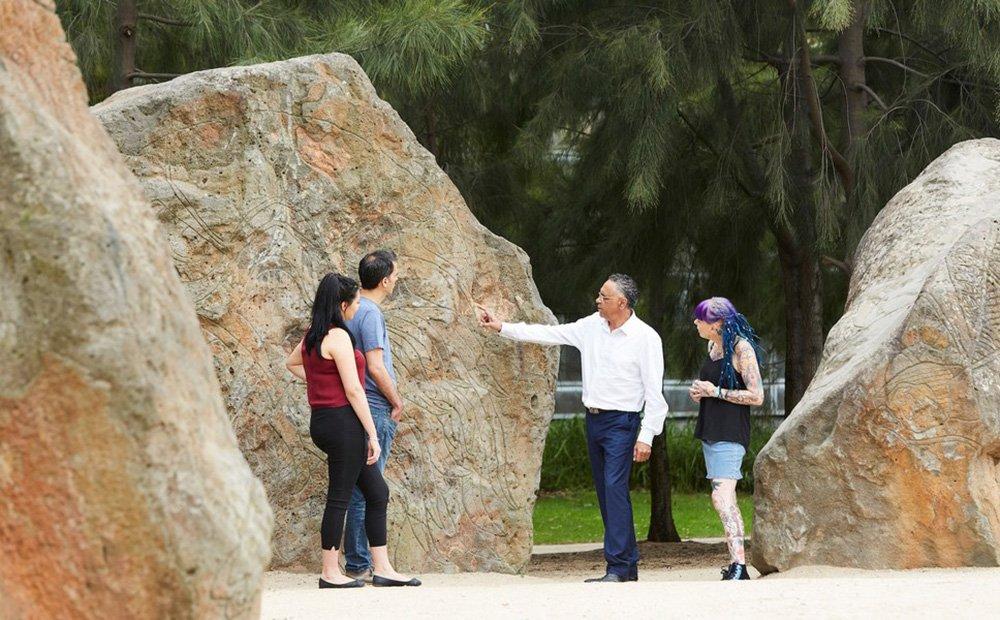
You can also find public artworks across the city that offer an insight into First Nations culture.
- Look for artworks at narrm ngarrgu Library and Family Services
- See Standing by Tunnerminnerwait and Maulboyheenner External link behind Melbourne City Baths
- Find the memorial to Pastor Sir Doug and Lady Gladys Nicholls External link in Parliament Gardens
Take a walking tour of the city
Wander from Fitzroy Gardens to the Docklands to learn about Melbourne’s Aboriginal heritage and culture, including scarred trees, historical meeting places and monuments.
Take your time on a self-guided Aboriginal Melbourne walking tour External link.
Prefer an experienced guide? Go on a Birrarung Wilam (River Camp) Walk External link run by the Koorie Heritage Trust External link. Hot tip: check out the public collection before you head off, and come back via the gift shop to pick up artworks, jewellery or books designed by Aboriginal and Torres Strait Islander artists.
Hear stories of survival against the odds and celebrate our vibrant cultures through performances, storytelling, artwork and more at Bunjilaka External link Aboriginal Cultural Centre at Melbourne Museum. And kids will love the Milarri Garden trail External link.
Head for the Royal Botanic Gardens to learn about significant native plants, plant uses, customs and ongoing connection to Country. Book an illuminating Aboriginal Heritage Walk External link through the gardens.
Visit What's On Melbourne External link to find more things to do in Aboriginal Melbourne and learn about culture and Country along the way.
Find public art on the river of mists, wander through cultural centres and art galleries, and plan your next accessible adventure External link.
Read books by Aboriginal and Torres Strait Islander authors
Explore this reading list External link of books by Aboriginal and Torres Strait Islander writers and allies. It features page-turners, high drama, memoir and thought-provoking topics.
You can borrow all these books and more from Melbourne Libraries.
Visit narrm ngarrgu Library
Make an unmissable trip to narrm ngarrgu Library near the Queen Victoria Market.
Pronounced nahm nar-GUW, narrm ngarrgu means ‘Melbourne Knowledge’ in Wurundjeri Woi-wurrung language.
We worked closely with Elders, artists and community members to bring this warm, welcoming space to life by drawing on deep knowledge systems.
The name, the materials, artworks even the design of the carpet honour and celebrate the First Nations community.
Learn some local language
When we travel overseas, we pick up how to say ‘hello’ and gather a few simple phrases that can help us understand and move through the place we’re there to explore.
Get to know some of the local languages right here on our doorstep, starting with a single greeting in the languages of the Wurundjeri Woi-wurrung and Bunurong / Boon Wurrung peoples of the Kulin.
- narrm is the Wurundjeri Woi-wurrung word for the Melbourne region
- Wominjeka / Womindjeka means ‘welcome’ in Woi-wurrung and Boon Wurrung
- Birrarung is the Wurundjeri Woi-wurrung word for the Yarra River
The Victorian Aboriginal Languages Corporation External link preserves, revives and restores local languages, including Woi-wurrung and Boon Wurrung language.
Support local businesses and creatives
Wear your values on your sleeve.
Visit the Purpose Precinct External link at Queen Victoria Market for merch from Clothing the Gaps and get to know other small businesses with a big cultural impact External link, including Gardening on Country, Deadly Wears, Haus of Dizzy, Bronwyn David and Mwerre.
Find stunning wearables at Ngali External link. This vibrant hub founded by Wiradjuri entrepreneur Denni Francisco teams up with talented First Nations artists to create high-end clothing and collectibles that are gentle to Country.
Look for the award-winning Ngarrgu Djerring in a city laneway off Collins Street. It's a cafe with purpose that serves a winning mix of coffee and culture.
The cafe offers offering stability, skills and culture to young Aboriginal and Torres Strait Islander people who might be otherwise at a loose end or having a hard time.
Deepen your knowledge
We are committed to showing how genuine reconciliation can happen between Aboriginal people and the broader community in the City of Melbourne.
We acknowledge and honour the unbroken spiritual, cultural and political connection the Wurundjeri, Bunurong, Dja Dja Wurrung, Taungurung and Wadawurrung peoples of the Eastern Kulin have to this unique place for more than 2000 generations.
Our city’s growth and development is enriched by Aboriginal culture, knowledge and heritage.
Aboriginal Melbourne
For more information, including educational videos, audio recordings and other resources, visit Aboriginal Melbourne.

