

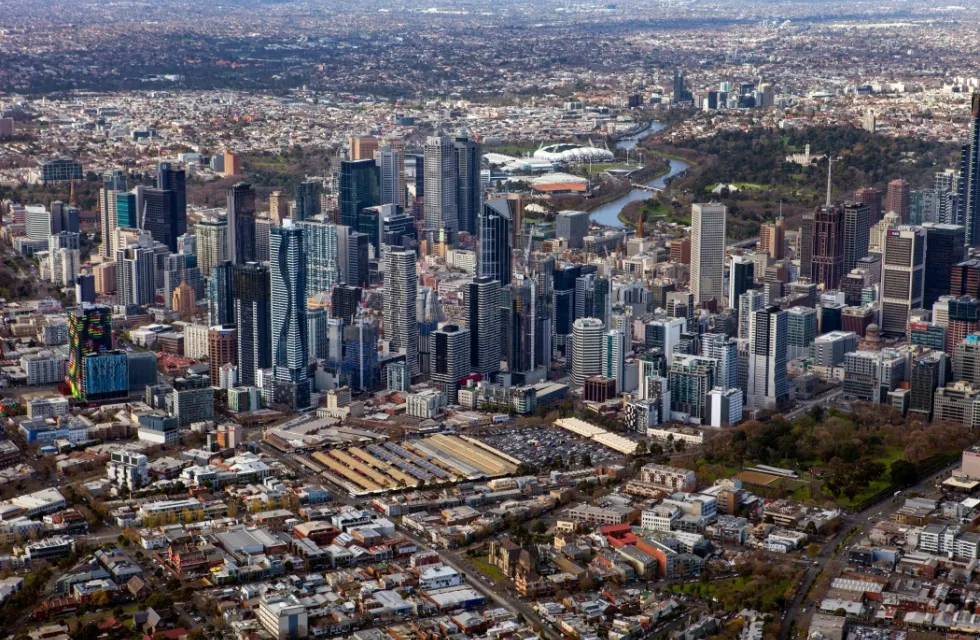
Spanning 170 hectares, Royal Park is the largest and most unique parkland in inner city Melbourne. Set aside as a reserve in 1845, Royal Park is known for its remnant native landscapes, wide variety of sports fields and large spaces for recreation. It plays an important role in ensuring that indigenous flora and fauna are retained in the inner city. This includes the endangered skink population in the park’s west.
The system consists of two linked ponds or wetlands – an S-shaped treatment wetland and a larger storage wetland. Completed in 2006, it was upgraded in 2008 to include an additional five megalitre storage tank underneath Ross Straw Field.
[Music]
(On-screen text: Trin Warren Tam-boore wetlands)
We're changing the way we manage water to secure the liveability of our city into the future.
When it rains, our water harvesting systems across the city collect water and save it for irrigating parks, sports fields and trees. But these projects don't just save water, they provide a range of social and economic benefits as well.
Constructed in 2006, the Trin Warren Tam-boore wetlands in Royal Park collects storm water from surrounding suburbs so that it can be used for irrigating sports fields and landscapes in the park.
After passing through a silt trap the water flows into the shallow s-shaped treatment wetland where 70,000 aquatic plants clean the water.
The microorganisms on these plants clean the storm water by absorbing or converting nutrients like phosphorus and nitrogen.
The treated water is kept in a large storage wetland until it is needed for irrigation. The Trin Warren Tam-boore wetlands has become a biodiversity hot spot in the city of Melbourne with its diverse population of plants and animals.
Hundreds of bird species live in this inner city habitat. The wetlands have also become a popular recreation place for residents and visitors. To learn about other water projects explore the urban water website.
[Music]
What benefits has the wetland and stormwater harvesting system provided? · Reduced stormwater pollutant and runoff levels entering Moonee Ponds Creek and Port Phillip Bay. Monitoring shows that the system is exceeding expectations for pollutant and sediment removal.
- Reduced reliance on drinking water for irrigation. The system provides up to 160 megalitres of stormwater per year, or 89 per cent of the park’s irrigation needs.
- Created a variety of different habitats, which has resulted in greater biodiversity.
- Created a space for community enjoyment and recreation. Boardwalks, footpaths and interpretive signage have allowed people to connect with the landscape.
Downloads
Design and construction details including costs are available in the case study below.

