

Can you tell the difference between the next Banksy and unwanted graffiti? Here's how to use a free app to keep Melbourne clean and safe.
Melbourne may be famous for street art in iconic laneways, but when graffiti spills into places where it’s unwanted or unsightly, emotions can run high.
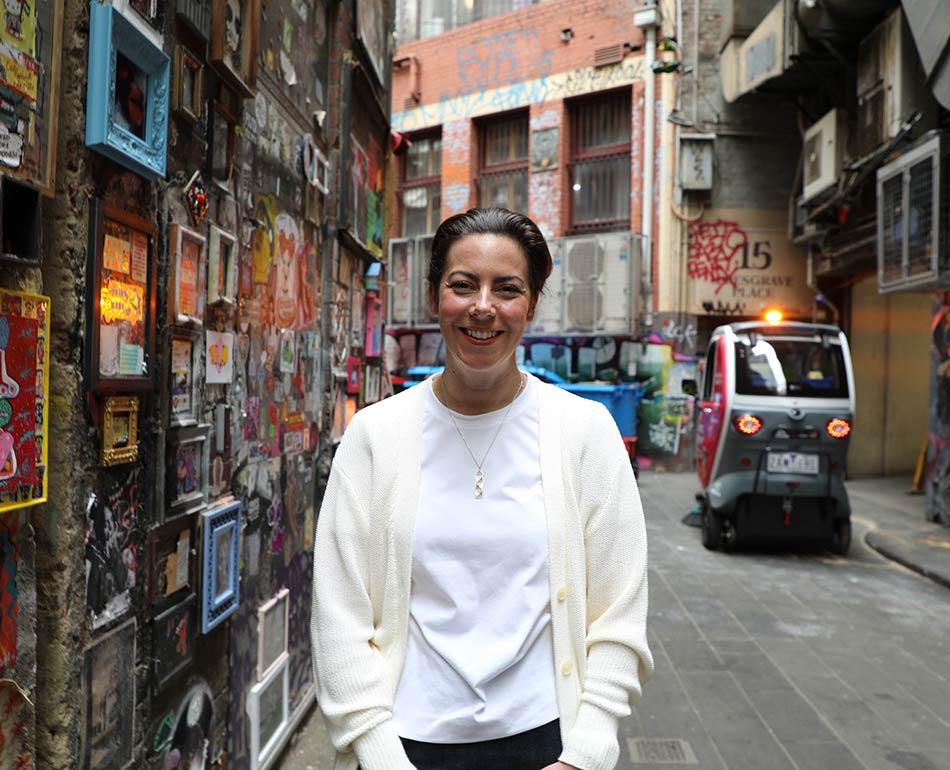
That’s why City of Melbourne’s Clean City manager and street art lover Emily Bardella has a watchful eye on the shifting canvas of our streets and laneways as she roams the city.
“Street art in Melbourne’s laneways is an ever-changing subculture. It’s one of the coolest street art scenes in the world,” Emily said.
Trained as a graphic designer, she gets a particular kind of job satisfaction from working alongside artists who add beauty to city streets.
“What I love about Melbourne's street art is that it can transform everyday laneways into cultural landmarks,” Emily said.
“Graffiti is an art form, and there are places throughout Melbourne that are well known for street art, like Hosier Lane, AC/DC Lane and Presgrave Place. But even beauty has its place,” Emily said.
She oversees the crew that removes illegal tagging and graffiti from private property and public places, helping to keep the city clean and safe.
“Clean spaces make people feel safe," Emily said.
She’s attuned to customer needs: in a previous role she helped establish and manage our Business Concierge.
When you’re offering one-on-one support to local businesses every day, you quickly come to learn what Melburnians care about.
“We find a strong psychological link between graffiti, general grubbiness like litter, and people reporting that they feel unsafe,” Emily said.
You can help.
Snap Send Solve: an easy way for people to report unwanted graffiti
We've made it easier and faster than ever to report unwanted graffiti using the popular app Snap Send Solve.
Report graffiti directly to City of Melbourne from your phone in just a few taps when you download Snap Send Solve from the App Store External link and Google Play External link.
When you upload photos of the graffiti to the app, the job now goes straight to the contractor.
That means the crew can act fast, and it also frees up our customer experience team to support Melburnians in other ways.
You can also track the progress of the job within the Snap Send Solve app.
“It's an incredibly powerful tool. I hope people get a lot of satisfaction out of seeing when something they reported has been restored or repaired or rectified,” Emily said.
How Snap Send Solve works
- Snap a photo: Open the app, select ‘Snap’ to add your photo
- Confirm Snap location: Use the map pin or address bar
- Select incident type: Select the relevant incident type
- Send your Snap: Select ‘Send Snap’ to send your Snap off to be solved.
- Solve it: City of Melbourne will receive your Snap and solve it swiftly.
The app is growing in popularity for reporting a range of issues within the City of Melbourne, including rubbish and bins, abandoned trolleys, parking and cars, roads and signage.
Customers reported almost 30,000 issues within the City of Melbourne to the year 30 September. That’s up by 183% when compared to the previous 12 months.
We solve issues at a rate that’s well above the state average, at nearly 93% compared with the Victoria-wide solve rate of 87%.
Since we added graffiti to the list of issues that can be reported through the app, customer satisfaction has increased to 88%, up from an average of 75% for graffiti services using the previous system.
What's the difference between street art and unwanted graffiti?
Graffiti is the marking of another person’s property without permission. Graffiti can include tags, stencils, pieces and even colourful murals which have been done without the permission of the person who owns the space.
Street art is artistic work created with the permission of the person who owns the wall. With proper permission, street art is legal in the City of Melbourne. Written permission is required from the building owner and a planning permit may also be required for properties in a heritage control area.
The rising stars of our street art scene
As someone with an art background, Emily’s first admiration was Leonardo Da Vinci – who put up a few murals on walls and ceilings in his time.
She also tracks the rising stars of Melbourne’s street art scene.
“These black-and-white bull terriers with spiked collars are popping up everywhere, I think he’s done some work for skate brands and clothing brands as well. I'm really enjoying his art,” Emily said.
Another piece she loves is a colourful mural in Rankins Lane by the artist Deb, which was commissioned by local businesses after a beloved 16-year-old mural on the opposite wall was painted over by a landlord.
“This mural is gorgeous, feminine, playful, and it features animals like a cat and flamingos. I heard that Deb’s niece came up with the concept so it’s got a cute background story too,”
City of Melbourne supported the new mural with funds from the graffiti prevention program. Where possible, we also commission street art to bring colour and life to otherwise overlooked spaces.
See how we manage graffiti and download the Snap Send Solve app from the App Store External link and Google Play External link.

