


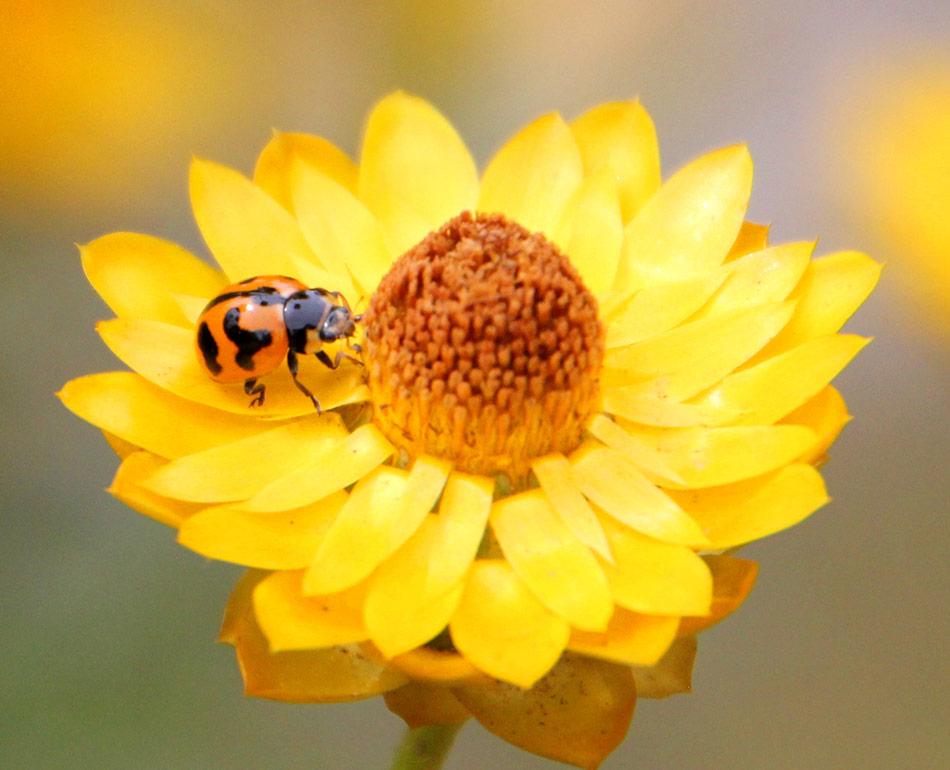
Step outside and see how many bugs you can spot in Melbourne during the Insect BioBlitz from 1 to 7 March.
Incredible insects are everywhere in the city if you know where to look, according to native bee expert and bug enthusiast Clancy Lester.
He wants all Melburnians to fall in love with the city's littlest creatures.
“The world of insects is another world in itself,” Clancy said. A passionate environmental educator, Clancy is also known as The Bee Man.
“Get amongst it! Look a bit closer than you might usually, and you’ll be surprised at the diversity of cool bugs right under your nose.”
The City of Melbourne’s Insect BioBlitz External link is a fun, easy way for any Melburnian to slow down and take a moment to notice nature and also learn about the local critters who keep our garden city not only humming, but also positively buzzing.
To help amateur bug-spotters spread their wings and identify the colourful and curious insects of Melbourne, we teamed up with Fed Square and Heartscapes to create the pocket-sized Insects of Melbourne guide, which will be launched on Saturday 28 Februrary. Get a free print version at all Insect BioBlitz events.
Once you’re out exploring, you can document the local critters you find using the iNaturalist External link app and help build a clearer picture of Melbourne’s biodiversity.
Clancy will be on the look-out for blue-banded bees and bogong moths in particular during the Insect BioBlitz, but every local critter plays an important role in our environment.
“My favourite things to find are native bees and butterflies, and bugs that don’t get as much love, such as really cool native flies and wasps, moths, beetles and everything in between,” Clancy said.
We share our garden city with 1,500 different insect species, but many face extinction due to habitat loss, pollution and climate change, so it’s more important than ever to care for nature.
“If we grow up not knowing what we have, how will we care about it? And if we don’t care about it why would we look after it? That’s something David Attenborough once said and it really stuck with me,” Clancy said.
“When we take the time to connect with the nature around us and care about it, we're more likely to protect it. The Insect BioBlitz is a little thing that everyday people can do that helps to protect nature in the city.”
Where to find insects in the city
Clancy’s happy places for bug-spotting are Westgate Park and the Australian Native Garden at Royal Park, but he encourages Melburnians to look for insects even closer to home.
“You might not expect to find cool bugs in little nooks and crannies in the city, but don’t discount that little patch of native flowers on someone’s nature strip,” Clancy said.
“Melbourne still loves its English-style cottage gardens and invasive European plants. Native insects are ‘fussy eaters’ because they are specialised to eat native plants – it’s so important to plant beautiful endemic indigenous species instead,” Clancy said.
He will run a bee hotel workshop External link during the Insect BioBlitz to show Melburnians how to attract more pollinators to our gardens and balconies.
It's one of many free activities happening across the city during the Insect BioBlitz External link, including a kids’ bug blitz with our Park Rangers, compost critter workshops, local lunchtime bioblitzes, a bioblitz to explore the insects that come out at night, and a guided walk in the native grasslands at Melbourne General Cemetery.
Across Melbourne, thousands of tiny lives are unfolding every day. You don’t always have to travel far to discover something extraordinary – it could be perched on a nearby flower, resting on a blade of grass or tucked into a crack in the pavement.
Can you hear the soft hum of the city’s littlest residents? This is your sign to slow down and get up close with nature in the garden city.
The Bee Man’s top tips for bug-spotting
Native flies
Look for short antennae and eyes that resemble goggles. Many species will hover in place before darting off. There are some really cool native flies to find.
Native bees
Often covered in fuzzy hair and dusted with pollen. The hairs on their bodies help them collect and transport pollen between flowers.
Leafcutter bees like native pea flowers like the purple coral pea External link. They cut up little chunks of leaves and fold them into little blankets that they wrap up their eggs in.
Blue-banded bees make a nest in open clay and soil. The females make the nests, and males gather together to sleep.
Native beetles
There's an incredible diversity of beetles in Australia, which are pollinators that don't get much credit. The Christmas beetle is evidence that within our lifetime, we’ve seen horrific declines in the numbers of our native insects. It’s important to avoid pesticides or insecticides around the house and turn off your outside lights to reduce light pollution.
Native wasps
Wasps don’t really hover as they’re not looking for nectar. They move more erratically because they're on the hunt. There are some really cool parasitic wasps that come in cool colours and shapes and sizes.
Butterflies and moths
Bogong moths are about to start breeding. If you find a bogong with a stamp on its wing, take a photo of it as the data is very valuable to scientists.
Common brown butterflies need native grasses like kangaroo grass and poa grass as larval host plants. A lot of native butterflies will only exist if their host plant is available, and in some cases only if other insect species are present: ants, for example, have symbiotic relationships with some butterflies.
Join the Insect BioBlitz External link from 1 to 7 March, when you can record insect observations from around your home and local green spaces using the iNaturalist External link app. It's a fun, easy way to help us get a clearer picture of Melbourne’s biodiversity.
The pocket-sized Insects of Melbourne guide will be launched on Saturday 28 Februrary, when you can download it and find more citizen science activities in the garden city.

