


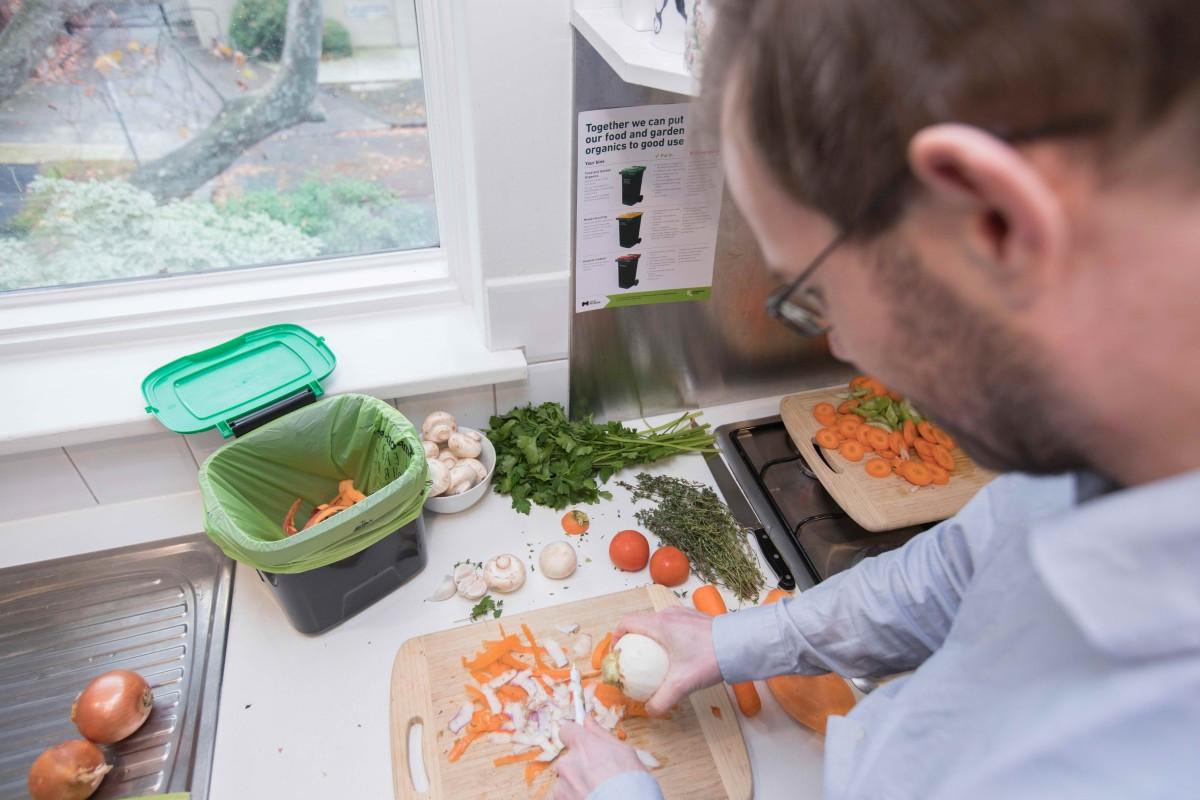
Selected residential apartment buildings (six storeys or higher) are participating in a twelve-month pilot program which explores the effectiveness of on-site organics processing technology.
Residents deposit their food scraps directly into an on-site organics processor, which dehydrates the organics and reduces its volume by up to 80 per cent. The resulting materials are then turned into a high nutrient soil conditioner.
The pilot will conclude in late 2026 when it will be evaluated. The results will be used to plan and design food organics collection system for existing and future buildings.
If your building is participating in this pilot, please see below for building-specific information and updates.
Organics processor location: Level 4 N car park waste area
Hours of operation: 9am to 10pm daily
What can and can't go into the kitchen caddy and organics processor
Download the caddy/organics processor A4 poster (PDF 1.4 MB)
List of specific items accepted and not accepted
What can go into the kitchen caddy:
• fruit and vegetable scraps (including citrus, onion, garlic, herbs, spices)
• bread, rice, pasta and cereal
• pastries, cakes and biscuits
• leftover food scraps
• spoiled or rotten food
• raw or cooked meat and fish
• soft shell seafood (prawns, shrimps, crayfish, crab)
• loose coffee grounds
• loose tea leaves and tea bags
• cut flowers and small leaves
• eggs and eggshells
• small bones (chicken and fish bones)
• small amounts of dairy
What can't go into the kitchen caddy:
• large amounts of dairy
• large bones (beef, pork and lamb bones)
• hard seafood shells (mussels, oyster, pipi shells)
• packaged food
• plastic or plastic bags
• biodegradable or compostable bags and packaging
• coffee pods, compostable cups and coffee cups (including biodegradable marked items)
• liquids including cooking oil, except for oil left on food waste
• recyclables (paper, cardboard, aluminium, steel and glass items)
• soft plastics (cling wrap, chip packets)
• rocks and pebbles
• string (including tea bag string), twine, ties, rope, metal wire
• plant pots
• soil
• cotton wool, cotton wool buds
• pet poo or pet litter
• nappies
• vacuum dust
• ash (from home fire)
• cigarette butts.
Organics processor location: Residents waste room
Hours of operation: 9am to 10pm daily
What can and can't go into the kitchen caddy and organics processor
Download the caddy/organics processor A4 poster (PDF 1.4 MB)
List of specific items accepted and not accepted
What can go into the kitchen caddy:
- fruit and vegetable scraps (including citrus, onion, garlic, herbs, spices)
- bread, rice, pasta and cereal
- pastries, cakes and biscuits
- leftover food scraps
- spoiled or rotten food
- raw or cooked meat and fish
- soft shell seafood (prawns, shrimps, crayfish, crab)
- loose coffee grounds
- loose tea leaves and tea bags
- cut flowers and small leaves
- eggs and eggshells
- small bones (chicken and fish bones)
- small amounts of dairy
What can't go into the kitchen caddy:
- large amounts of dairy
- large bones (beef, pork and lamb bones)
- hard seafood shells (mussels, oyster, pipi shells)
- packaged food
- plastic or plastic bags
- biodegradable or compostable bags and packaging
- coffee pods, compostable cups and coffee cups (including biodegradable marked items)
- liquids including cooking oil, except for oil left on food waste
- recyclables (paper, cardboard, aluminium, steel and glass items)
- soft plastics (cling wrap, chip packets)
- rocks and pebbles
- string (including tea bag string), twine, ties, rope, metal wire
- plant pots
- soil
- cotton wool, cotton wool buds
- pet poo or pet litter
- nappies
- vacuum dust
- ash (from home fire)
- cigarette butts.
Organics processor location: The loading bay
Hours of operation: 9am to 10pm daily
What can and can't go into the kitchen caddy and organics processor
Download the caddy/organics processor A4 poster (PDF 1.4 MB)
List of specific items accepted and not accepted
What can go into the kitchen caddy:
- fruit and vegetable scraps (including citrus, onion, garlic, herbs, spices)
- bread, rice, pasta and cereal
- pastries, cakes and biscuits
- leftover food scraps
- spoiled or rotten food
- raw or cooked meat and fish
- soft shell seafood (prawns, shrimps, crayfish, crab)
- loose coffee grounds
- loose tea leaves and tea bags
- cut flowers and small leaves
- eggs and eggshells
- small bones (chicken and fish bones)
- small amounts of dairy
What can't go into the kitchen caddy:
- large amounts of dairy
- large bones (beef, pork and lamb bones)
- hard seafood shells (mussels, oyster, pipi shells)
- packaged food
- plastic or plastic bags
- biodegradable or compostable bags and packaging
- coffee pods, compostable cups and coffee cups (including biodegradable marked items)
- liquids including cooking oil, except for oil left on food waste
- recyclables (paper, cardboard, aluminium, steel and glass items)
- soft plastics (cling wrap, chip packets)
- rocks and pebbles
- string (including tea bag string), twine, ties, rope, metal wire
- plant pots
- soil
- cotton wool, cotton wool buds
- pet poo or pet litter
- nappies
- vacuum dust
- ash (from home fire)
- cigarette butts.
Organics processor location: Level 1 car wash area
Hours of operation: 9am to 10pm daily
What can and can't go into the kitchen caddy and organics processor
Download the caddy/organics processor A4 poster (PDF 1.4 MB)
List of specific items accepted and not accepted
What can go into the kitchen caddy:
- fruit and vegetable scraps (including citrus, onion, garlic, herbs, spices)
- bread, rice, pasta and cereal
- pastries, cakes and biscuits
- leftover food scraps
- spoiled or rotten food
- raw or cooked meat and fish
- soft shell seafood (prawns, shrimps, crayfish, crab)
- loose coffee grounds
- loose tea leaves and tea bags
- cut flowers and small leaves
- eggs and eggshells
- small bones (chicken and fish bones)
- small amounts of dairy
What can't go into the kitchen caddy:
- large amounts of dairy
- large bones (beef, pork and lamb bones)
- hard seafood shells (mussels, oyster, pipi shells)
- packaged food
- plastic or plastic bags
- biodegradable or compostable bags and packaging
- coffee pods, compostable cups and coffee cups (including biodegradable marked items)
- liquids including cooking oil, except for oil left on food waste
- recyclables (paper, cardboard, aluminium, steel and glass items)
- soft plastics (cling wrap, chip packets)
- rocks and pebbles
- string (including tea bag string), twine, ties, rope, metal wire
- plant pots
- soil
- cotton wool, cotton wool buds
- pet poo or pet litter
- nappies
- vacuum dust
- ash (from home fire)
- cigarette butts.
Organics processor location: B1 waste room in the Spring Street Tower
Hours of operation: 9am to 10pm daily
What can and can't go into the kitchen caddy and organics processor
Download the caddy/organics processor A4 poster (PDF 1.4 MB)
List of specific items accepted and not accepted
What can go into the kitchen caddy:
- fruit and vegetable scraps (including citrus, onion, garlic, herbs, spices)
- bread, rice, pasta and cereal
- pastries, cakes and biscuits
- leftover food scraps
- spoiled or rotten food
- raw or cooked meat and fish
- soft shell seafood (prawns, shrimps, crayfish, crab)
- loose coffee grounds
- loose tea leaves and tea bags
- cut flowers and small leaves
- eggs and eggshells
- small bones (chicken and fish bones)
- small amounts of dairy.
What can't go into the kitchen caddy:
- large amounts of dairy
- large bones (beef, pork and lamb bones)
- hard seafood shells (mussels, oyster, pipi shells)
- packaged food
- plastic or plastic bags
- biodegradable or compostable bags and packaging
- coffee pods, compostable cups and coffee cups (including biodegradable marked items)
- liquids including cooking oil, except for oil left on food waste
- recyclables (paper, cardboard, aluminium, steel and glass items)
- soft plastics (cling wrap, chip packets)
- rocks and pebbles
- string (including tea bag string), twine, ties, rope, metal wire
- plant pots
- soil
- cotton wool, cotton wool buds
- pet poo or pet litter
- nappies
- vacuum dust
- ash (from home fire)
- cigarette butts.
Organics processor location: Main waste area - follow the green line in the Level 1 car park
Hours of operation
- 12pm Monday to 8pm Tuesday
- 12pm Wednesday to 8pm Thursday
- 12pm Friday to 8pm Friday
- 12pm Saturday to 8pm Sunday
What can and can't go into the kitchen caddy
Download caddy/organics processor A4 poster (PDF 1.4 MB)
List of specific items accepted and not accepted
What can go into the kitchen caddy:
- fruit and vegetable scraps (including citrus, onion, garlic, herbs, spices)
- bread, rice, pasta and cereal
- pastries, cakes and biscuits
- leftover food scraps
- spoiled or rotten food
- raw or cooked meat and fish
- soft shell seafood (prawns, shrimps, crayfish, crab)
- loose coffee grounds
- loose tea leaves and tea bags
- cut flowers and small leaves
- eggshells.
What can't go into the kitchen caddy:
- dairy products of any kind
- large bones
- corn cobs and husks
- avocado pits
- hard seafood shells (mussels, oyster, pipi shells)
- packaged food
- plastic or plastic bags
- biodegradable or compostable bags and packaging
- coffee pods, compostable cups and coffee cups (including biodegradable marked items)
- liquids including cooking oil, except for oil left on food waste
- recyclables (paper, cardboard, aluminium, steel and glass items)
- soft plastics (cling wrap, chip packets)
- rocks and pebbles
- string (including tea bag string), twine, ties, rope, metal wire
- plant pots
- soil
- cotton wool, cotton wool buds
- pet poo or pet litter
- nappies
- vacuum dust
- ash (from home fire)
- cigarette butts.
Organics processor location: Level B1, East Tower bin room
Hours of operation:
- 1pm Monday to 8pm Thursday
- 1pm Friday to 8pm Sunday
What can and can't go into the kitchen caddy
Download caddy/organics processor A4 poster (PDF 1.4 MB)
List of specific items accepted and not accepted
What can go into the kitchen caddy:
- fruit and vegetable scraps (including citrus, onion, garlic, herbs, spices)
- bread, rice, pasta and cereal
- pastries, cakes and biscuits
- leftover food scraps
- spoiled or rotten food
- raw or cooked meat and fish
- soft shell seafood (prawns, shrimps, crayfish, crab)
- loose coffee grounds
- loose tea leaves and tea bags
- cut flowers and small leaves
- eggshells.
What can't go into the kitchen caddy:
- dairy products of any kind
- large bones
- corn cobs and husks
- avocado pits
- hard seafood shells (mussels, oyster, pipi shells)
- packaged food
- plastic or plastic bags
- biodegradable or compostable bags and packaging
- coffee pods, compostable cups and coffee cups (including biodegradable marked items)
- liquids including cooking oil, except for oil left on food waste
- recyclables (paper, cardboard, aluminium, steel and glass items)
- soft plastics (cling wrap, chip packets)
- rocks and pebbles
- string (including tea bag string), twine, ties, rope, metal wire
- plant pots
- soil
- cotton wool, cotton wool buds
- pet poo or pet litter
- nappies
- vacuum dust
- ash (from home fire)
- cigarette butts.
Location: Dispose of food scraps in the black tubs located in the main kitchen or benchtop caddies in the kitchenettes on each level.
What can and can't go into the tubs and caddies
Download tubs and caddies A4 poster (PDF 1.4 MB)
List of specific items accepted and not accepted
What can go into the tubs and caddies:
- fruit and vegetable scraps (including citrus, onion, garlic, herbs, spices)
- bread, rice, pasta and cereal
- pastries, cakes and biscuits
- leftover food scraps
- spoiled or rotten food
- raw or cooked meat and fish
- soft shell seafood (prawns, shrimps, crayfish, crab)
- loose coffee grounds
- loose tea leaves and tea bags
- cut flowers and small leaves
- eggshells.
What can't go into the tubs and caddies:
- dairy products of any kind
- large bones
- corn cobs and husks
- avocado pits
- hard seafood shells (mussels, oyster, pipi shells)
- packaged food
- plastic or plastic bags
- biodegradable or compostable bags and packaging
- coffee pods, compostable cups and coffee cups (including biodegradable marked items)
- liquids including cooking oil, except for oil left on food waste
- recyclables (paper, cardboard, aluminium, steel and glass items)
- soft plastics (cling wrap, chip packets)
- rocks and pebbles
- string (including tea bag string), twine, ties, rope, metal wire
- plant pots
- soil
- cotton wool, cotton wool buds
- pet poo or pet litter
- nappies
- vacuum dust
- ash (from home fire)
- cigarette butts.
Text says 'ecoguardians: SoilFood System User Instructions. Soilfood'
The Eco Guardians SoilFood system is very easy and simple to use.
Bring your caddy with your food waste. Use your fob or personalised passcode to unlock the system. Then slide open the door.
Place your compostable bag in the unit and close the door. It's as simple as that.
Most organics can be used in Eco Guardians SoilFood system, but if you're not sure please refer to the checklist that you received.
Text on screen reads 'ecoguardians: For more information please visit www.ecoguardians.com.au'
Frequently asked questions
If you did not attend an information session or you've just moved in, please contact your building manager for an introduction to the service.
Your kitchen caddy is used to collect and transfer food scraps to the dehydrator. Place the caddy in a convenient place, such as your kitchen bench, and start collecting food scraps.
Compostable liners are used to line your kitchen caddy. Once your caddy is full, take it to the organics processor, lift the bin liner out and place it into the organics processor. Do not tie a knot in the bag.
It is important to only use council-approved compostable liners, as only these will break down during the dehydration process. Other plastic, degradable and biodegradable bags must not be used with your kitchen caddy. They can contain harmful plastic and heavy metals that will contaminate the organic material and damage the processor.
You will receive enough caddy liners to last you one year. If you run out, please speak to your building manager to get more.
You can also purchase your own compostable bin liners through COMPOST-A-PAK External link.
At times the organic processor won’t be available due to cleaning and maintenance. Please do not leave your caddy or food scraps next to the organics processor. Check the operating schedule beside the organics processor and return during operating hours.
Speak to your building manager about a replacement caddy.
Please do not take the kitchen caddy with you when you move out. Wash and dry the caddy and leave it, along with any unused compostable liners, in the apartment for the next tenant.
Return the organics processor access card to building management or leave it along with the kitchen caddy in the apartment.
Please speak to building management about a replacement card or fob.
Contact us
Phone

