

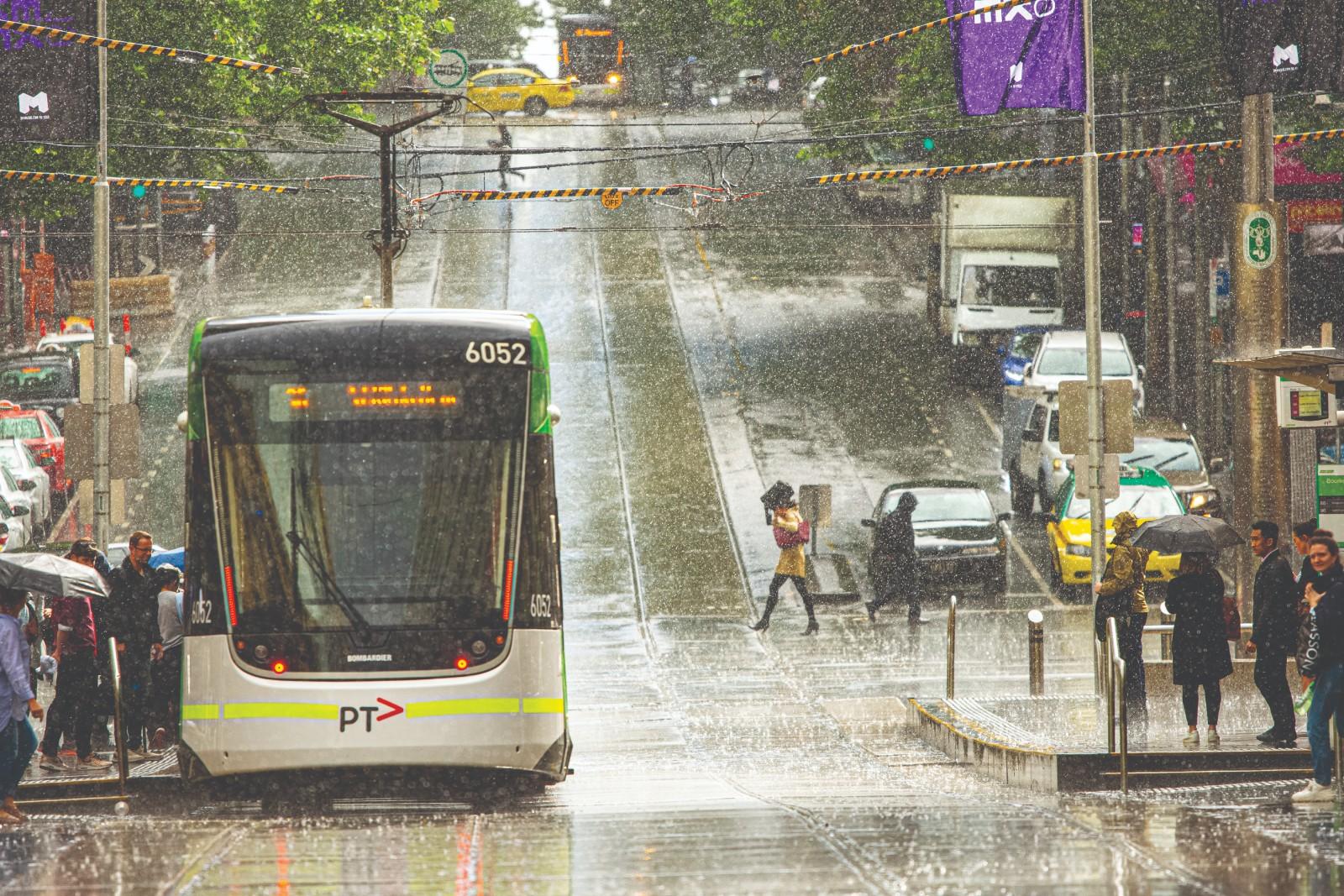
Storms can bring heavy rain, strong winds, hail and lightning that can cause flash flooding and damage buildings, trees and utilities. There are simple steps you can take to plan ahead and help protect yourself, the people you love and the things you value.
You can prepare by:
- developing a home or business emergency plan
- assembling an emergency kit
- cleaning your gutters, downpipes and drains
- trimming over-hanging branches
- making sure your roof is in good repair
- clearing or securing items around your property.
In an emergency
If you need assistance during a flood or storm emergency, call the Victorian State Emergency Service (VICSES) on 132 500.
Please refer to the VICSES website External link to learn when to call for help.
If it’s a life-threatening emergency call 000.
To get real-time alerts on events occurring around you, download the VicEmergency app External link.
Understand your flood risk
The Victorian State Emergency Service Local Flood Guides External link can help you better understand your flood risk, how flood warnings work and how to prepare yourself, your home or your business.
City of Melbourne has information External link on understanding floods, managing the impacts of floods and how to be flood ready.
If you live or work in Kensington or West Melbourne, please be aware that Melbourne Water has recently released the new Maribyrnong River Flood Model External link showing current and future flood risk in the Maribyrnong River catchment. To request specific flood information for your property, please call Melbourne Water on 131 722 or email enquiry@melbournewater.com.au. For more information on requesting property flood risk information, visit Melbourne Water External link.
More information
For information about what to do before, during and after a flood event, visit:
- Emergency Management Victoria External link
- FloodSafe External link
- Victorian Department of Health External link
You can also visit our Emergency management page for links to emergency services and other relevant websites.
FAQs - Maribyrnong River Flood Model
Water has always been a vital part of Melbourne. Prior to European settlement, the landscape included the Birrarung (Yarra River), Moonee Moonee Chain of Ponds, Maribyrnong River and low-lying areas, which would often flood as part of natural cycles.
Over time, urbanisation resulted in ground surfaces being sealed for roads, footpaths and buildings. The natural flow of our rivers and creeks were also altered. This makes it harder for water to be absorbed by the land, increasing the potential for flood events. Climate change has also increased the frequency of sudden storms, intense rainfall events, and raised sea levels. Visit Flooding and defences for further information on the types of flooding that Melbourne experiences.
When parts of our city experience flooding, it can cause damage to property, disruptions to transport or utility services, and put people’s wellbeing and livelihoods at risk. It’s important to know the risk of flooding in areas you live and work, and how you can protect yourself, your loved ones and your property.
Australia is increasingly grappling with the intensifying impacts of climate change, including more frequent and severe extreme weather events such as heatwaves, bushfires, droughts, storms, and floods. This trend is evident in Melbourne and regional Victoria, where a significant portion of the population resides on floodplains.
Research by the Climate Council indicates that 13% of Victorians have experienced flooding multiple times since 2019, highlighting the growing vulnerability of our communities. The anxiety and uncertainty caused by these extreme weather events are understandable.
To build resilience, it's essential that everyone has access to clear information about climate risks and understands how to prepare for them. Heavy rainfall poses a particular threat to urban areas and small catchments, where rapid runoff can quickly lead to flash flooding. Given the increasing inevitability of flooding, a multifaceted approach is essential, combining natural solutions like greening and urban planning with robust infrastructure and effective social policies
City of Melbourne plays an important role in flood risk management including planning and delivering local drainage systems, flood modelling, and collaborating with government agencies, like Melbourne Water, on strategies and planning.
City of Melbourne is also responsible for reviewing planning permit applications in the municipality to make sure they meet flood management rules and regulations in the Melbourne Planning Scheme.
If a planning permit application is lodged with City of Melbourne for a property located in a flood-affected area, the City of Melbourne will refer the application to Melbourne Water.
Melbourne Water is responsible for floodplain management within the City of Melbourne. Melbourne Water works with other agencies to deliver their flood responsibilities including Victorian State Emergency Service, Local Government Authorities, the Department of Environment Energy and Climate Change and the Department of Transport and Planning.
To learn more about how Melbourne Water manages and responds to flood risks, you can visit their website. External link
Flood extent and depth mapping has been updated by Melbourne Water.
To request specific flood information for your property, please call Melbourne Water on 131 722 or email enquiry@melbournewater.com.au. For more information on requesting property flood risk information, visit Melbourne Water. External link
Due to the recently released flood data from Melbourne Water, City of Melbourne’s current flood maps and inundation overlays are in the process of being updated.
An overlay shows property owners, developers and statutory authorities important information which applies to a section of land (such as heritage significance, built-form controls, environmental sensitivity or flooding).
Flood overlays in the Melbourne Planning Scheme are used to identify land that is flood prone and affected by the 1 per cent Annual Exceedance Probability storm event, which is an event with 1 per cent chance of happening in any given year.
If you have property in the City of Melbourne and are proposing a development or other building works, you will likely need planning approval. For more information see City of Melbourne Planning permit applications.
Planning for emergencies helps you stay safe and protect your loved ones and property. Our Prepared Communities page External link has resources to help you prepare for emergencies. For information on flooding in Melbourne, as well as our top five steps to being flood-ready, visit our Water and flooding in Melbourne page. External link
If you need assistance during a flood, call the Victorian State Emergency Service (VICSES) on 132 500. Please refer to the VICSES website External link to learn when to call for help. If it’s a life-threatening emergency call 000.
The Maribyrnong River Flood Model is a riverine flood model developed by Melbourne Water. The Model provides the latest flood information for the Maribyrnong River and uses the most up-to-date data to give a picture of how water flows, which helps predict flood patterns and their effects. Flood models are updated periodically to make sure they’re accurate.
The new Maribyrnong River Flood Model released in 2024 was commissioned by Melbourne Water as part of their commitment to update all flood modelling across the Port Phillip and Westernport catchments by 2026.
Visit Melbourne Water External link to learn more about the updated Maribyrnong River Flood Model.
Melbourne Water and City of Melbourne both manage public infrastructure that functions to reduce flood risk in Kensington and West Melbourne.
This includes drainage systems and assets such as levees and retarding basins, which are parks that are designed to temporarily store water during heavy rain.
City of Melbourne and Melbourne Water manage different public water infrastructure which helps reduce flood risk in Kensington and West Melbourne. This includes drainage, levees and assets which are designed to temporarily store water during heavy rain. City of Melbourne typically manages the local drainage network with Melbourne Water having the responsibility for major drainage and waterways.
City of Melbourne delivered a pump station at Stubbs Street and Smith Street last year. The Stubbs and Smith Street pump station drainage upgrade is planned to be completed by June 2025. An additional pump station at Stubbs Street and Arden Street will be completed in December 2024, with its drainage upgrade works expected to be finished by the June 2026. These upgrades will increase drainage capacity and help reduce flooding in low-lying areas of Kensington.
The recently completed City of Melbourne Open Space Strategy Review External link, identified areas along Maribyrnong River banks which would benefit from linear parks and additional open space. Parks and gardens can soak stormwater into the ground and help reduce the risk of flooding.
City of Melbourne is responsible for an extensive network of underground drains which prevent stormwater from affecting property, footpaths and roads. We maintain and monitor these drains to minimise the effects of flooding. Community members can report any blocked or flooded drains on our website.
Also, City of Melbourne are piloting a stormwater sensing project. The sensors are like real-time eyes and ears in our drainage system, continuously monitoring water levels and blockages. Early detection and removal of blockages can prevent local flooding. As part of the pilot, two sensors have been installed in Kensington. You can learn more and follow the project progress in Participate Melbourne Stormwater Sensing External link.
The Melbourne Planning Scheme is City of Melbourne’s plan to govern the use, development and protection of its land, underpinned by current and future needs.
The Melbourne Planning Scheme is updated regularly to reflect the changing needs of the city.
The release of the new Maribyrnong River Flood Model by Melbourne Water has triggered the need to update the Land Subject to Inundation Overlay (LSIO) in the Melbourne Planning Scheme.
An overlay shows property owners, developers and statutory authorities’ important information and considerations that apply to a section of land (such as heritage significance, built-form controls, environmental sensitivity or flooding).
If you want to develop or build on private land, you must obtain the relevant planning and building approvals. This includes to build a new home, extend, renovate or add a structure to your property.
Where land has been identified as flood prone and there is no Land Subject to Inundation Overlay (LSIO) in the Melbourne Planning Scheme, you may not need planning approval however you will still need to consider the flood risk through the building permit process. Your appointed building surveyor or designer will apply to Council for the necessary approvals. Consideration will be given to things like ensuring the floor level of the building works is located at least 300mm above the flood level.
If you have a current planning permit for a development, and the Land Subject to Inundation Overlay has not yet been placed on your property, you are still required to seek the Report and Consent from Council as part of your building permit under Regulation 116 of the Building Regulations 2018. If the finished floor level needs to be raised to comply with the new flood level, and this differs from your planning permit, this will result in the need to amend you approved planning permit plans.
On the other hand, if a planning and building permit have both already been issued prior to Council adopting the new flood mapping, there is nothing further that you need to do and you can build in accordance with your building permit knowing the potential risks.
Now the new Maribyrnong River flood modelling has been completed, Melbourne Water is progressing detailed assessment of long-term sustainable flood mitigation options to address the riverine flood hazards.
The mitigation study will review previously identified traditional solutions, as well as any new innovative solutions.
The study will consider feasible solutions, that prioritise the safety and resilience of the communities within the catchment and have the greatest impact on reducing the flood risk. Comprehensive economic, environmental, social and cultural impact assessments will be undertaken.
The community and stakeholders will be invited to participate in the development and assessment of options later this year. In the meantime, the community can register its interest in the mitigation study and provide preliminary input by completing a short survey on Melbourne Water’s website External link.
The City of Melbourne is collaborating with Melbourne Water to undertake the study, sharing expertise about innovative solutions that could be applied in the Kensington Banks area.
We will use the findings of the study to work with Melbourne Water on identifying infrastructure solutions to implement.
For general information about flood insurance and premiums, please go to the Insurance Council Australia website to access the following information.

