


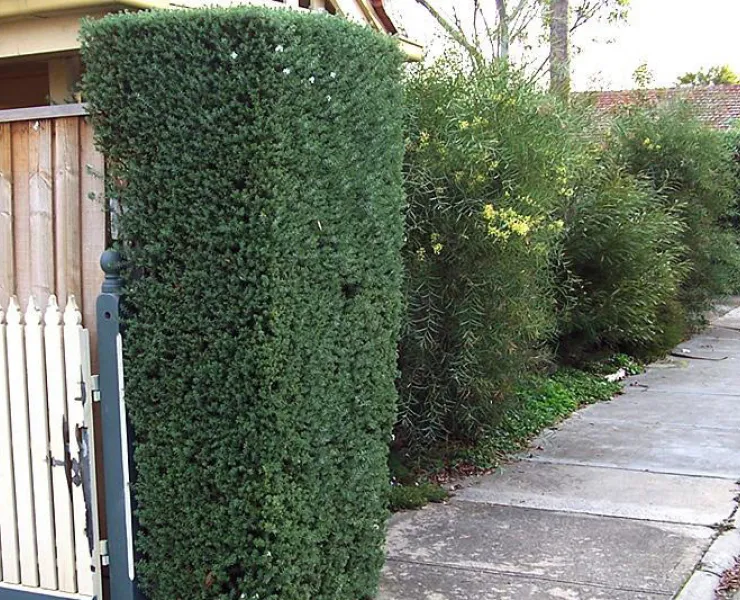
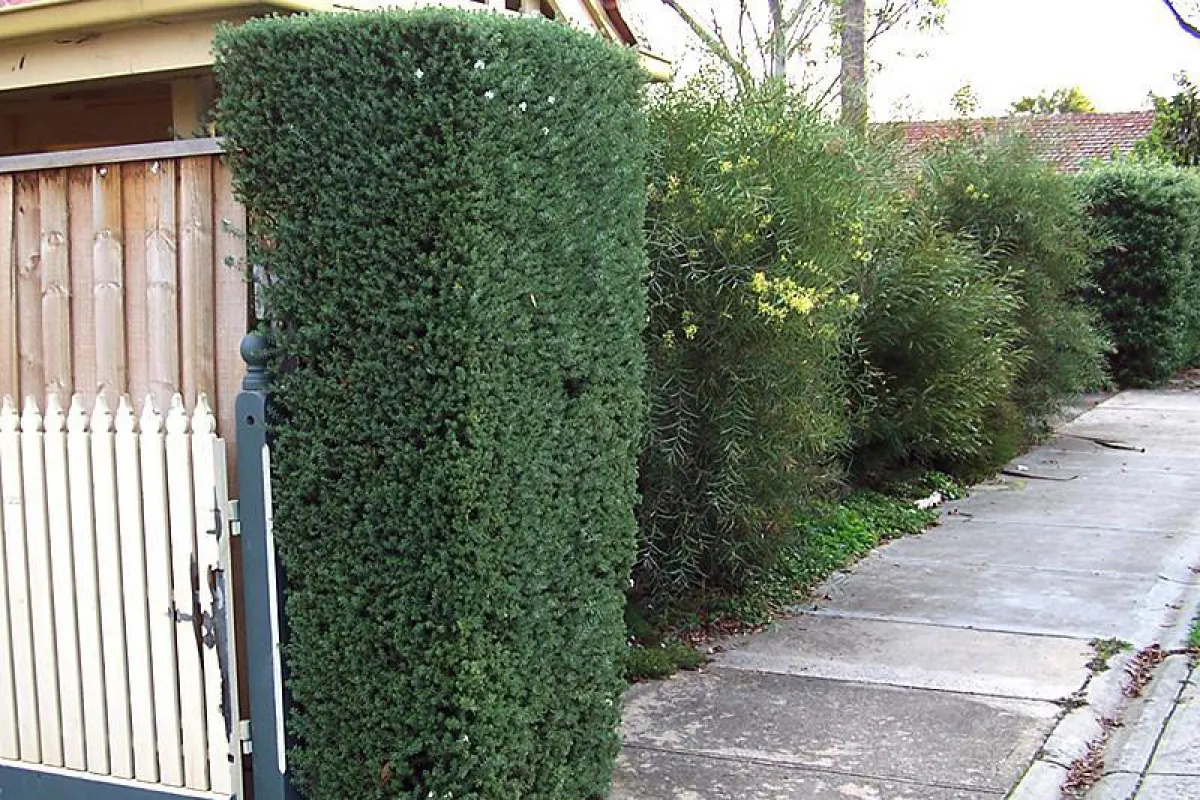
Westringia fruticosa is a useful hedging species. © The University of Melbourne
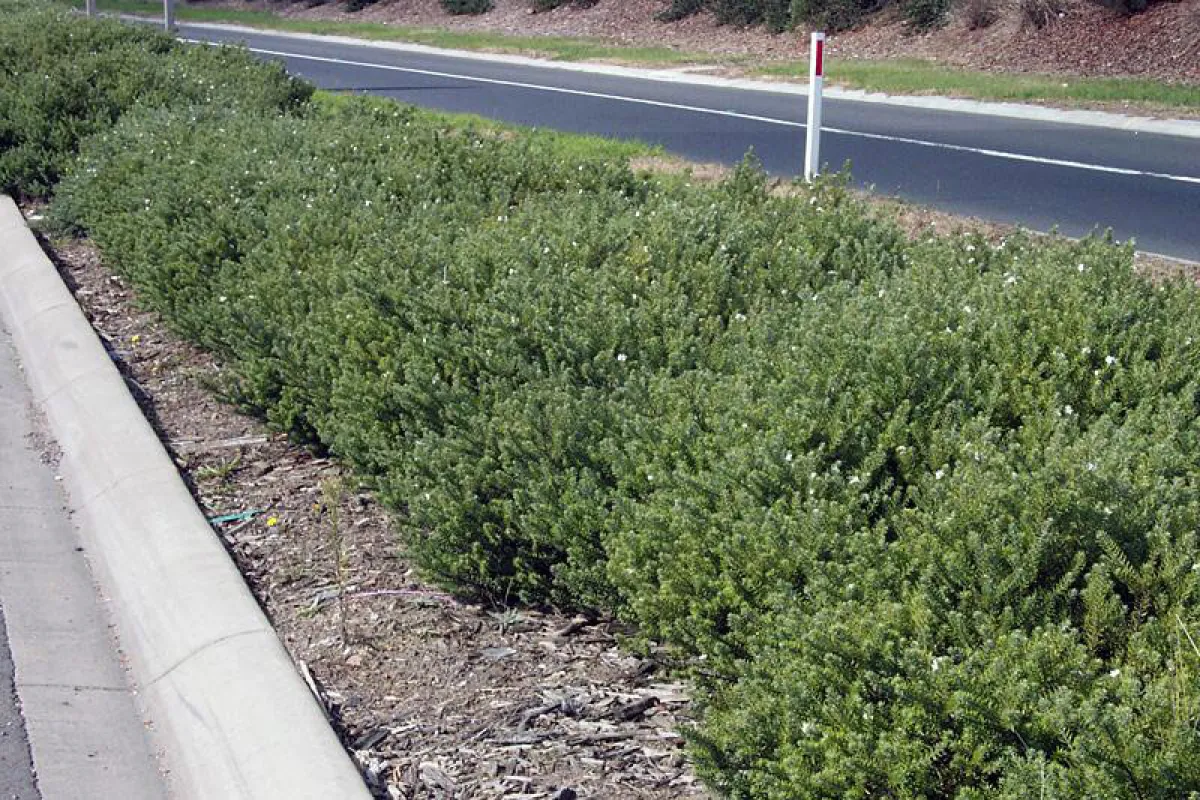
Median strip planting of Westringia fruticosa, Melbourne © The University of Melbourne
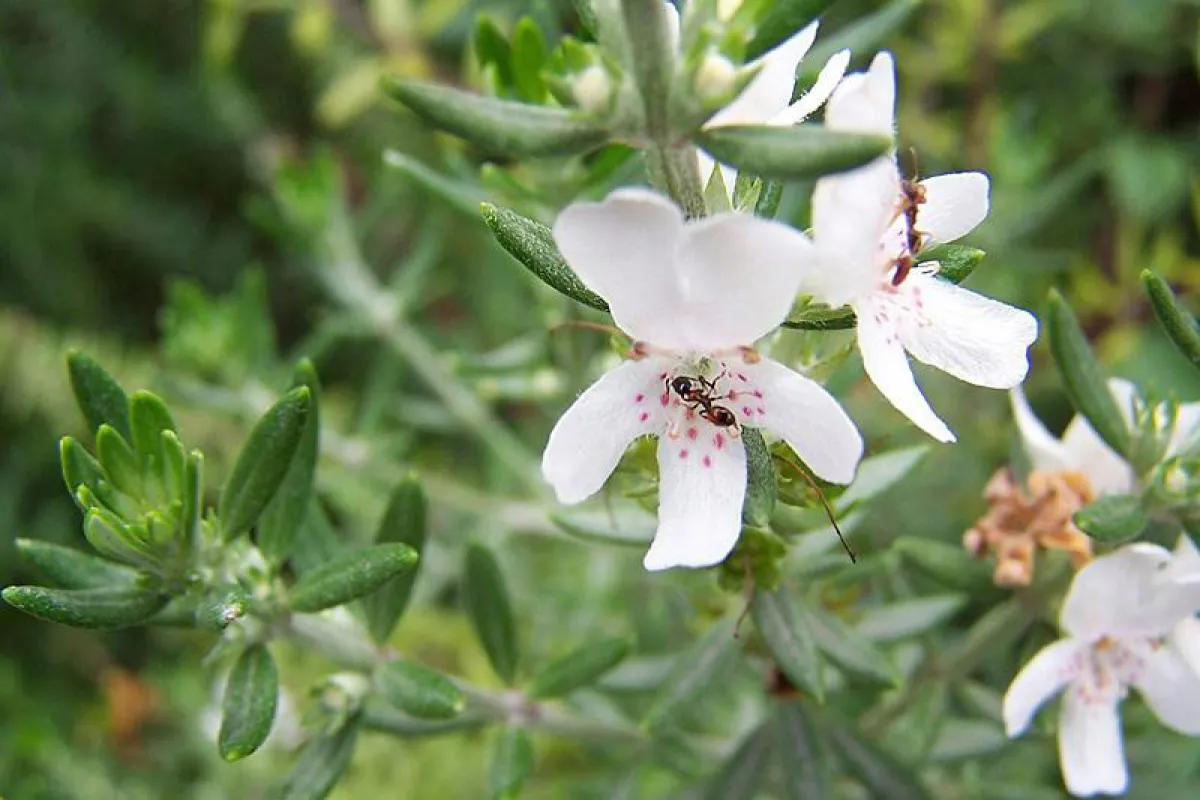
Flowers are white, with the lower 'lip' divided into three narrow lobes that are tan-spotted at the base. Ants are frequent visitors. © The University of Melbourne
Westringia fruticosa is a useful hedging species. © The University of Melbourne
Median strip planting of Westringia fruticosa, Melbourne © The University of Melbourne
Flowers are white, with the lower 'lip' divided into three narrow lobes that are tan-spotted at the base. Ants are frequent visitors. © The University of Melbourne
Plant growth form and habit: A dense evergreen shrub, variable from low-growing to more upright forms.
Natural distribution: Coast vegetation in New South Wales and eastern Victoria.
Indigenous to greater Melbourne: No
Height category: 1-2m
Dimensions (height and width): 2 m x 4 m
Landscape features: Winter flowering, Good for screening, Shrub mass
Flowering: White flowers for much of the year.
Typical growth rate: Fast
Light: Full sun, Partial sun
Drought: Very good
Waterlogging: Average
Maintenance and cultivation notes: A tough, robust and fast growing plant. Widely used as a hedge but will need frequent clipping. Prune regularly to maintain density. It can be rejuvenated by hard pruning, although old plants may not respond. Lots of different forms and named cultivars exist, including smaller compact forms and different flower and foliage colours.
Bees and butterflies nectar and pollen source: Attractive to native bees, blue-banded bees (Amegilla sp.), butterflies, hoverflies, and other nectar and pollen foraging insects.
Butterfly larval host plants: Larval food plant for rayed blue (Candalides heathi).
Birds: Dense foliage provides good shelter and nesting sites for small birds. Provides food for insect and larvae eating birds.
Benefits: Nectar and pollen, Butterfly (caterpillar) host, Birds (food source), Birds (habitat structure)
Availability: Bushland Flora (availability as of June 2017)
Typical horticultural uses: Edging or screening, and as shrub mass for groundcover, as a wind-break and for edging.

