


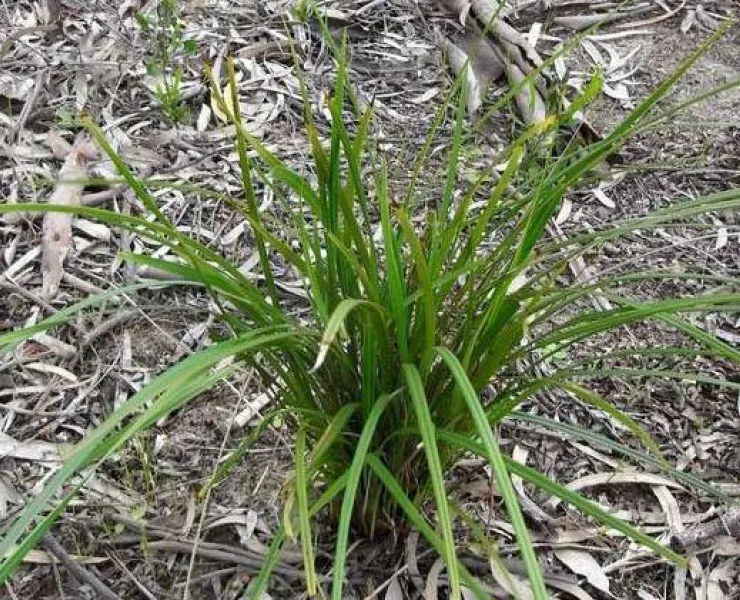
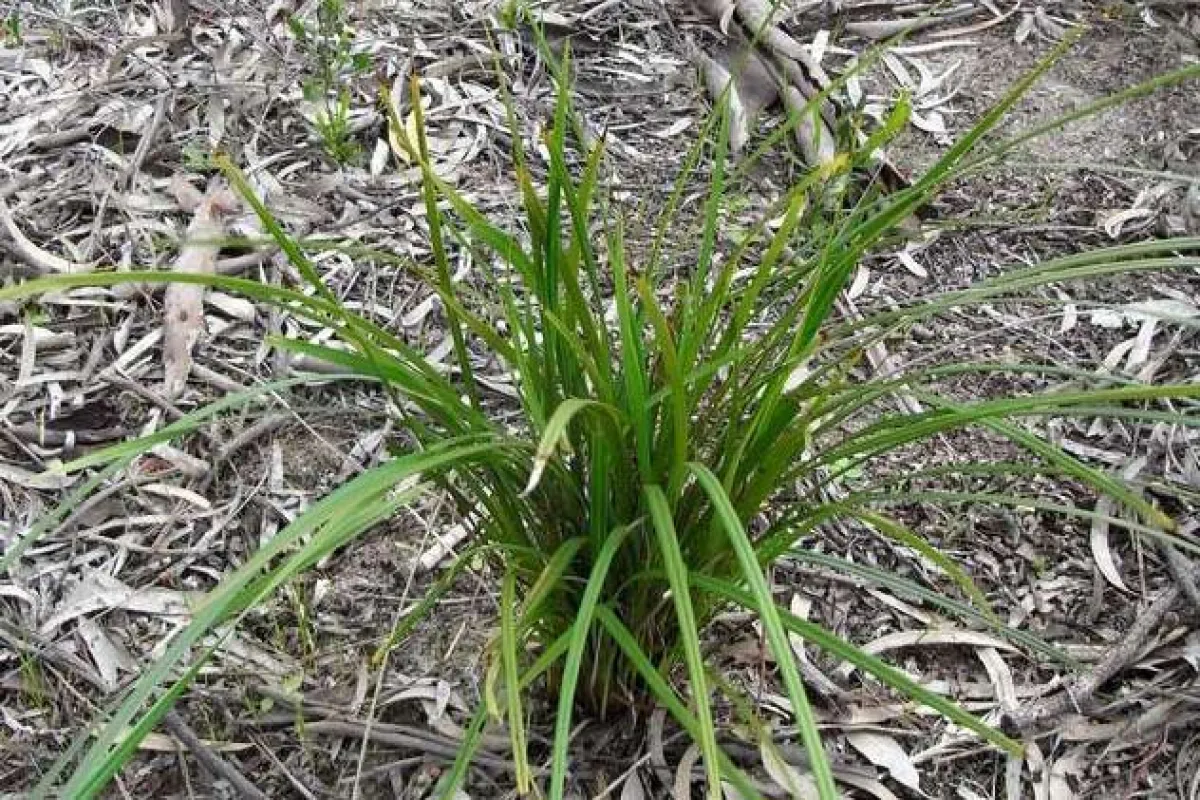
Dianella brevicaulis © Russell Best (NatureShare)
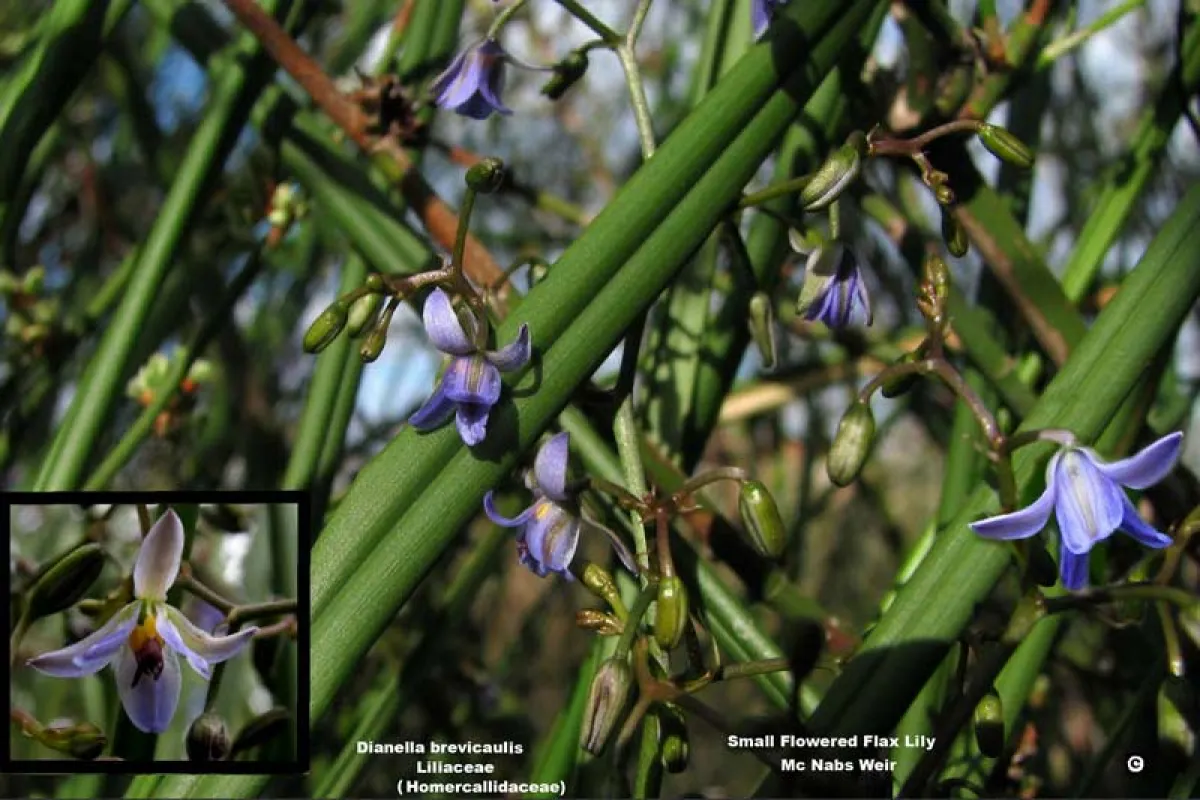
Dianella brevicaulis © Richard Hartland
Dianella brevicaulis © Russell Best (NatureShare)
Dianella brevicaulis © Richard Hartland
Plant growth form and habit: Densely tufted rhizomatous perennial herb.
Natural distribution: Coastal areas in Victoria, New South Wales, Tasmania, South Australia and Western Australia.
Indigenous to greater Melbourne: Yes
Height category: 0-0.5m
Dimensions (height and width): 0.3-0.5 m x 0.3-0.5 m
Landscape features: Dense foliage
Flowering: Dark blue to violet flowers, September to December. Produces dark blue berries.
Typical growth rate: Medium to fast
Light: Full sun, Partial sun
Drought: Moderately good
Waterlogging: Moderately good
Maintenance and cultivation notes: A dense-growing and smaller form of the genus. It generally requires sandy soil, but persists in heavier soils west of Melbourne. Can be sheared to above ground level to rejuvenate plants.
Green roof suitability: Irrigated < 10 cm depth, Irrigated 10-20 cm depth, Irrigated > 20 cm depth
Bees and butterflies nectar and pollen source: Attractive to blue-banded species (Amegilla sp.) which buzz pollinate Dianella flowers.
Butterfly larval host plants: Sometimes used as larval food plant for yellow grass-dart (Ocybadistes walkeri sothis).
Birds: Small birds shelter in the dense foliage and a variety of birds eat the fruit. The flowers attract insects which in turn attract wrens and thornbills.
Lizards and frogs: Blue tongue lizards shelter in the foliage and also eat the fruit.
Benefits: Nectar and pollen, Butterfly (caterpillar) host, Birds (food source), Birds (habitat structure), Lizard habitat
Availability: Westgate Biodiversity Bili Nursery, Mornington Peninsula Shire (Briars) Nursery, Bushland Flora (availability as of April 2020)
Typical horticultural uses: Has successfully been used in traffic islands, staying green all year round. Suitable for green roofs.

