

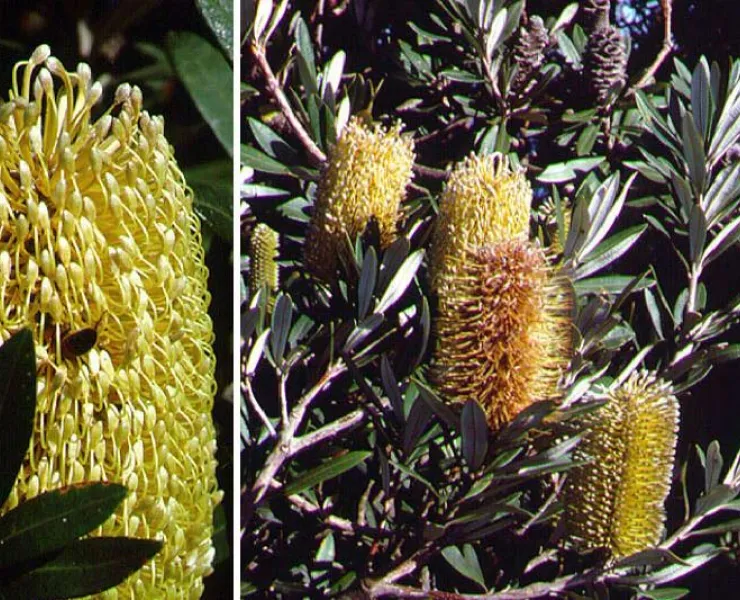
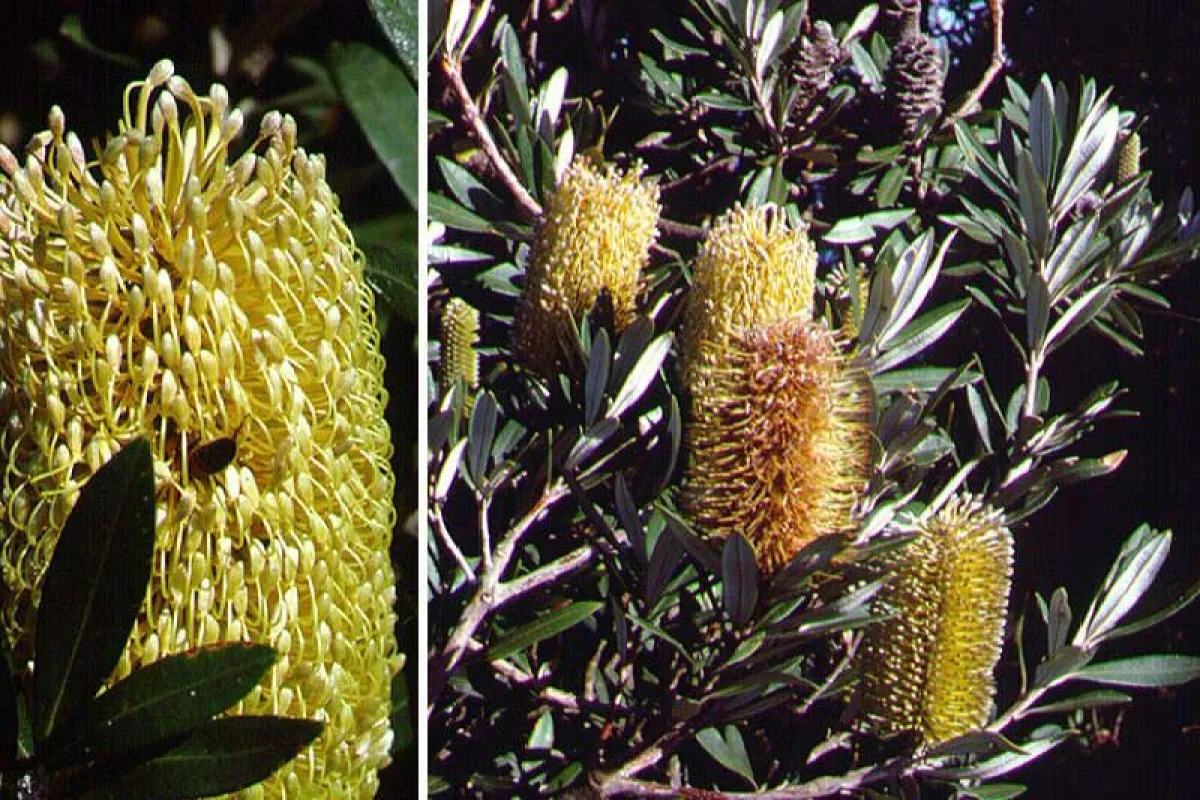
Lemon yellow flowers, in various stages from buds, semi-open to spent. © The University of Melbourne
Lemon yellow flowers, in various stages from buds, semi-open to spent. © The University of Melbourne
Plant growth form and habit: This cultivar is a prostrate selection of Banksia integrifolia from SE NSW, sold as Roller Coaster.
Natural distribution: Coastal eastern Australia from Victoria to Queensland, and the north-west coast of Tasmania.
Indigenous to greater Melbourne: No
Height category: 1-2m
Dimensions (height and width): 0.5-2.5 m x 4 m. Can stay below 2.5 m in height for a number of years but usually builds up in height over time. Judicious pruning can maintain it at a lower height.
Landscape features: Colourful flowers, Groundcover
Flowering: Yellow flowers in erect spikes. March to September.
Typical growth rate: Medium
Light: Full sun
Drought: Very good
Waterlogging: Average
Maintenance and cultivation notes: A tough and reliable cultivar of that performs well on sandy and clay soils. Can be rejuvenated by hard pruning but like most banksia is sensitive to high levels of soil phosphorus.Can be useful for beach reclamation and erosion control.
Soil compaction tolerance: Average
Bees and butterflies nectar and pollen source: Attractive to native bees, particularly Colletidae species, butterflies, hoverflies, and other nectar and pollen foraging insects.
Birds: Provides food for nectar-eating birds, including mistletoebird, eastern spinebill, spiny-cheeked honeyeater, New Holland honeyeater, white-plumed honeyeater and red wattlebird. Also provides food for seed eating birds, including musk lorikeet, galah and eastern rosella.
Benefits: Nectar and pollen, Birds (food source)
Availability: Westgate Biodiversity Bili Nursery, Mornington Peninsula Shire (Briars) Nursery, Bushland Flora (availability as of April 2020)
Typical horticultural uses: A vigorous cascading ground cover suitable for banks, rockeries, and the borders of shrubberies. Very tough, especially for coastal areas with sandy soil.

