


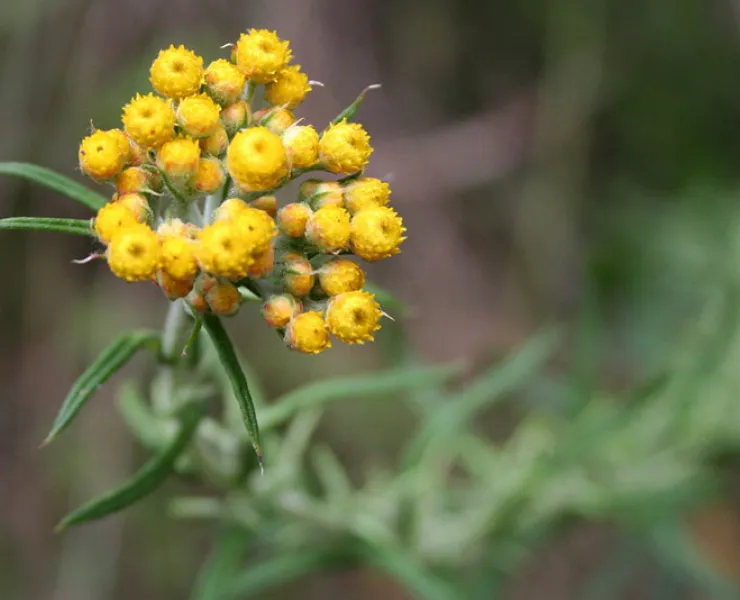
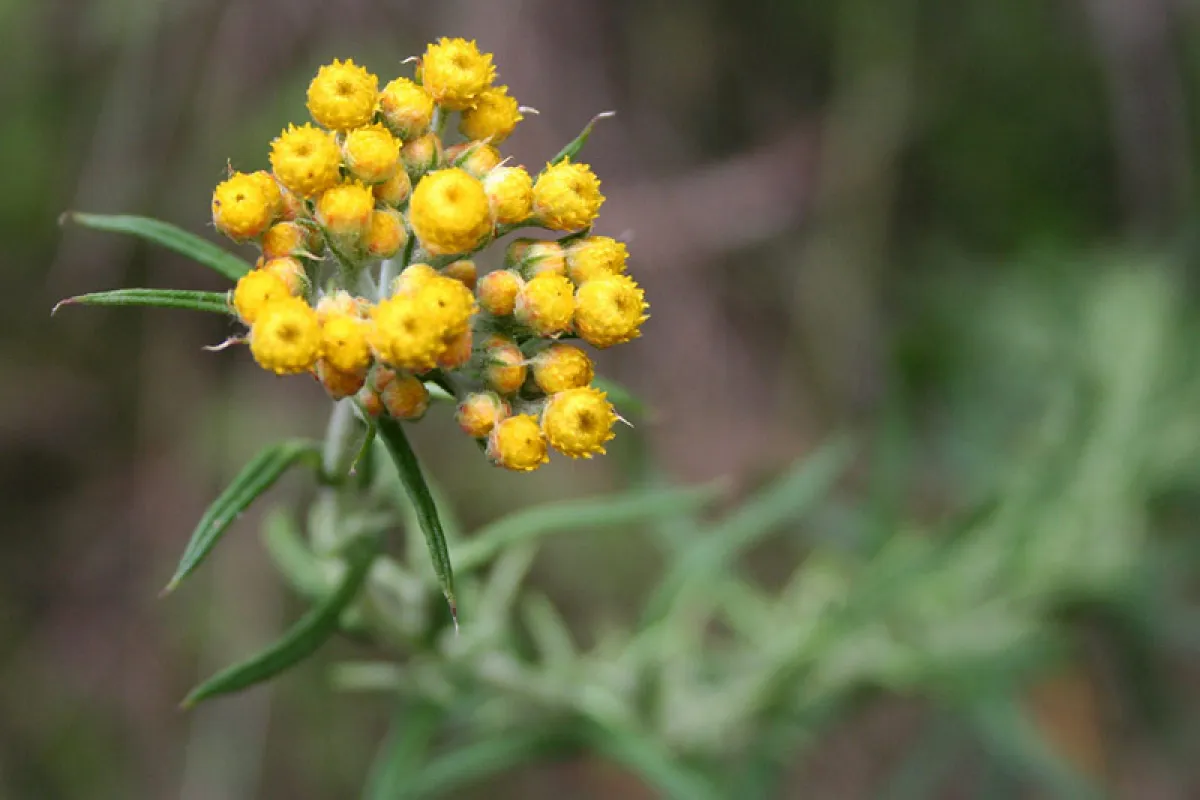
The numerous heads in tight clusters give the plant its common name. © Bill Strong (CC)
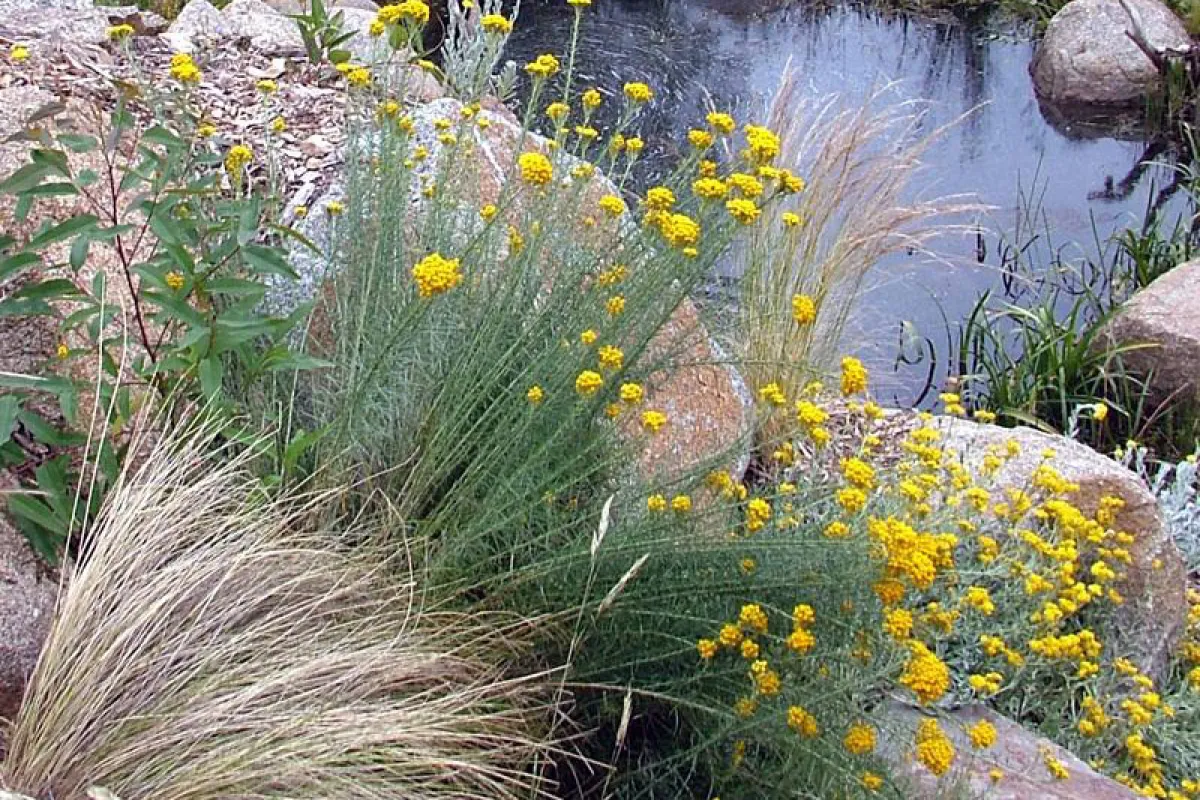
Clustered Everlasting makes a fine display in this nature-like garden. © The University of Melbourne
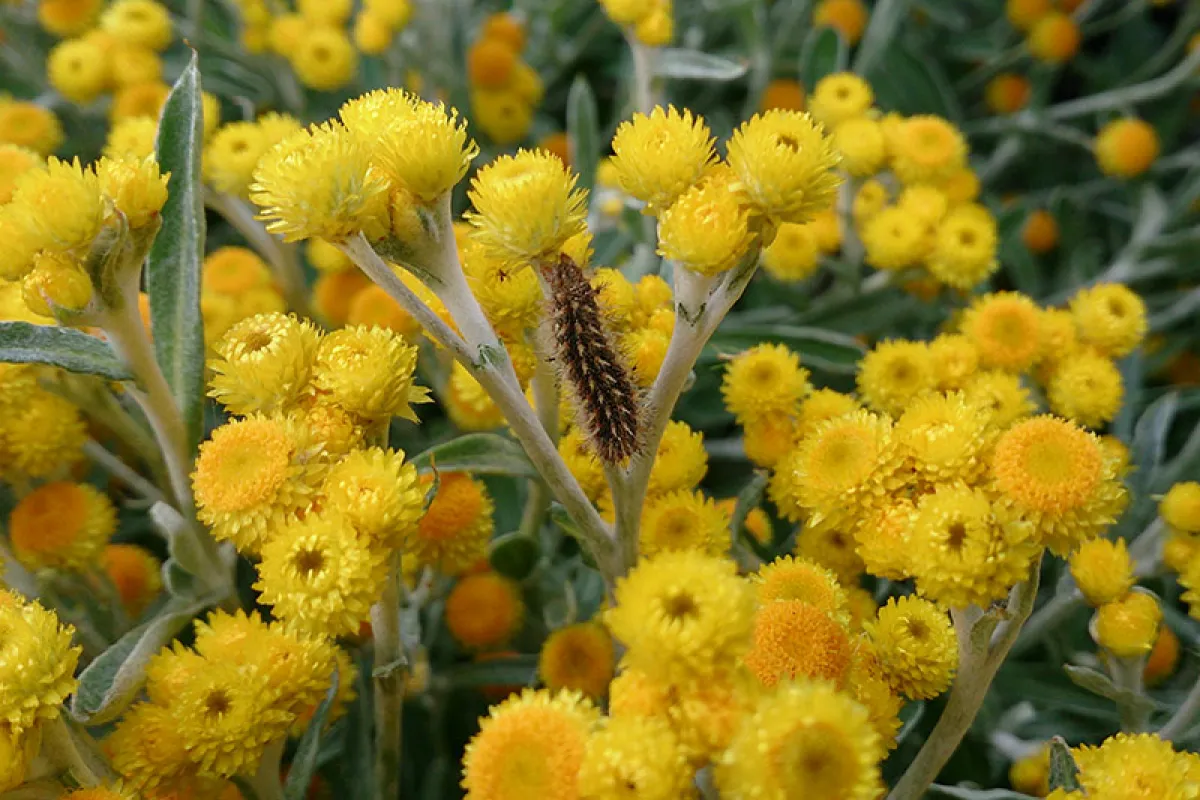
Australian painted lady larvae on Chrysocephalum semipapposum – Jesse Kurylo (University of Melbourne)
The numerous heads in tight clusters give the plant its common name. © Bill Strong (CC)
Clustered Everlasting makes a fine display in this nature-like garden. © The University of Melbourne
Australian painted lady larvae on Chrysocephalum semipapposum – Jesse Kurylo (University of Melbourne)
Plant growth form and habit: A very variable, clumping, perennial herb or subshrub, with dense basal foliage and taller, showy flowering stems. Green to grey foliage selections available. Usually grey foliage selections not as vigorous.
Natural distribution: Widespread in all states in a variety of understorey habitats.
Indigenous to greater Melbourne: Yes
Height category: 0.5-1m
Dimensions (height and width): 0.4-1 m x 0.5-2.5 m
Landscape features: Colourful flowers
Flowering: Dense clusters of small yellow flowerheads. October to February.
Typical growth rate: Medium
Light: Full sun, Partial sun, Full shade
Drought: Very good
Waterlogging: Average
Maintenance and cultivation notes: Individual stems die after two years. Prune old flowerheads and stems off at ground level in winter to rejuvenate and promote dense growth. May die off in very dry conditions, will reshoot after rain. Summer watering will increase flowering duration.
Green roof suitability: Irrigated > 20 cm depth
Soil compaction tolerance: Average
Bees and butterflies nectar and pollen source: Attractive to native bees, particularly Halictidae species such as Homalictus and Lasioglossum sp., butterflies, hoverflies, and other nectar and pollen foraging insects.
Butterfly larval host plants: Larval food plant for Australian painted lady (Vanessa kershawi).
Birds: Provides food for insect eating birds, including the willie wagtail which feeds on the larvae of Vanessa kershawi.
Benefits: Nectar and pollen, Butterfly (caterpillar) host, Birds (food source)
Availability: Victorian Indigenous Nurseries Co-operative (VINC), Bili Nursery, Western Plains Flora, Kuranga Native Nursery (availability as of June 2017)
Typical horticultural uses: A useful functional groundcover plant, also for wildflower gardens and perennial plantings. Suitable for green roofs.

