


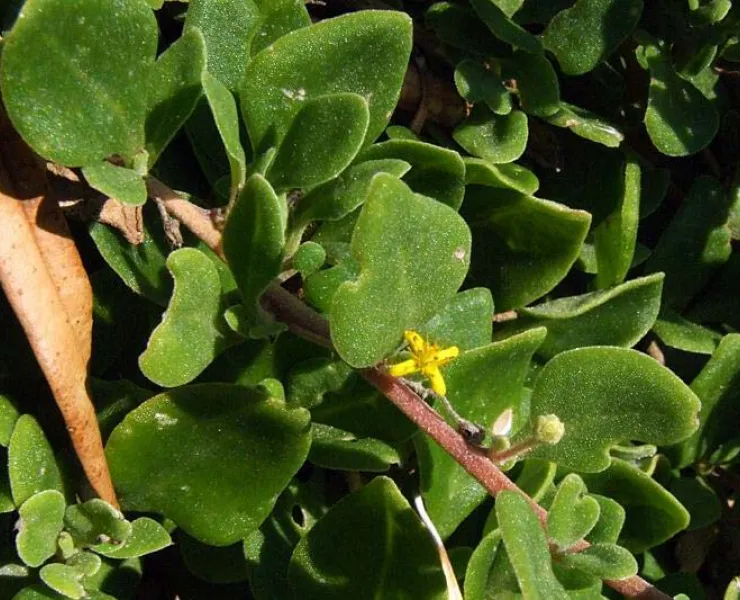
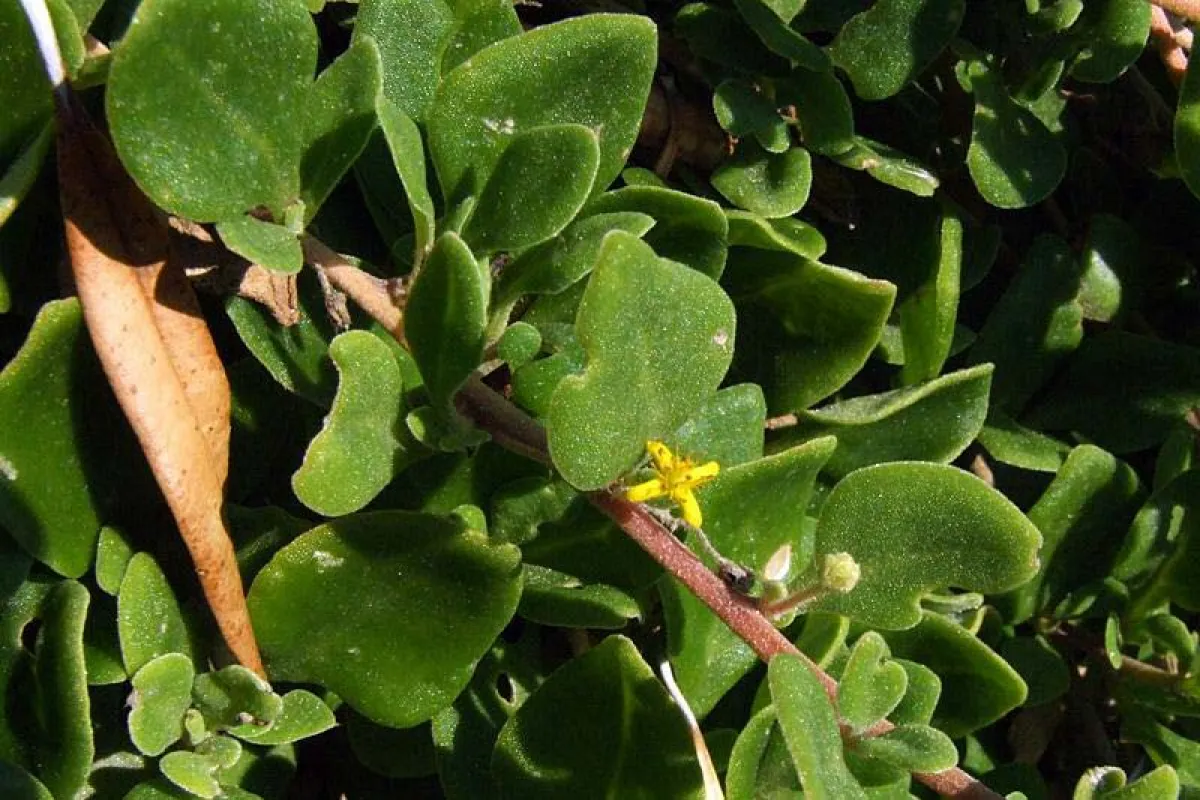
Tiny, fragrant, starry yellow flowers are borne from spring to summer. © The University of Melbourne
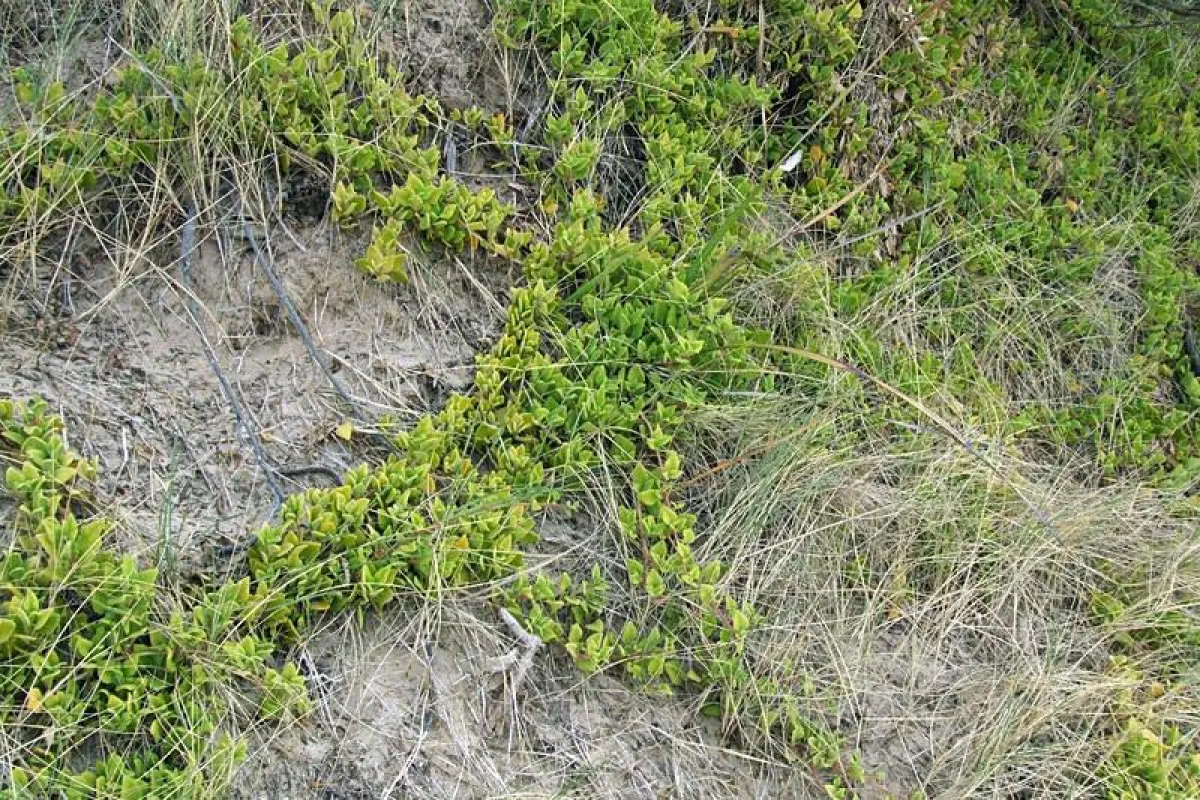
Tetragonia implexicoma colonising dunes near Mallacoota, Victoria. © The University of Melbourne
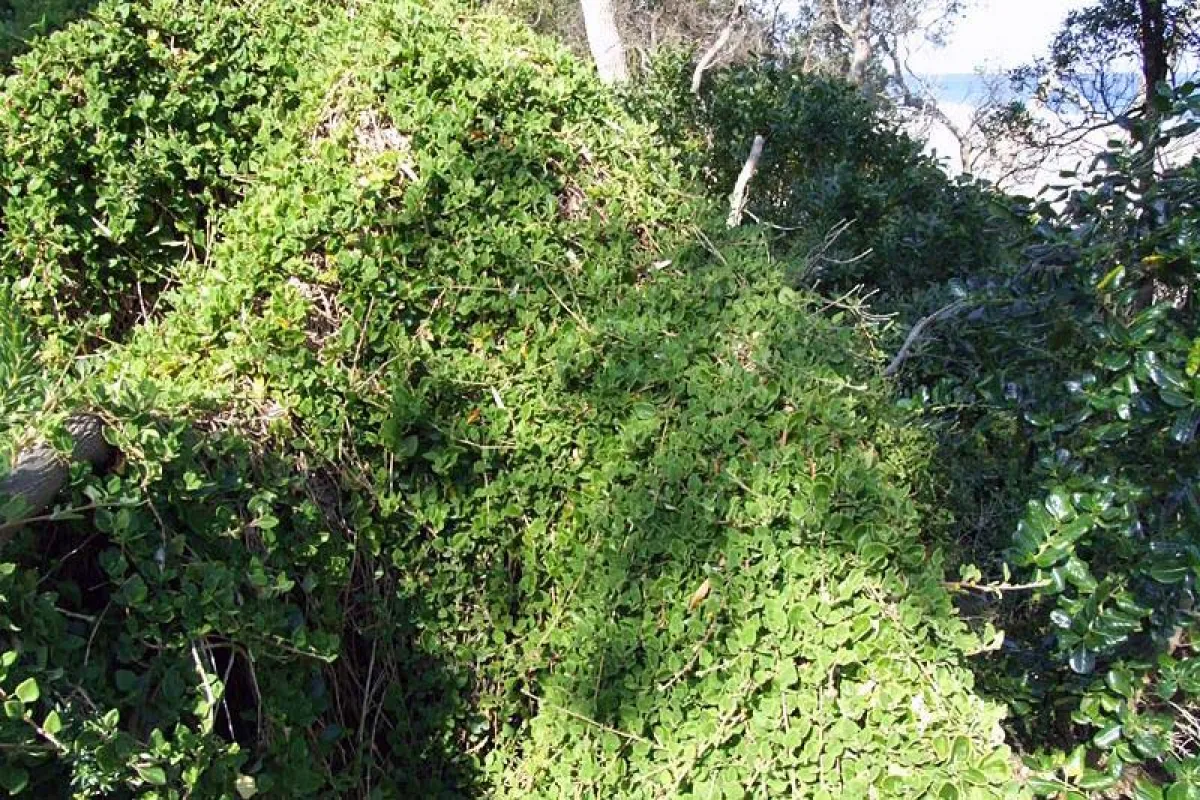
Tetragonia implexicoma is a trailing and scrambling, soft-wooded, succulent evergreen shrub that can form dense mounds. © The University of Melbourne
Tiny, fragrant, starry yellow flowers are borne from spring to summer. © The University of Melbourne
Tetragonia implexicoma colonising dunes near Mallacoota, Victoria. © The University of Melbourne
Tetragonia implexicoma is a trailing and scrambling, soft-wooded, succulent evergreen shrub that can form dense mounds. © The University of Melbourne
Plant growth form and habit: A trailing, scrambling or climbing, soft-wooded, succulent evergreen shrub, often forming dense mounds.
Natural distribution: Coastal dunes or volcanic loams, saltmarshes and banksia woodland, in Victoria, South Australia, Western Australia and Tasmania.
Indigenous to greater Melbourne: Yes
Height category: 2-3m
Dimensions (height and width): 0.3-3 m x 2-5 m
Landscape features: Groundcover, Edible
Flowering: Tiny, fragrant, starry yellow flowers, borne from spring to summer. August to February. Produces small red berries, which ripen black.
Typical growth rate: Medium to fast
Light: Full sun, Partial sun
Drought: Very good
Waterlogging: Average
Maintenance and cultivation notes: Not usually grown as an ornamental plant, but useful in coastal restoration work. Invaluable as a soil stabiliser and as a groundcover in shady, coastal situations.
Soil compaction tolerance: Poor
Bees and butterflies nectar and pollen source: Likely attractive to native bees, particularly Halictidae species such as Homalictus and Lasioglossum sp. butterflies, hoverflies, and other nectar and pollen foraging insects.
Birds: Provides food for fruit eating birds.
Lizards and frogs: Food source and habitat refuge for small lizards.
Benefits: Nectar and pollen, Birds (food source), Lizard habitat
Availability: Westgate Biodiversity Bili Nursery, Mornington Peninsula Shire (Briars) Nursery (availability as of April 2020)
Typical horticultural uses: Groundcover, bush garden, edible

