


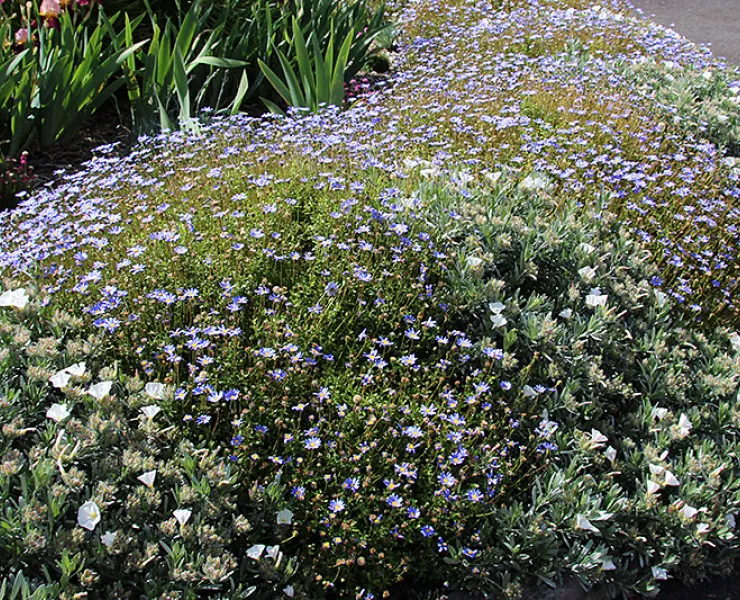
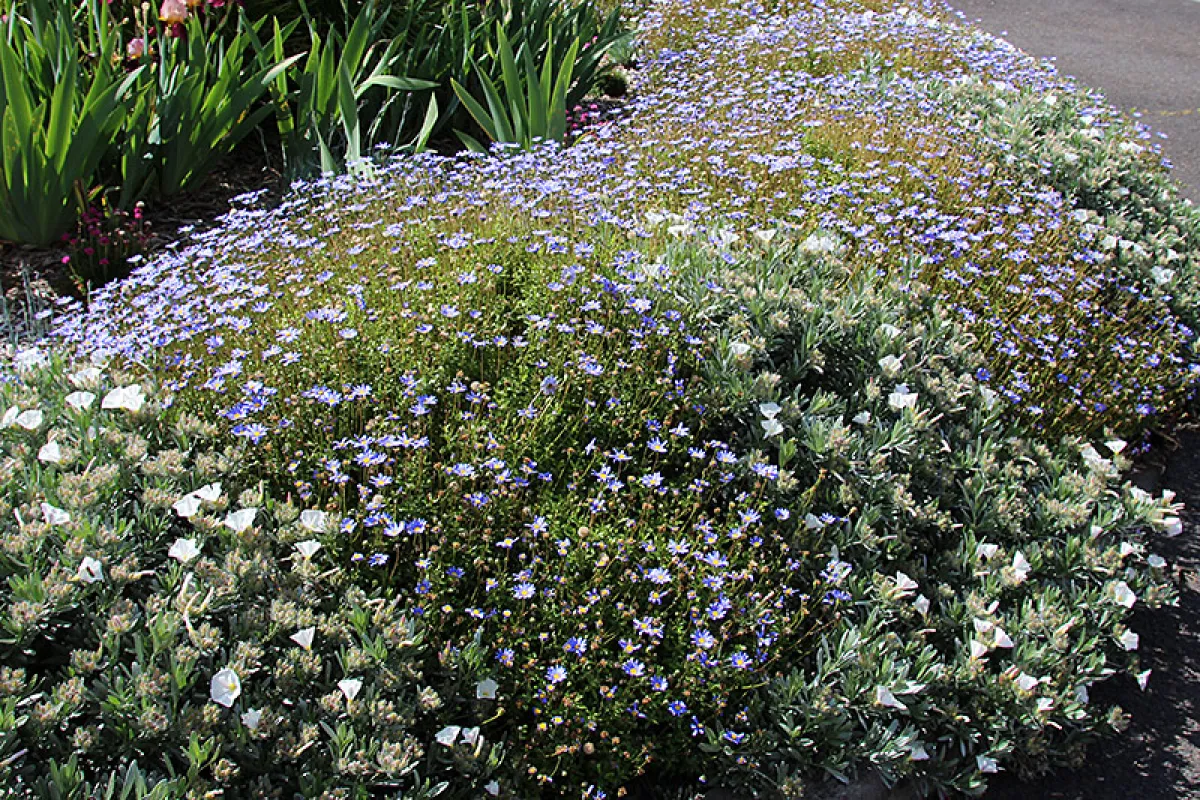
Felicia amelloides (with Convolvulus cneorem) as a bold edging. © The University of Melbourne
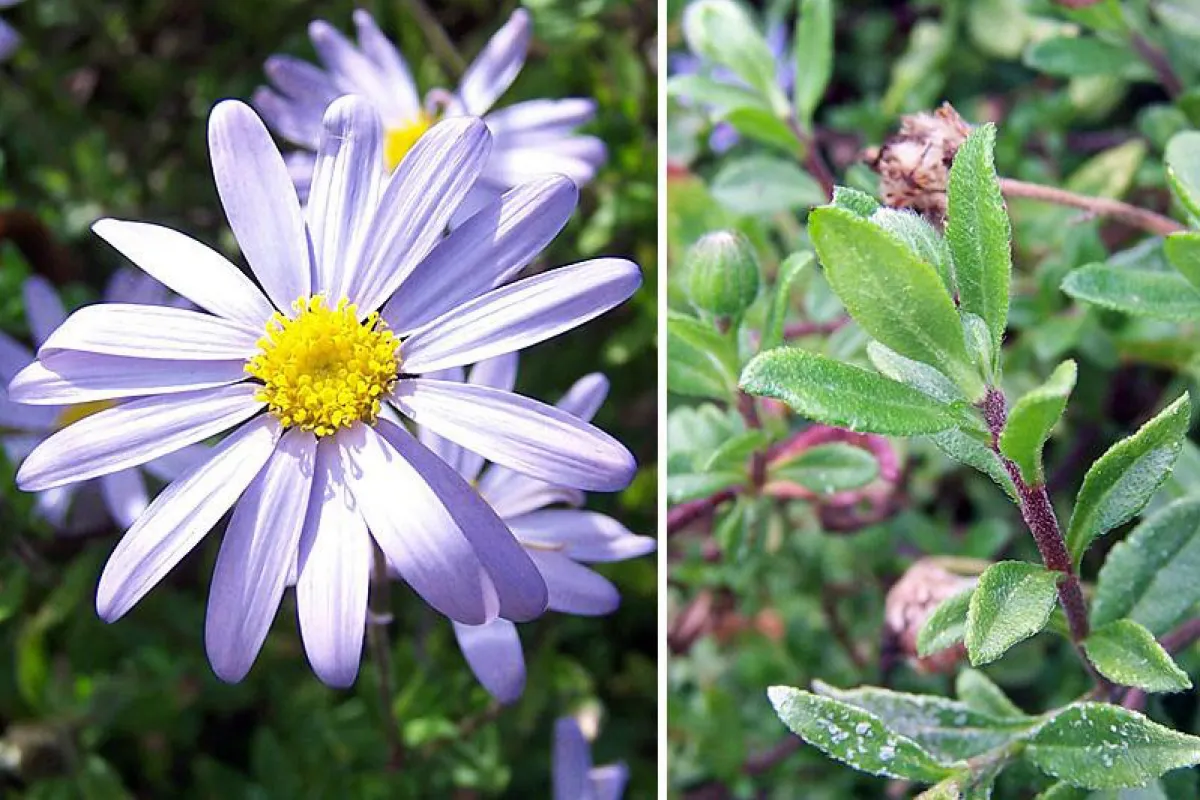
Felicia amelloides © The University of Melbourne
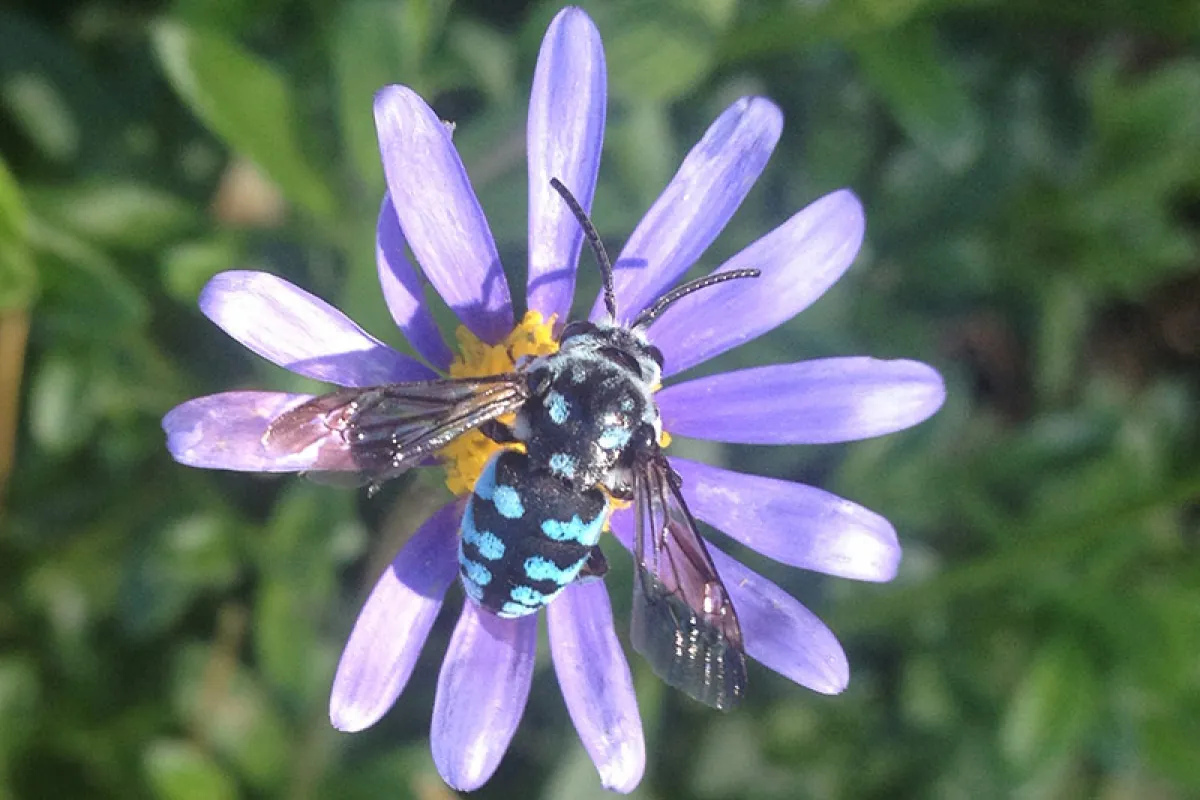
Thyreus sp. on Felicia amelloides. Photo: Jess Baumann
Felicia amelloides (with Convolvulus cneorem) as a bold edging. © The University of Melbourne
Felicia amelloides © The University of Melbourne
Thyreus sp. on Felicia amelloides. Photo: Jess Baumann
Plant growth form and habit: A small, somewhat sparse and open (without pruning) subshrub.
Natural distribution: South Africa
Indigenous to greater Melbourne: No
Height category: 0-0.5m
Dimensions (height and width): 0.3 m x 0.3 m
Landscape features: Colourful flowers, Long flowering
Flowering: Blue daisies, bloom year round in mild climates.
Typical growth rate: Medium
Light: Full sun
Drought: Moderately good
Waterlogging: Average
Maintenance and cultivation notes: A reasonably robust small plant, tolerant of drought and heat/high solar radiation, but not of high humidity or wet soils. Rapidly develops bare lower stems, and must be shorn back after flowering to keep compact. Could be a substitute for Brachyscome species (tend to be a little more woody than the Brachyscome sp.).
Green roof suitability: Irrigated > 20 cm depth
Bees and butterflies nectar and pollen source: Attracts blue-banded bees (Amegilla sp.), Thyreus sp. and some Halictidae species, butterflies, hoverflies, and other nectar and pollen foraging insects.
Benefits: Nectar and pollen
Typical horticultural uses: Ground cover, perennial border, shrub or mixed border, low hedges, green roof.

