


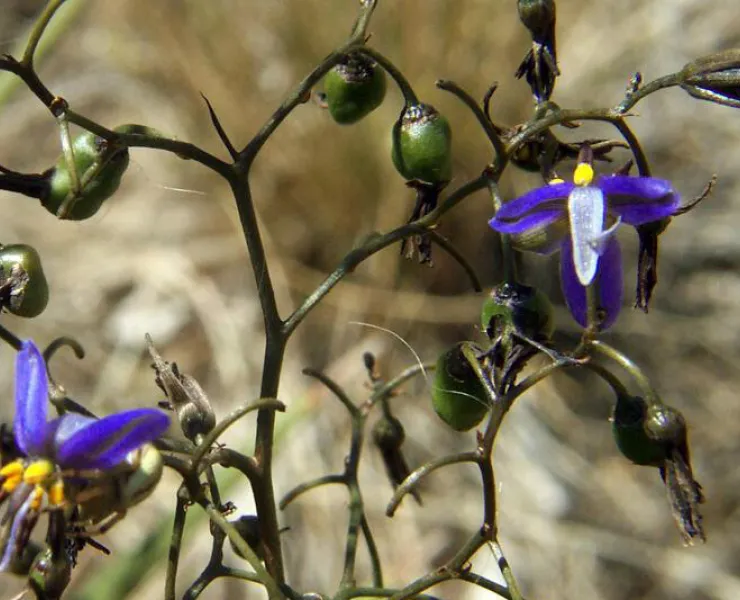
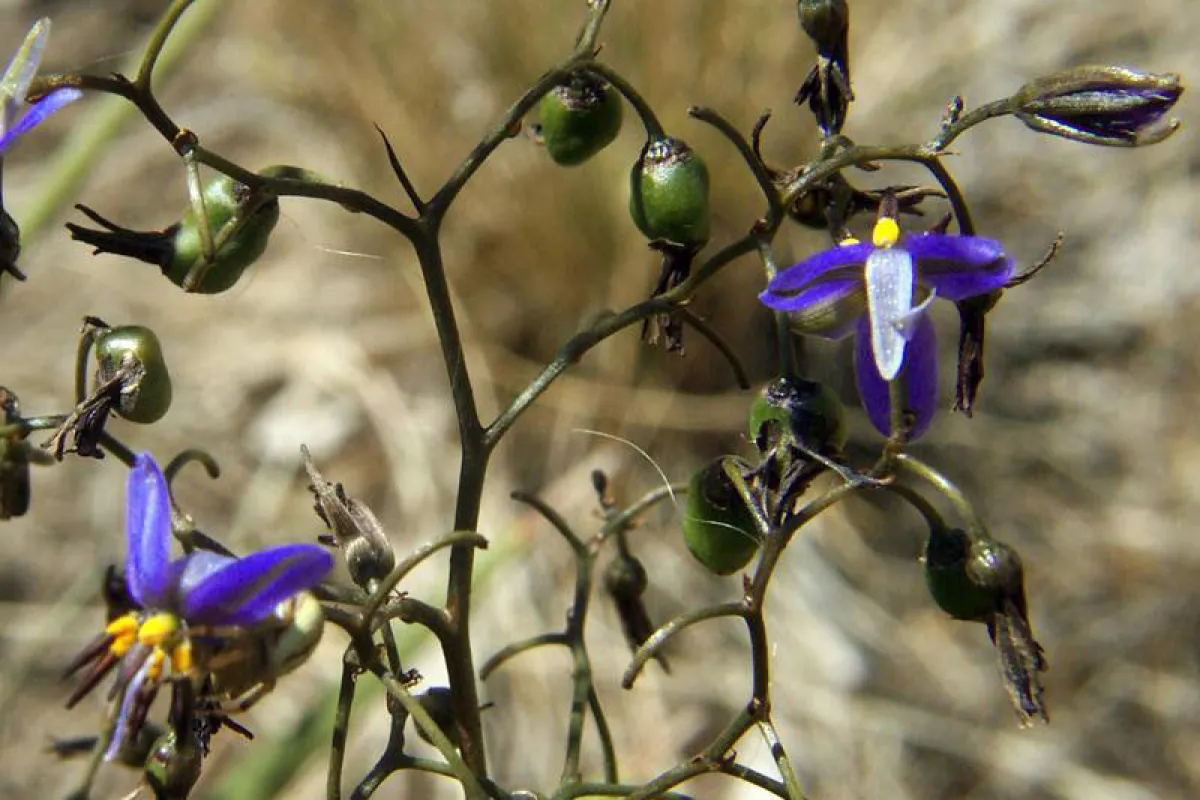
As the common name implies, the flowers of this species have black anthers. © The University of Melbourne
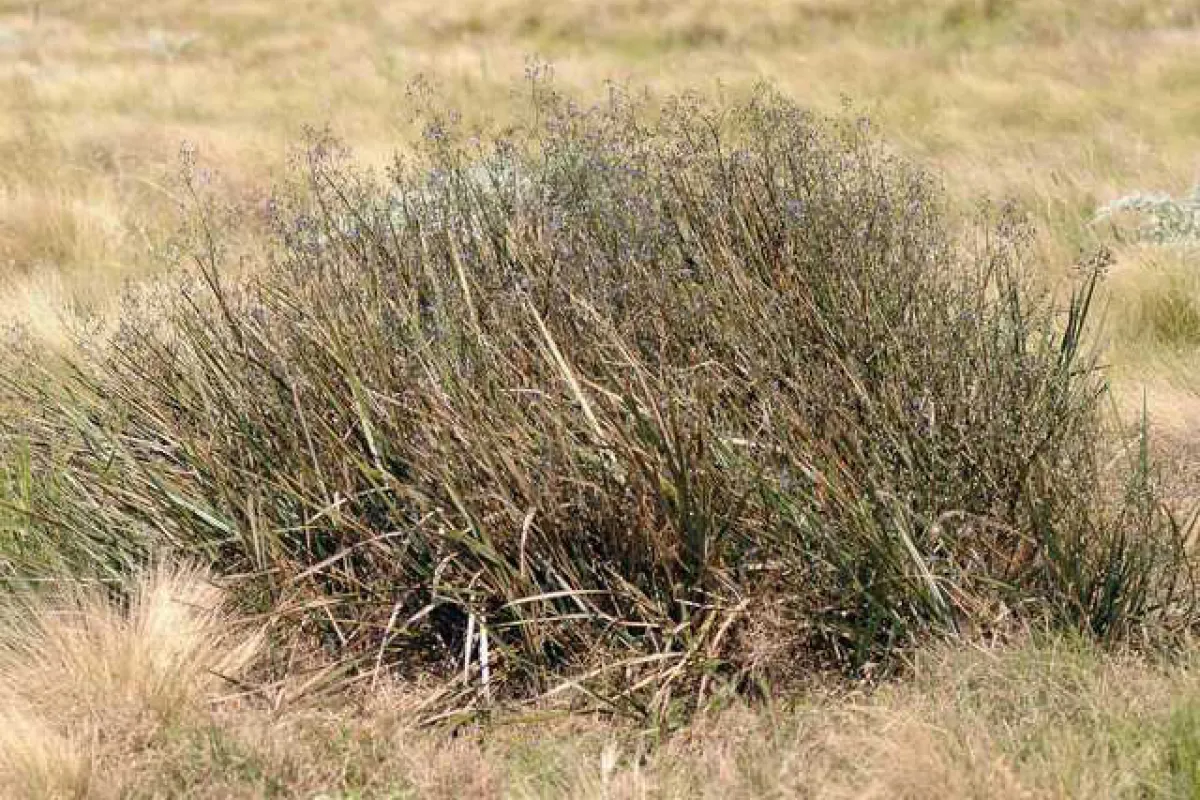
Dianella admixta © Giorgio De Nola (Nature Share)
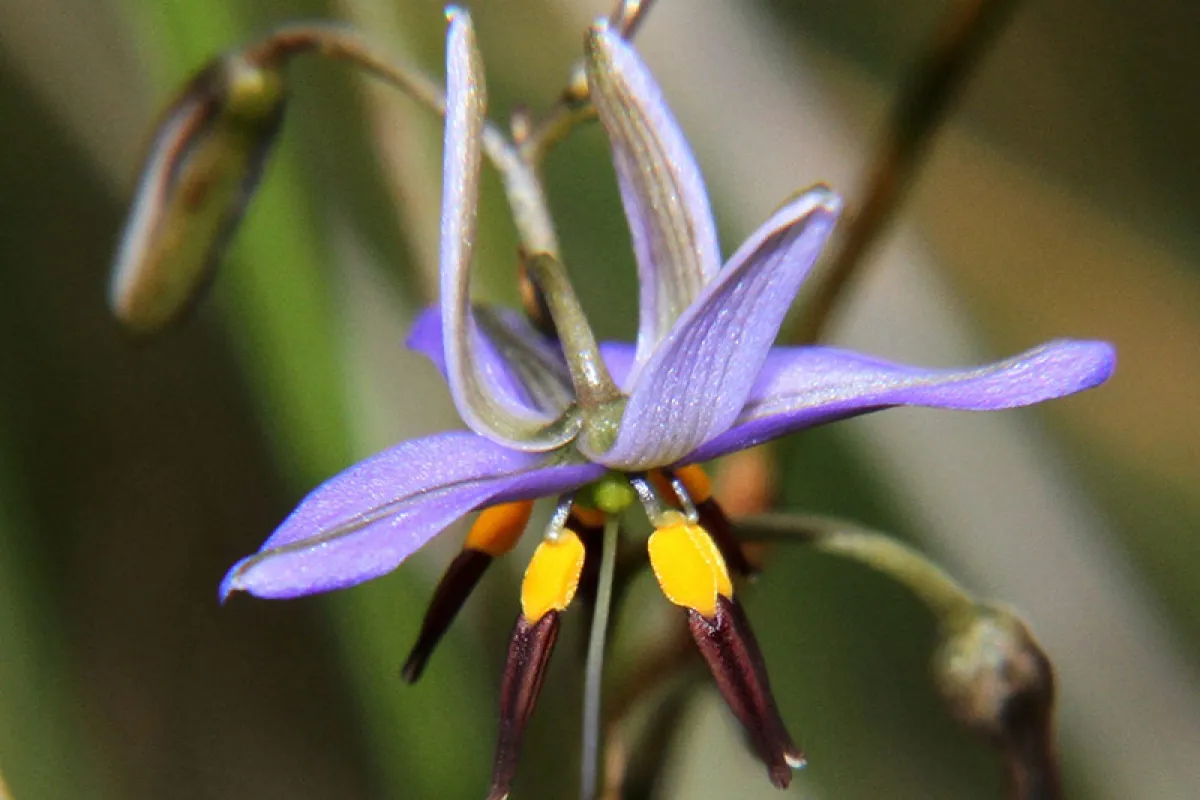
Dianella admixta © Russel Best (CC)
As the common name implies, the flowers of this species have black anthers. © The University of Melbourne
Dianella admixta © Giorgio De Nola (Nature Share)
Dianella admixta © Russel Best (CC)
Plant growth form and habit: Very variable, erect evergreen rhizomatous perennial herb, forming dense clumps.
Natural distribution: Vic, NSW, Qld, Tas, SA, WA. Grows in grasslands, heaths, woodland and open forest.
Indigenous to greater Melbourne: Yes
Height category: 0-0.5m
Dimensions (height and width): 0.3-0.8 m x 0.5-1.5 m
Landscape features: Dense foliage
Flowering: Blue to violet flowers September to December, followed by purple berries in summer.
Typical growth rate: Slow to medium
Light: Full sun, Partial sun
Drought: Moderately good
Waterlogging: Moderately good
Maintenance and cultivation notes: Robust, but variable in form and habit. Widely grown and used.
Green roof suitability: Unirrigated < 10 cm depth, Unirrigated 10-20 cm depth, Unirrigated > 20 cm depth, Irrigated < 10 cm depth, Irrigated 10-20 cm depth, Irrigated > 20 cm depth
Soil compaction tolerance: Moderately good
Bees and butterflies nectar and pollen source: Attractive to blue-banded species (Amegilla sp) which buzz pollinate Dianella flowers.
Butterfly larval host plants: Sometimes used as larval food plant for yellow grass-dart (Ocybadistes walkeri sothis).
Birds: Small birds shelter in the dense foliage and a variety of birds eat the fruit. The flowers attract insects which in turn attract wrens and thornbills.
Lizards and frogs: Blue tongue lizards shelter in the foliage and also eat the fruit.
Benefits: Nectar and pollen, Butterfly (caterpillar) host, Birds (food source), Birds (habitat structure), Lizard habitat
Availability: Victorian Indigenous Nurseries Co-operative (VINC), Bili Nursery, Western Plains Flora, Kuranga Native Nursery (availability as of June 2017)
Typical horticultural uses: A reliable flowering herb in difficult conditions such as roadsides. Can form dense mats that will prevent weeds establishing. Can be mass planted for groundcover and bordering, and used in wildflower gardens. Suitable for green roofs.

