


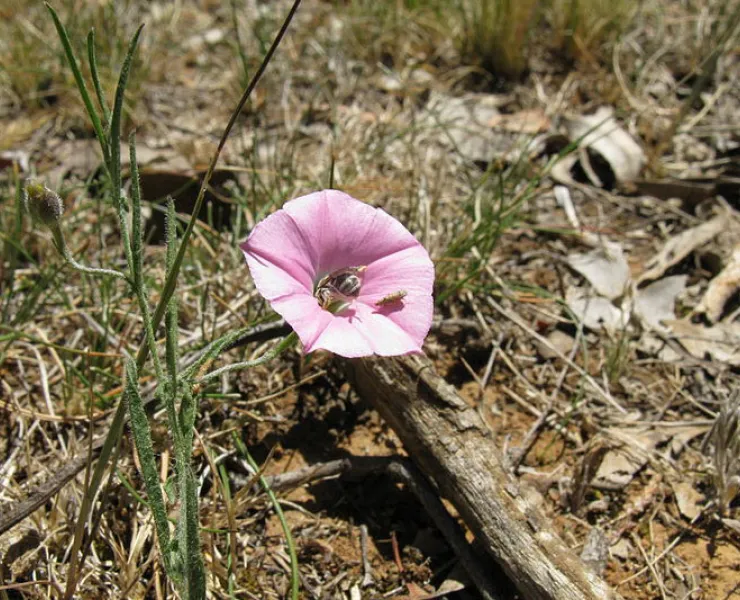
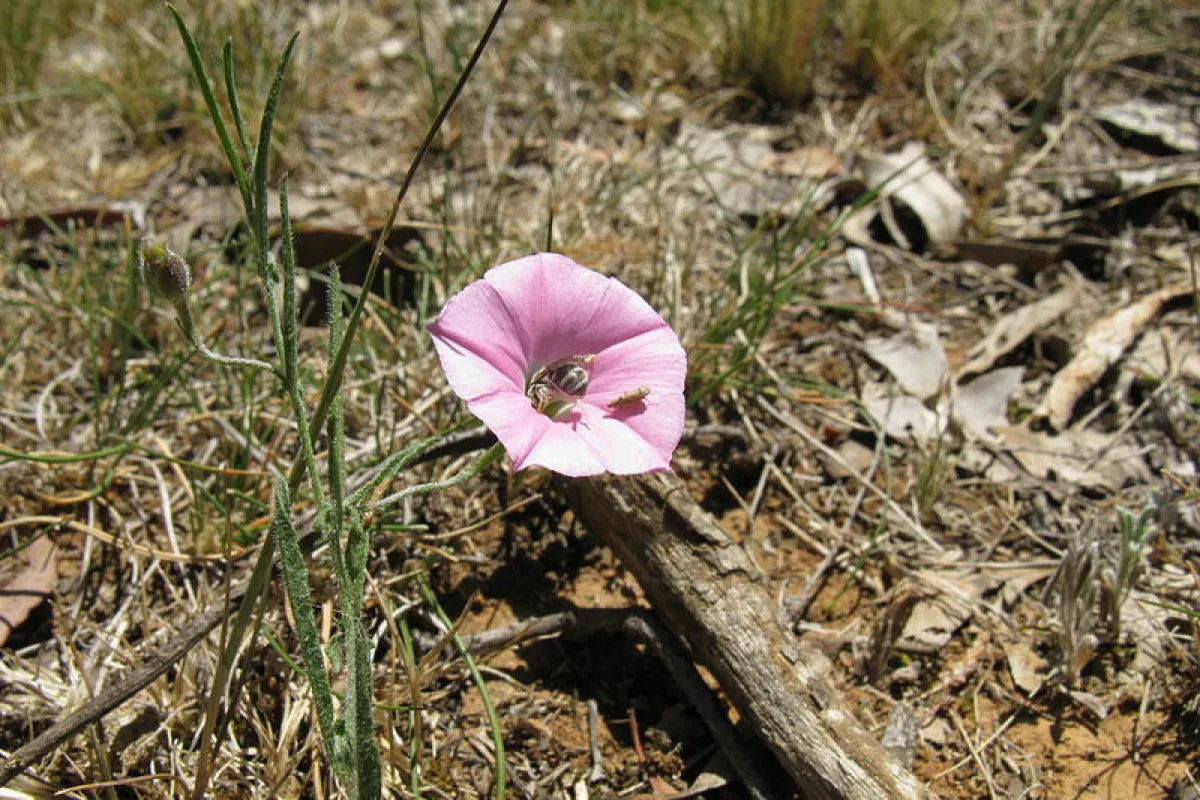
Native bee on Convolvulus angustissimus ssp. angustissimus © Harry Rose (Wikimedia)
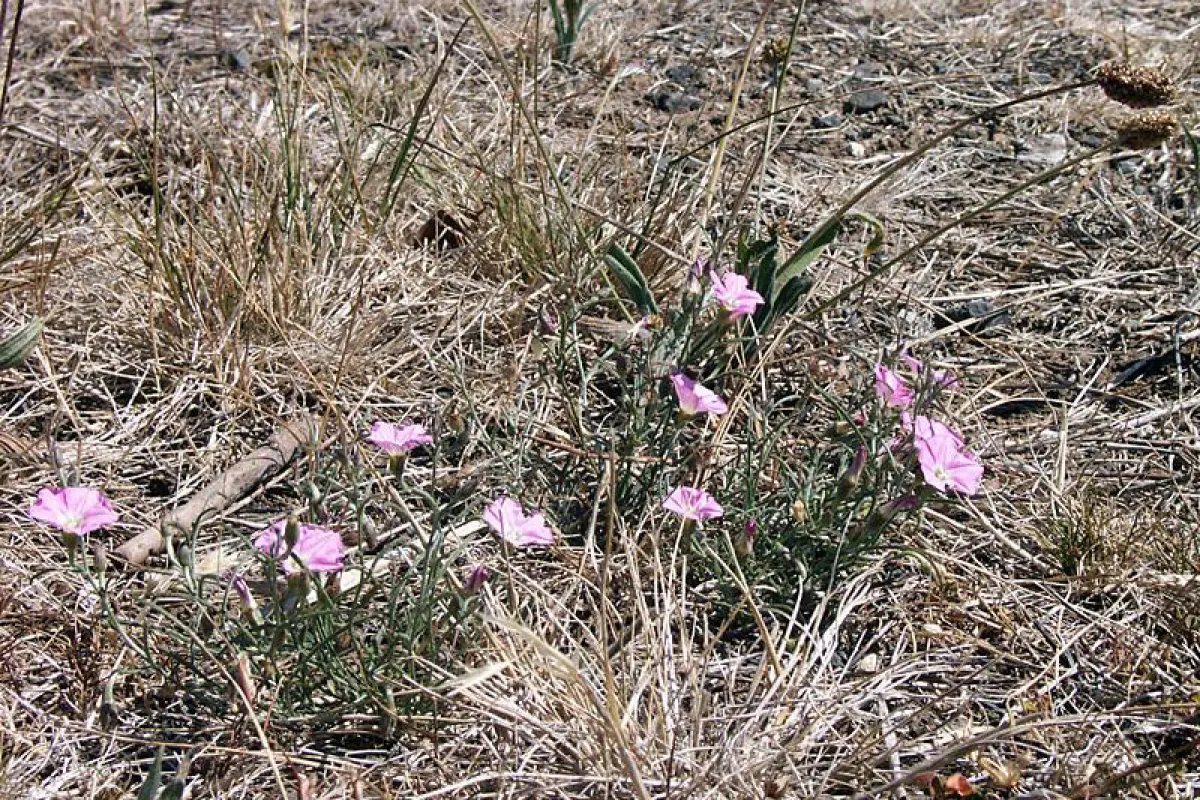
This pretty plant will grow in fairly difficult sites, if competition from other plants is not too vigorous. © The University of Melbourne
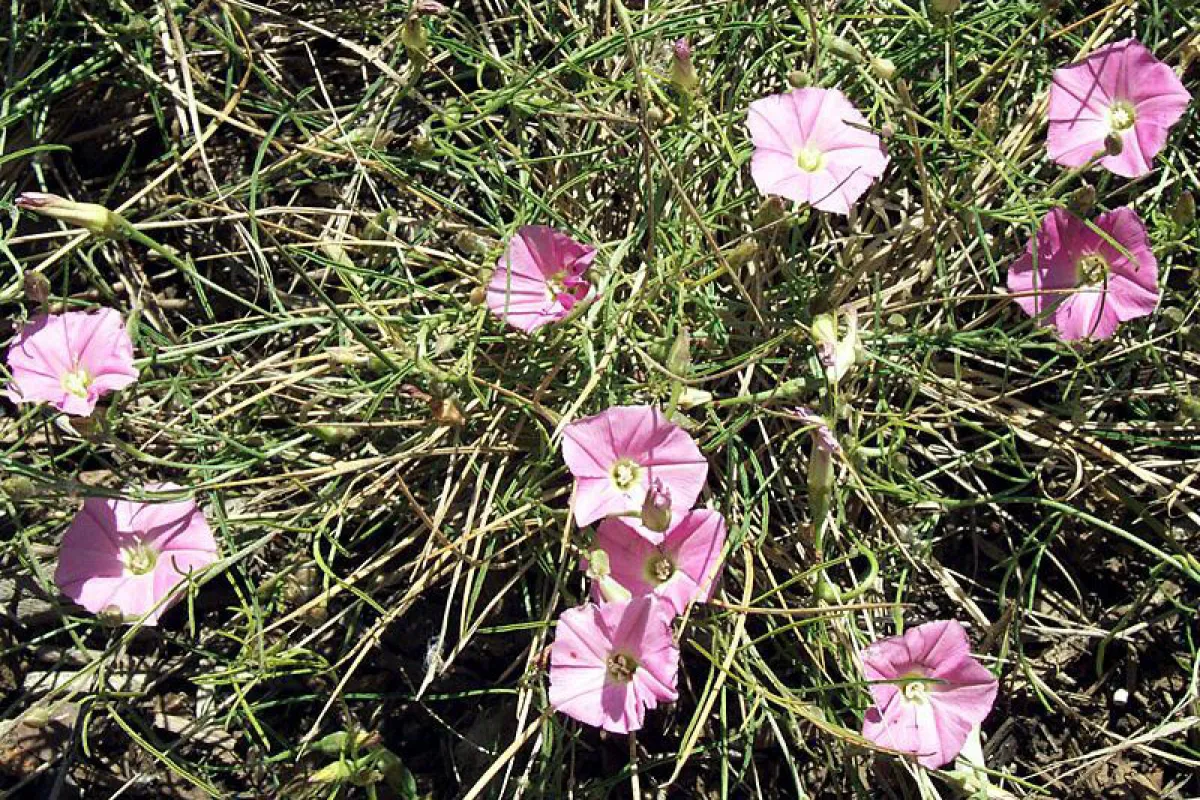
In grassy vegetation, plants will be inconspicuous until they flower. © The University of Melbourne
Native bee on Convolvulus angustissimus ssp. angustissimus © Harry Rose (Wikimedia)
This pretty plant will grow in fairly difficult sites, if competition from other plants is not too vigorous. © The University of Melbourne
In grassy vegetation, plants will be inconspicuous until they flower. © The University of Melbourne
Plant growth form and habit: An evergreen, trailing and scrambling perennial herb. Will climb if a host is available.
Natural distribution: Occurs in all states, in woodlands, heaths and grasslands.
Indigenous to greater Melbourne: Yes
Height category: 0-0.5m
Dimensions (height and width): 0.1-0.9 m x 0.5-1 m
Landscape features: Long flowering, Colourful flowers
Flowering: Pink, funnel-shaped flowers. August to February.
Typical growth rate: Medium to fast
Light: Full sun, Partial sun
Drought: Very good
Waterlogging: Average
Maintenance and cultivation notes: Short lived, but will self-sow. Will not succeed against competition from vigorous weeds or high bio-mass grass species. Observed to require acid soils.
Bees and butterflies nectar and pollen source: Likely attractive to native bees, particularly Halictidae species such as Homalictus and Lasioglossum sp., butterflies, hoverflies, and other nectar and pollen foraging insects.
Benefits: Nectar and pollen
Availability: Victorian Indigenous Nurseries Co-operative (VINC), Bili Nursery, Western Plains Flora, Kuranga Native Nursery (availability as of June 2017)
Typical horticultural uses: Mainly display and wildflower garden uses.

