

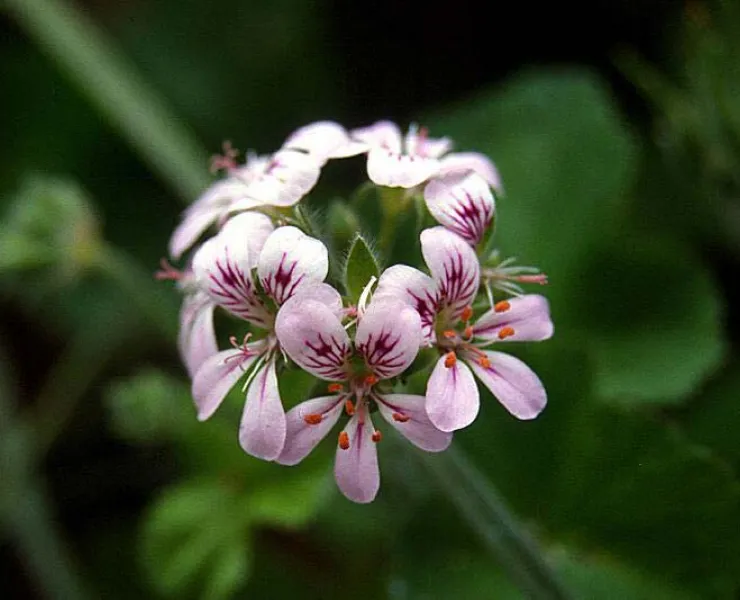
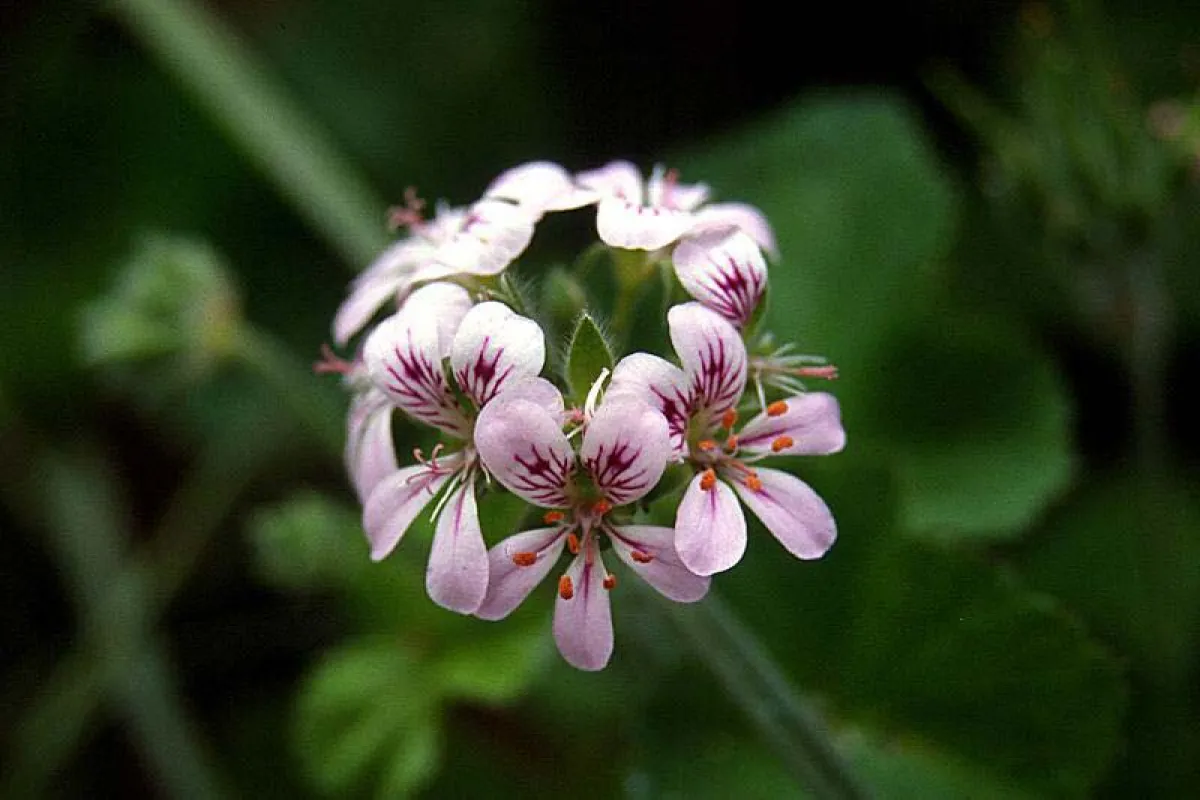
Flowers are pink to mauve, with darker-pink markings. © The University of Melbourne
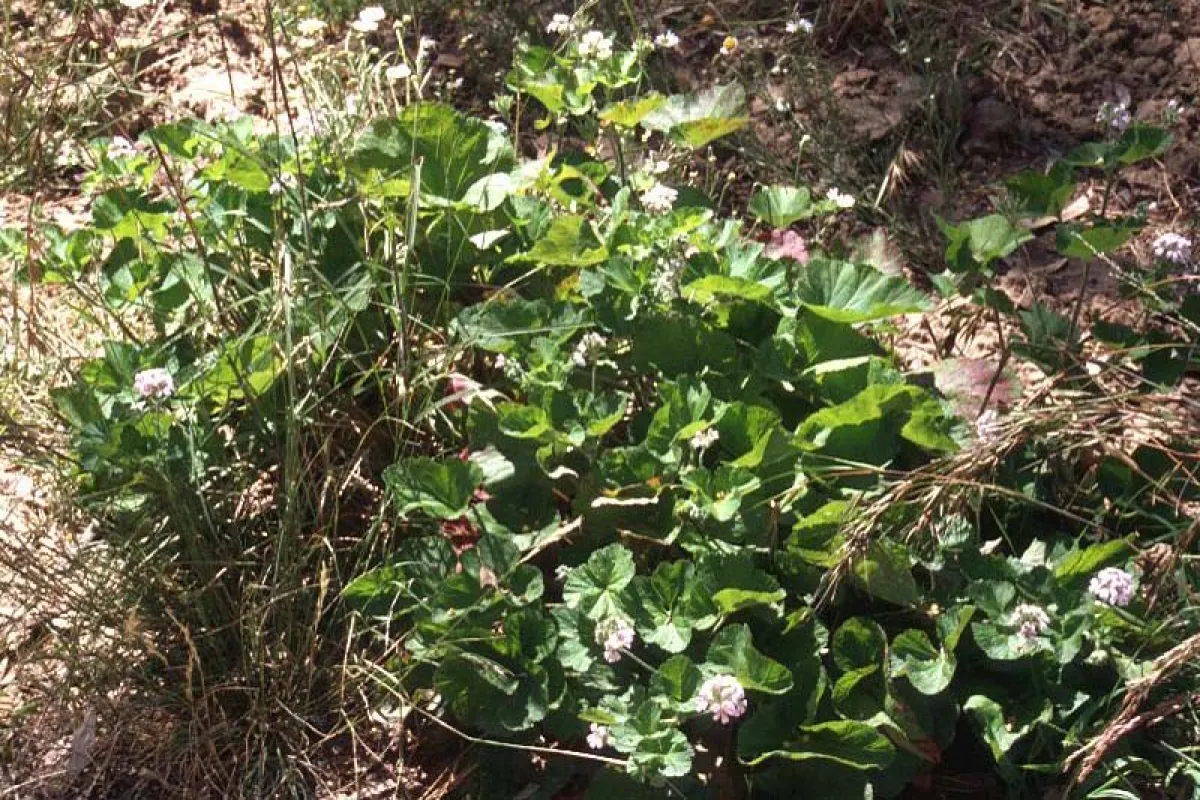
Pelargonium australe in the native garden, Burnley Gardens, Melbourne. © The University of Melbourne
Flowers are pink to mauve, with darker-pink markings. © The University of Melbourne
Pelargonium australe in the native garden, Burnley Gardens, Melbourne. © The University of Melbourne
Plant growth form and habit: A variable perennial herb, from dwarf to scrambling. Has a fleshy tap root.
Natural distribution: Widespread in all eastern Australian states, Tasmania and Western Australia. Commonly found in coastal areas.
Indigenous to greater Melbourne: Yes
Height category: 0-0.5m
Dimensions (height and width): 0.3-0.5 m x 0.3-1 m
Landscape features: Groundcover, Colourful flowers
Flowering: Small pink with purplish markings, typical irregular Pelargonium flowers. November to March, but also may flower sporadically.
Typical growth rate: Medium
Light: Full sun, Partial sun
Drought: Moderately good
Waterlogging: Average
Maintenance and cultivation notes: Does best in well drained soils, reflecting its origin. May be lightly pruned to rejuvenate and will often self-sow. Can die back to its rootstock during summer, resprouting following autumn rains.
Green roof suitability: Irrigated 10-20 cm depth, Irrigated > 20 cm depth
Bees and butterflies nectar and pollen source: Likely attractive to native bees, butterflies, hoverflies, and other nectar and pollen foraging insects.
Butterfly larval host plants: Larval food plant of a number of moth species.
Birds: Provides food for larvae eating birds.
Benefits: Nectar and pollen, Butterfly (caterpillar) host, Birds (food source)
Availability: Westgate Biodiversity Bili Nursery, Mornington Peninsula Shire (Briars) Nursery (availability as of April 2020)
Typical horticultural uses: Edging, bush garden, wildflower garden, container, accent. Useful as a soil or sand binder. Suitable for green roofs.

